

How to make a Maine Coon grow big starts with helping the kitten reach its own healthy potential: feed a complete growth-stage diet, provide play and arrange regular veterinary care. Genetics sets the broad possibilities, and overfeeding cannot safely turn every Maine Coon into a giant.
How to help a Maine Coon grow big and healthy
Support steady growth rather than trying to maximize the number on the scale. A kitten needs appropriate food, fresh water, activity, preventive care and enough time to mature.
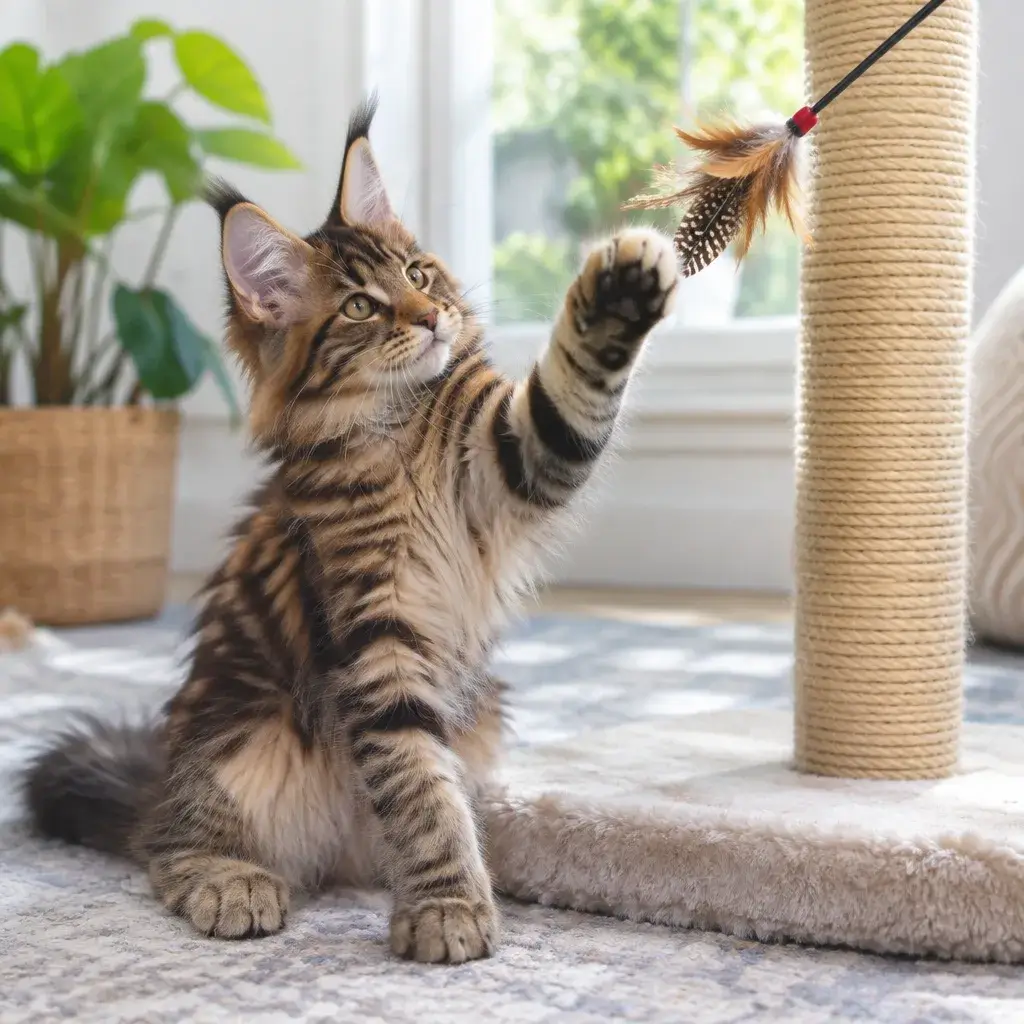
My advice is to track your kitten’s weight and body condition with your veterinarian, especially during the first year. A healthy, smaller Maine Coon is preferable to an overweight cat whose size is the result of excess fat.
If you are exploring white Maine Coon kittens for sale, ask about health and temperament as well as the appearance and size of the parents. Coat color does not tell you how large a kitten will become.
How big is a Maine Coon at full size?
A full-size Maine Coon commonly weighs about 13–18 pounds for a male and 9–12 pounds for a female, although healthy individuals can fall outside those ranges. Males are often larger, but sex and weight alone cannot tell you whether an individual cat is in good condition.
A cat’s frame, muscle and body fat all matter. A heavier cat is not automatically healthier, and a 20-pound Maine Coon needs a body-condition assessment rather than an assumption that its weight is ideal. For more on the changes leading to a full-grown Maine Coon, see our guide to growth stages.
How long is a Maine Coon?
A Maine Coon may measure roughly 30–40 inches from nose to tail tip, with the upper end being exceptional rather than a size to expect from every cat. Its long tail and full coat contribute to its impressive appearance.
To measure, wait until your cat is relaxed and standing naturally, then use a flexible tape from the nose along the body to the tail tip. Do not pull the tail straight or stretch the cat; a second person can hold a treat while you take an approximate measurement.

Do all Maine Coon cats get big?
No. Maine Coons vary in inherited size, sex, age and health, and a smaller healthy cat can still be a Maine Coon.
Some females are substantially smaller than some males, and kittens in the same litter can grow at different rates. A large parent gives you a clue about family size, not a guarantee that a kitten will match it. Pedigree and registration information are more useful for understanding a cat’s background than a weight threshold alone.
Long fur can also make comparisons misleading. If your cat looks small next to a fluffy adult online, check its age, frame and condition before assuming anything is wrong. Ask your veterinarian if you are uncertain whether its growth is appropriate.
What contributes to a Maine Coon’s large size?
Maine Coon genetics contributes to the breed’s substantial frame and long, muscular build, while nutrition and health help determine whether an individual reaches its potential. No single parent measurement or simple size prediction can guarantee an adult outcome.
Inherited traits come from both parents and vary among kittens. Good care supports normal development, but extra calories cannot change a kitten’s inherited frame. Similarly, a kitten that has experienced illness or inadequate nutrition may need veterinary attention rather than a bigger food bowl.
How should you feed and exercise a growing Maine Coon?
Feed a complete and balanced kitten food, adjust portions to your kitten’s growth and body condition, and provide daily opportunities to play. The goal is steady development, not rapid weight gain.
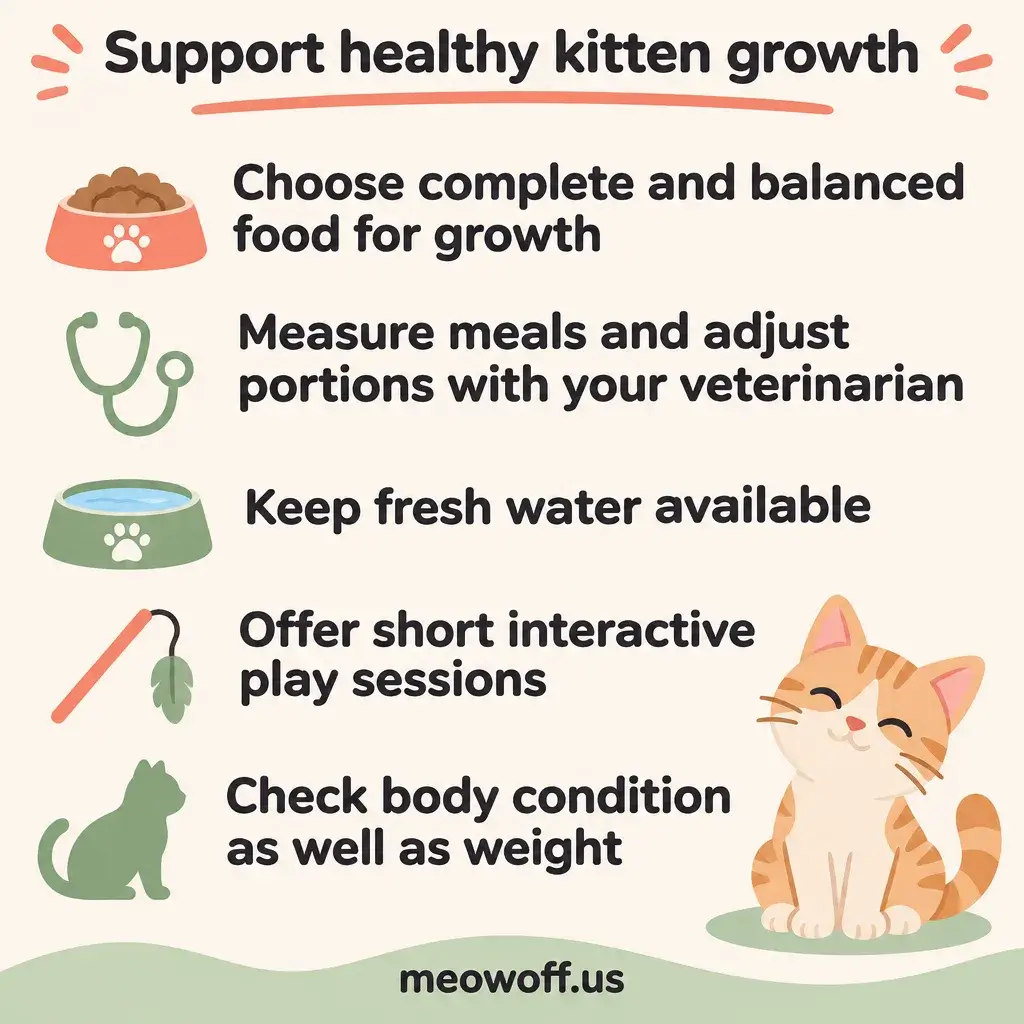
Look for a nutritional adequacy statement on the food label indicating it is complete and balanced for growth or for all life stages, including growth. A food marketed specifically for large breeds is not essential. Use the package feeding guide as a starting point, measure meals, and ask your veterinarian to help adjust the amount as your kitten grows.
Keep fresh water available. If you change foods, introduce the new food gradually unless your veterinarian advises otherwise. Treats should not displace balanced meals, and you should not force-feed or add vitamins, minerals or other supplements simply to chase size. Excessive supplementation can be harmful.
Offer several short interactive play sessions each day with a wand toy or other cat-safe toy. A sturdy climbing tree, scratching post and space to explore support activity; choose equipment stable enough for your cat as it gets bigger. Put string toys away after supervised play.
Check body condition as well as weight. You should be able to feel the ribs under a thin covering of fat, and an adult cat should generally have a visible waist when viewed from above. Kittens’ proportions change as they grow, so ask your veterinarian to demonstrate how to assess your individual kitten rather than restricting food on your own.
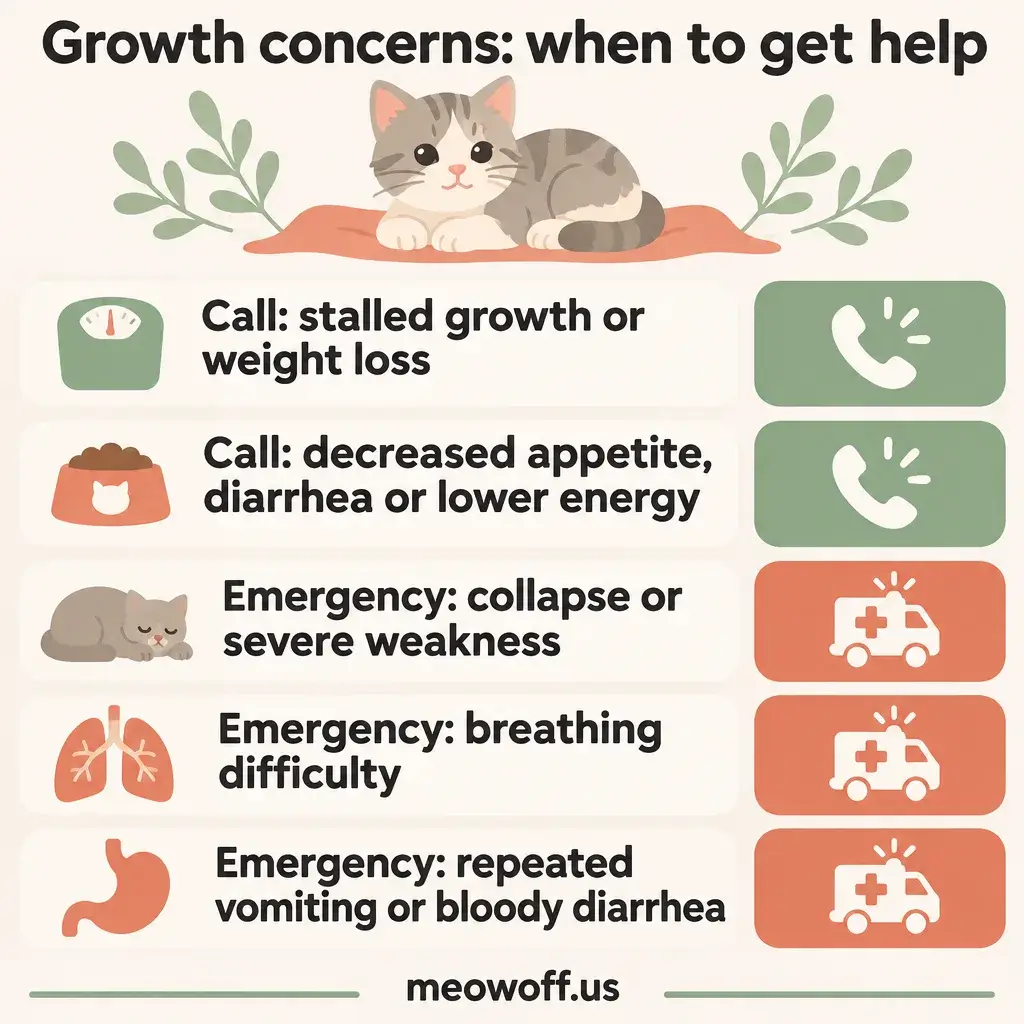
Call your veterinarian about poor appetite, unwanted weight loss or concerns that your cat is gaining excess weight. A kitten that is very weak, collapses or has trouble breathing needs emergency veterinary care. Our first-week kitten care guide can also help you set up feeding and a comfortable routine after arrival.

Why is my Maine Coon so small?
Your Maine Coon may be small because of normal inherited variation or because it is still growing. Inadequate nutrition, parasites or illness can also interfere with growth, so look at the cat’s own weight trend and body condition rather than one target number.
For example, a lively 4-month-old kitten that eats well and gains weight consistently may simply have a smaller frame than another kitten of the same age. A kitten that stops gaining, loses weight or becomes less active needs a different response, even if its current weight falls within a chart’s range.
Weigh a kitten regularly using a scale that can measure small changes, and record the date and weight. Use the same scale and similar conditions each time; a carrier on a scale can help if you subtract the carrier’s weight. Bring the record, food information and any stool or appetite changes to your veterinary appointment.
- Call your veterinarian promptly if growth stalls, weight drops, appetite decreases, diarrhea occurs or energy is lower than usual. Young kittens can deteriorate quickly, so do not wait several days to see whether a poor appetite resolves.
- Seek emergency care for collapse, severe weakness, breathing difficulty, repeated vomiting, bloody diarrhea, or an inability to keep water down. Contact an emergency clinic immediately if you are unsure whether your kitten can safely wait.
- Ask about testing rather than treating blindly. Your veterinarian may recommend a physical exam, a fecal test for parasites or other tests based on the signs and history.
For context, explore how heavy Maine Coons are at different ages and use the Maine Coon growth size chart as a reference, not a diagnosis. Our guide to female Maine Coon size also discusses variation in growing kittens.
When does a Maine Coon reach full size?
Many Maine Coons continue maturing and filling out until roughly 3–5 years of age, though the timeline varies. Most rapid kitten growth happens earlier; later changes may include developing muscle and a more mature frame rather than a steady increase in height.
Keep recording weight and discussing body condition at routine visits instead of expecting a particular birthday to mark the finish line. Learn more about when Maine Coons stop growing and what changes to expect.
How can you choose a healthy kitten without chasing size?
Choose a kitten for health, suitable temperament and responsible care, not a promise of extraordinary adult weight. Ask about the parents’ size as useful background, while recognizing that no breeder can guarantee a kitten’s final dimensions.
Before reserving a kitten, ask to review its pedigree and veterinary records, and discuss what screening has been performed on the parents. Useful questions include:
- How large are the parents, and are their weights accompanied by a healthy body-condition assessment?
- What screening has been done for hypertrophic cardiomyopathy and hip dysplasia, and can the results be reviewed?
- What vaccinations, examinations and parasite care has the kitten received, and what follow-up is due?
- What is the kitten’s temperament, and how has it been socialized?
Hypertrophic cardiomyopathy is a heart muscle disease; hip dysplasia affects the hip joint. Screening can help inform your decision but cannot promise that a kitten will never develop a health problem. Ask your veterinarian how to interpret the records and what ongoing care your cat needs.
Call your veterinarian if your cat develops lameness, reluctance to jump, reduced activity or a change in breathing. Breathing with an open mouth, severe breathing difficulty, collapse or sudden inability to use the hind legs is an emergency; go to an emergency veterinarian immediately.
TICA and CFA are cat registries with Maine Coon breed standards; registration and pedigree information help document background, but they do not replace health screening or a veterinary exam. I put health, genetics and temperament before a dramatic size claim or a sought-after color.
At MeoWoff, kittens go home at 12–16 weeks, after socialization and age-appropriate vaccines. They are microchipped, and their veterinary records are shared with their families. Our Wood Dale showroom is open by appointment, and we provide guidance for the first 48 hours and first weeks at home.
Families considering Maine Coon kittens in Idaho can also ask about delivery. Ground delivery starts at $600 and flight nanny delivery at $1,000; optional heart ultrasound and genetic testing are $200 each.
Questions about Maine Coon size and growth? Talk to MeoWoff
We can help you ask the right questions when choosing a Maine Coon kitten and prepare for its first weeks at home.
Call (773) 917-0073 or send us a message to talk with our team.


