

Maine Coon vs Persian comparisons usually come down to size, activity and grooming: Maine Coons are generally larger and more interactive, while Persians are often quieter and need daily coat care. Both can be affectionate companions, but the right choice depends on the individual cat and the routine you can offer.
Maine Coon vs Persian at a glance
Maine Coons tend to suit people who enjoy an active, substantial cat, while Persians often appeal to those who prefer a calmer companion and are ready to comb daily. Both need play, veterinary care and attention, regardless of their breed reputation.
| Feature | Maine Coon | Persian |
|---|---|---|
| Typical adult size | Females 8–12 lb; males 13–18 lb | Females 7–11 lb; males 9–14 lb |
| Personality | Often playful and interactive | Often gentle and quieter |
| Coat care | Brush several times a week | Comb daily |
| Typical lifespan | About 12–15 years | About 12–15 years |
| Health questions | Heart, muscle and hip screening | Kidney screening; breathing, eyes and teeth |
If you are beginning your search, you can see our Maine Coon kittens for sale and ask us about an individual kitten’s temperament and care. The breed description is a starting point, not a promise about every kitten.
Maine Coon vs Persian size and appearance
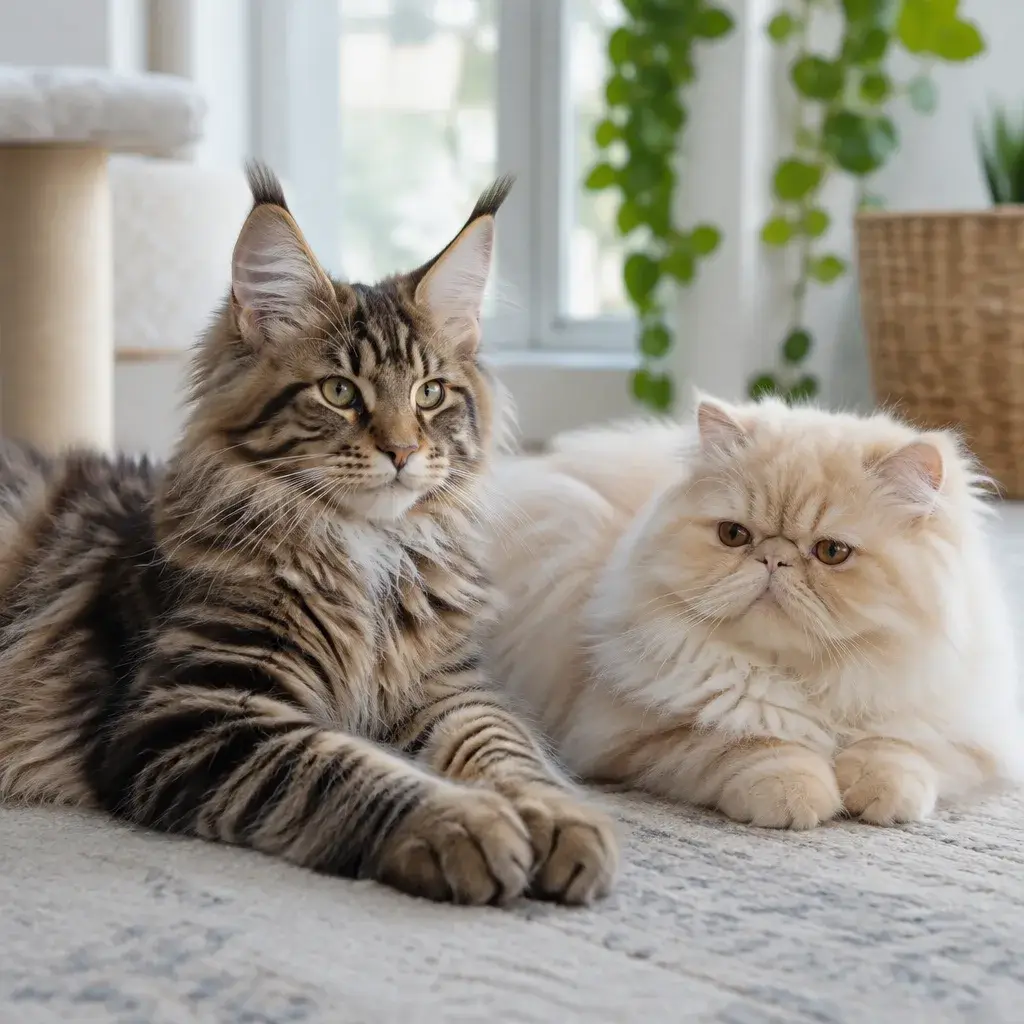
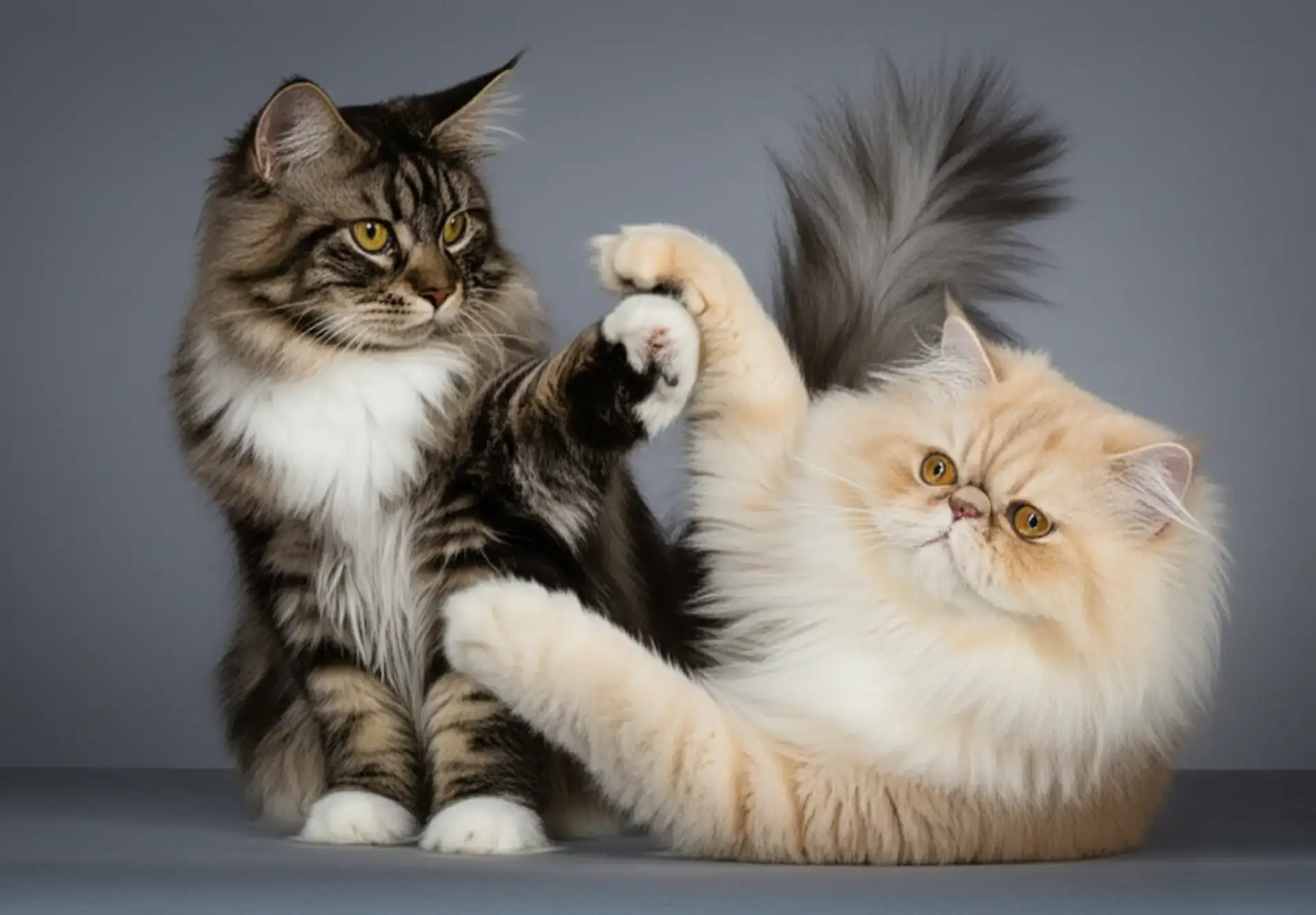
The main Maine Coon vs Persian size difference is that a Maine Coon usually has a longer, larger frame, although their adult weight ranges overlap. A Persian is generally shorter-bodied and compact, with a round head and a shorter muzzle.
Typical adult Maine Coon males weigh about 13–18 pounds and females about 8–12 pounds; Persian males often weigh about 9–14 pounds and females about 7–11 pounds. These are guides, not targets: frame, muscle, age and body condition matter more than reaching a particular number.
Maine Coons often continue to fill out for three to five years, so a kitten’s size at pickup does not tell you exactly how big it will become. Follow its growth with your veterinarian rather than overfeeding to encourage size; our guide to Maine Coon cat weight offers more context.
Maine Coons are among the largest domestic cat breeds, but they are not invariably the biggest: Savannah cats can also be large, and individual sizes vary. A Maine Coon typically has a long body, square muzzle, large ears that may have tufts, and a long, bushy tail. Its New England background is explored in our article on Maine Coon origin.
Persians have a rounder head, smaller rounded ears, shorter legs and a full coat. Facial flatness varies; a flatter face can bring practical health concerns, so I would not choose a kitten based on that look alone.
Both breeds come in many colors and patterns, including white, black, blue, red, cream and tabby combinations. Color inheritance can be complicated; the Maine Coon color calculator explains the possibilities. I put health, genetics and temperament ahead of a particular color.

Maine Coon vs Persian personality
A Maine Coon is often curious, playful and interested in household activity; a Persian is often gentler in its activity and happier with a quieter pace. Neither description guarantees whether an individual cat will be a lap cat, vocal or comfortable with a busy home.
Both can attach closely to their owners. Some favor one person, while others share their affection across the household; give a new kitten space to approach rather than insisting on cuddles. A Persian’s calm manner does not mean it wants to be left alone all day.
Maine Coons can get along with other cats, and Persians can too, but compatibility depends on the individual animals and gradual introductions. Start the newcomer in a separate room with its own food, water and litter box, exchange bedding scents, and progress to short, supervised meetings when both cats are relaxed.
Children should learn to sit quietly, use gentle hands and let the cat leave. Provide high resting places and separate resources so no pet has to compete for a safe spot. Our additional breed information describes more Maine Coon traits.
Health and lifespan differences
Both breeds can live around 12–15 years, but individual lifespan varies, and neither a pedigree nor a screening result guarantees health. Maine Coon shoppers should ask particularly about heart, muscle and hip screening; Persian shoppers should ask about kidney screening and examine breathing, eyes and dental comfort.
Maine Coon: Hypertrophic cardiomyopathy (HCM) is a heart disease that can occur in the breed. Ask for the parents’ cardiac ultrasound records and dates, and discuss any follow-up with your veterinarian. A negative test for the Maine Coon MYBPC3 variant does not rule out all causes of HCM or replace ultrasound screening.
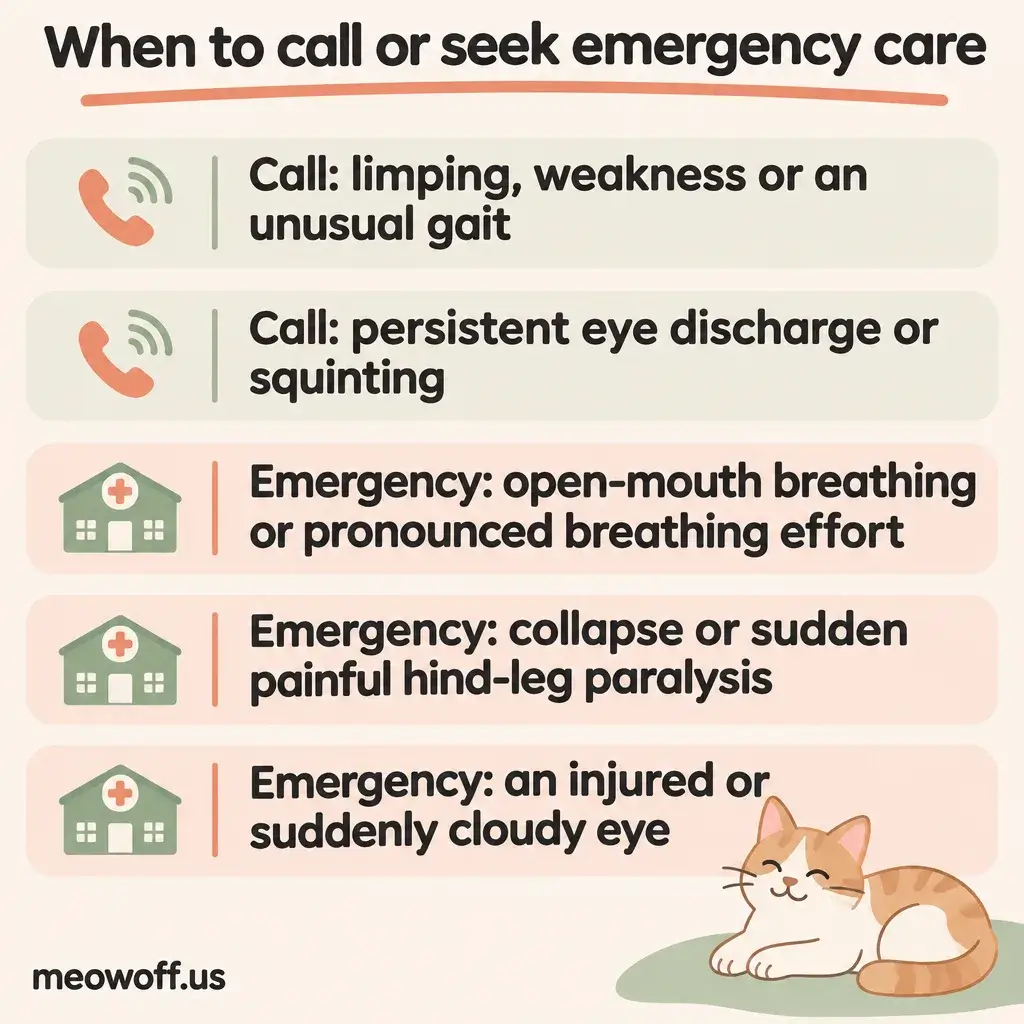
Also ask about genetic testing for spinal muscular atrophy and how the breeder assesses hips for hip dysplasia. Call your veterinarian for limping, reluctance to jump, weakness or an unusual gait. Sudden collapse, severe weakness, or sudden painful inability to use the hind legs is an emergency.
Persian: Inherited polycystic kidney disease can occur in Persians; ask for the parents’ relevant genetic results and discuss any kidney ultrasound findings. Increased thirst or urination, weight loss, vomiting or poor appetite warrants a veterinary call. Collapse, profound weakness or inability to urinate requires emergency care.
A flattened face can contribute to brachycephalic airway syndrome, as well as tear drainage and dental crowding problems. Persian cats can develop dental disease, but a breed-specific percentage should not be assumed. Call your veterinarian about noisy breathing at rest, persistent eye discharge, squinting, bad breath, drooling or difficulty eating; open-mouth breathing, pronounced breathing effort, blue or gray gums, or an injured or suddenly cloudy eye is an emergency.
Ask to see actual test reports, not just a verbal assurance that parents are healthy. A veterinarian can explain what a result covers, whether further screening is appropriate and which signs to monitor as the kitten grows.
Grooming, feeding and daily life
Both breeds need a consistent care routine, but the Persian’s long, dense coat usually demands more daily attention. Plan several brushing sessions a week for a Maine Coon and daily combing for a Persian, adjusting to the individual coat and how readily it tangles.
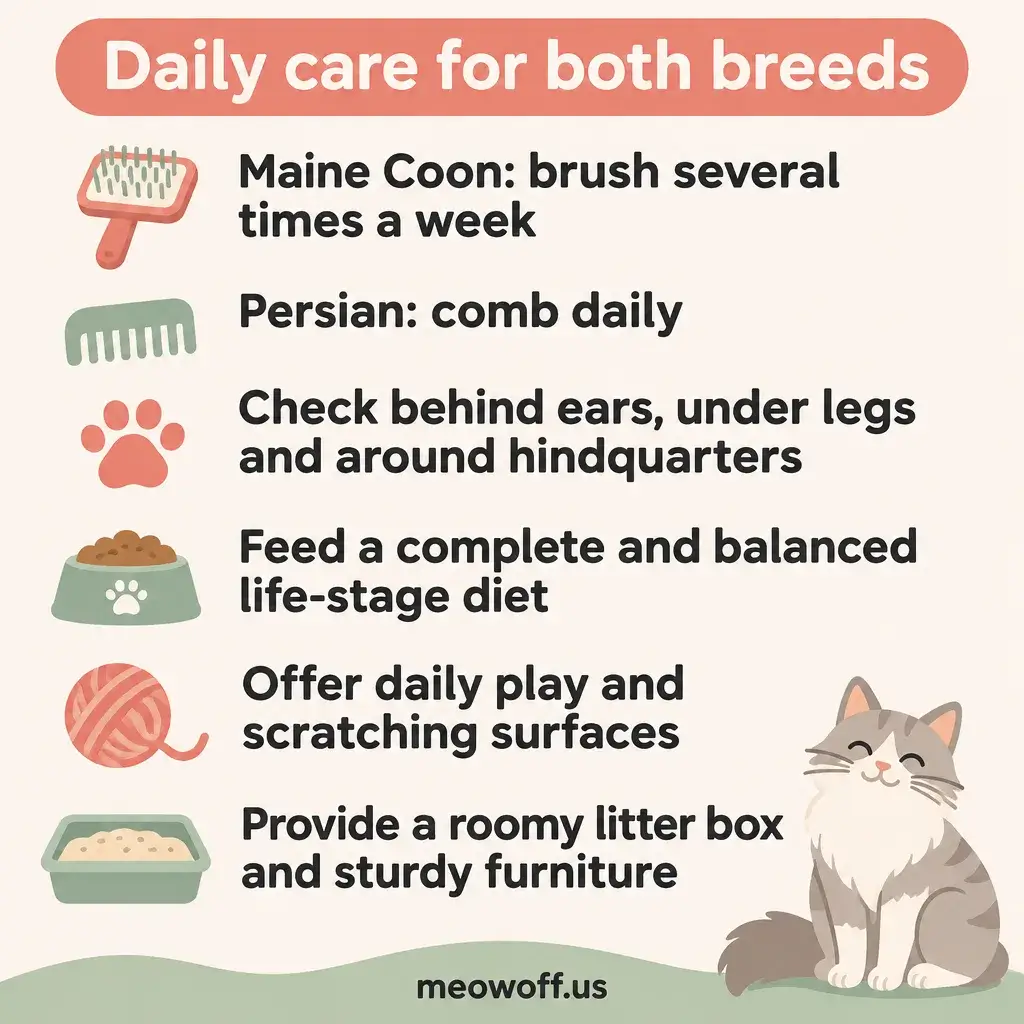
- Groom gently: Use a suitable comb to work through the coat in small sections, checking behind the ears, under the front legs and around the hindquarters. Do not cut tight mats with scissors: cat skin is easily injured. Call your veterinarian for painful mats or irritated skin; severe injury or uncontrolled bleeding is an emergency.
- Check eyes and teeth: If needed, gently wipe around the eyes with clean, damp gauze, using a fresh piece for each eye. Call your veterinarian for redness, persistent discharge, squinting, drooling or trouble eating; seek emergency care for sudden cloudiness, eye injury or severe distress.
- Feed for life stage: Choose a complete and balanced kitten food for a growing kitten, then discuss the transition to adult food with your veterinarian. Portion according to the food and your cat’s body condition, not its breed name alone. Call your veterinarian if your cat is eating less or losing weight; a weak or unresponsive cat needs emergency care.
- Make room for play: Offer daily interactive play and scratching surfaces to both breeds. A sturdy cat tree and roomy litter box help a larger Maine Coon turn and stretch comfortably; a Persian also benefits from easily accessible resting and play areas.
Use short, pleasant grooming sessions and reward cooperation. For example, a four-month-old kitten can learn to accept a few gentle comb strokes at a time before you gradually lengthen the session. Our week-by-week kitten care guide can help you plan the transition home.
Maine Coon vs Persian kittens and prices
Maine Coon kittens are often active explorers that take years to reach full adult size, while Persian kittens are often calmer, though individuals vary. Meet the kitten, if possible, and ask how it responds to handling, grooming and ordinary household activity.
Typical US breeder prices are roughly $1,000–$3,000 for either breed, with pedigree, breeder practices, location and pet, show or breeding quality affecting the price. At MeoWoff, kittens typically cost $2,100–$5,800 depending on breed, pedigree and quality; the $500 deposit reserves a kitten and is part of the price, not an extra charge.
| Expense | What to plan for |
|---|---|
| Kitten from MeoWoff | Typically $2,100–$5,800, including the $500 deposit |
| Pickup or delivery | Wood Dale pickup; ground delivery from $600 or flight nanny from $1,000 |
| Optional tests | Heart ultrasound $200; genetic test $200 |
| Ongoing care | Food, litter, routine veterinary care, grooming supplies and an emergency reserve |
For example, a $2,100 kitten with $600 ground delivery would total $2,700 before optional tests and supplies; confirm the delivery quote and what each test covers. Annual care costs vary with local veterinary fees, food, grooming and unexpected illness, so request estimates from a local clinic and keep a separate emergency fund.
Our kittens go home at 12–16 weeks, after socialization and age-appropriate vaccines, with a microchip and veterinary records shared with the family. Ask what vaccines have been given and arrange a first veterinary visit to discuss the remaining schedule, parasite prevention and your kitten’s individual needs.
Families outside Illinois can ask about delivery to all 50 states; for example, see our page for Maine Coon kittens in Kentucky. A very low asking price deserves careful questions about records, screening, the kitten’s age and what the quoted price includes.
Maine Coon or Persian cat: which suits your home?
Choose a Maine Coon if you want an interactive companion and have room for larger equipment; consider a Persian if you prefer a quieter cat and can commit to daily coat care. Either can fit a family, a single person or a home with other pets when the individual cat and household are well matched.
Before deciding, watch the kitten move and interact, and look for comfortable breathing and clear, comfortable eyes. Ask about the parents’ screening records, the kitten’s veterinary history and how the breeder has prepared it for handling. Contact your veterinarian about discharge, limping or concerning breathing; obvious breathing distress or collapse is an emergency.
My priority is health, genetics and temperament before looks. You can visit our showroom at 126 E Irving Park Rd, Wood Dale, IL 60191, by appointment, or ask us about delivery and guidance for the first 48 hours and weeks at home.
Maine Coon and Persian questions
A Maine Coon Persian mix has ancestry from both breeds, but its adult size, coat, face and temperament are unpredictable. Appearance alone cannot establish pedigree; ask about documented parentage and the health history of both parents, including the screening relevant to each breed.
People often describe Persians as “traditional” or “doll-face” when the muzzle is less flat, and “flat-face” or “peke-face” when it is shorter. These are informal appearance descriptions rather than separate breeds, and a less-flat appearance is not a substitute for checking a kitten’s health and breathing.
If you like the Maine Coon’s substantial build and long coat, consider a Siberian; a Ragdoll is another sociable, longhaired alternative. Spend time with the individual cat and compare grooming, activity and health-screening needs rather than assuming the breeds are interchangeable.
Questions about Maine Coon vs Persian cats? Talk to MeoWoff
We can help you compare an individual kitten’s temperament and care needs, prepare for its arrival and plan its first weeks at home.
Call (773) 917-0073 or send us a message to talk with our team.


