
How long does it take for a Maine Coon to grow? Most grow rapidly as kittens, then continue to fill out more slowly, often reaching full physical maturity at around 3–5 years. Growth starts at birth, but there is no single size or timetable that every kitten must follow.
As a veterinarian, I encourage families to look at steady development, appetite and body condition rather than trying to produce the biggest possible cat. Here is what to expect at each age and when a change deserves a call to your veterinarian.
Maine Coon growth stages at a glance
Maine Coon growth stages run from a dependent newborn period through an energetic juvenile phase and a long period of adult filling out. The ages below are useful guideposts, not deadlines for an individual kitten.
| Age | Typical development | Care focus |
|---|---|---|
| Birth to 2 weeks | ||
| 3 to 12 weeks | ||
| 3 to 6 months | ||
| 6 to 12 months | ||
| 1 year and beyond |
Families considering Maine Coon cats for sale can ask about a kitten’s age, veterinary records, temperament and readiness to leave its mother. At MeoWoff, health, genetics and temperament matter more to us than a particular look or unusually large size.
Newborn Maine Coons: Birth to 2 weeks
In the newborn stage, from birth to 2 weeks, Maine Coons depend on their mother for warmth, milk and help with elimination. They are born with closed eyes and spend much of their time nursing and sleeping.
Eyes generally begin to open during the first two weeks, although timing varies. A newborn may approximately double its birth weight in the first week; it does not keep doubling its weight every week throughout kittenhood. A caregiver should weigh each newborn daily on a gram scale and record the result rather than judging growth by appearance alone.
Keep the nesting area warm, clean and quiet, with room for the mother to move away from a heat source. Avoid feeding or warming a chilled kitten without veterinary guidance: a weak newborn can deteriorate quickly.
Call a veterinarian promptly if a newborn is not nursing well, feels cool, seems weak or fails to gain weight. A limp, unresponsive kitten or one struggling to breathe needs emergency veterinary care immediately; keep the kitten safely warm during transport and call the clinic on the way.
Development milestones from 3 to 12 weeks
From 3 to 12 weeks, kittens progress from tentative walking to eating solid food, playing and learning social boundaries. These milestones overlap, and a kitten may reach them a little earlier or later than a littermate.
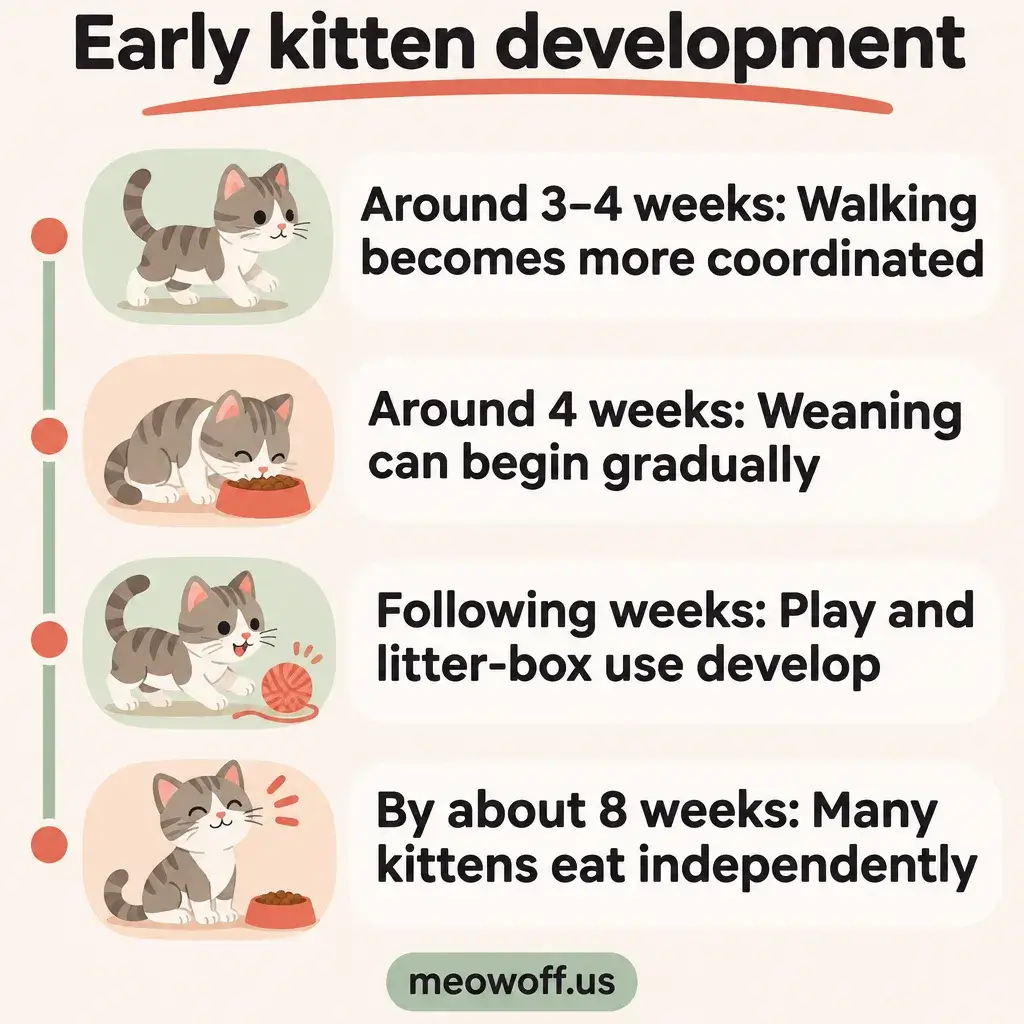
- Around 3–4 weeks: Walking becomes more coordinated, baby teeth begin to appear and kittens start exploring beyond the nest.
- Around 4 weeks: Weaning can begin gradually with a suitable wet kitten food; nursing usually continues while kittens learn to eat.
- Following weeks: Play, litter-box use and gentle exposure to ordinary household sounds help kittens practice skills and build confidence.
- By about 8 weeks: Many kittens are eating independently, though the timing of complete weaning varies.
Offer shallow dishes and a low-sided litter box, supervise exploration and introduce people and new experiences gently. If a kitten struggles to chew or swallow, has persistent diarrhea or is not gaining weight, contact your veterinarian promptly. Severe weakness, trouble breathing or collapse is an emergency.
We do not release kittens before they are developmentally ready. MeoWoff kittens go home at 12–16 weeks, after socialization and age-appropriate vaccines; they are microchipped, and their veterinary records are shared with the family. Our first week with a new kitten guide can help you prepare a quiet room, food and a consistent routine.
Juvenile Maine Coons: 3 to 6 months
A juvenile Maine Coon is usually curious, active and still developing coordination and confidence. At this age, legs and ears can seem oversized for the body, and a kitten’s eventual proportions are not yet obvious.
Play is practice, not proof of a future adult personality. Offer short, supervised sessions with a wand toy, sturdy climbing options and a place to rest; put strings and small detachable toy parts away afterward. Reward the behaviors you want, such as using a scratching post, instead of using hands as toys.
Permanent teeth replace baby teeth during these months, so mild chewing and a temporary preference for softer food can occur. Introduce a comb gently, focusing on short sessions and treats so grooming becomes familiar before the coat gets fuller.
Call your veterinarian if appetite stays poor, gums look painful, a kitten has difficulty eating or growth appears to stall. Seek emergency care for trouble breathing, collapse or suspected swallowing of string; do not pull string from the mouth or rear end.
A kitten’s inherited traits influence its eventual frame, but its parents’ size cannot guarantee its own. Ask about family health and screening as well as size: a large frame is not a substitute for sound movement or a healthy body condition.
The teenage phase: 6 to 12 months
The Maine Coon teenage phase generally falls around 6 to 12 months, when a kitten may look lanky, act energetic or become more independent while still having substantial development ahead. Behavior varies: some adolescents remain cuddly, while others are more interested in exploring.
A Maine Coon at 7 months may have long legs, a lean outline and a coat that still looks less full than an adult’s. That appearance alone does not mean the kitten is underfed or will become exceptionally large. Look for a comfortable, active kitten and ask your veterinarian to assess body condition alongside weight.
Keep a predictable routine, offer daily interactive play and use treats or praise to reward calm handling. Practice entering a carrier and being brushed in brief sessions. Discuss the timing of spaying or neutering with your veterinarian, taking your kitten’s health and circumstances into account.
Call your veterinarian about weight loss, limping or an appetite change that persists or worries you. A cat that cannot bear weight after an injury, has difficulty breathing or collapses needs urgent emergency care.
When do Maine Coons reach maturity?
Maine Coons commonly continue to fill out until around 3–5 years of age, although growth slows well before then and maturity varies between cats. A cat that looks nearly adult at one year can still gain muscle and develop a fuller coat.
For more on what changes after kittenhood, see when a Maine Coon is fully grown. Typical adult males often weigh about 13–18 pounds and females about 8–12 pounds, but healthy individuals can fall outside those ranges. Our discussion of Maine Coon male weight offers more context; a weight alone cannot tell you whether a cat is lean, muscular or overweight.
Maine Coon growth stages in pictures
Pictures of Maine Coon growth stages can show the change from a compact newborn to a long-legged juvenile, a lanky adolescent and a more filled-out adult. They are best used to compare proportions and coat development, not to determine whether your kitten has reached a required size.
For a useful family record, photograph your kitten from the side at regular intervals, in a similar standing position and against the same background. Label each image with the actual age and date. If sharing another person’s pictures, obtain permission and verify the ages rather than relying on captions alone.
A kitten’s coat may look soft and relatively short beside an adult’s, and the neck ruff can become more noticeable as the cat matures. Coat fullness also varies by individual and season, so an adolescent without a dramatic ruff is not necessarily behind.
The comparison of Maine Coon full size explains how genetics and care contribute to the adult picture. A photograph cannot assess muscle, body fat or health as reliably as an examination.
How to support healthy growth
Support healthy Maine Coon growth with complete and balanced kitten food, fresh water, safe play and regular veterinary care. The goal is a steady, healthy body condition, not maximum size.
Choose a food with a nutritional adequacy statement for growth or all life stages; a complete cat food supplies essential nutrients, including taurine. Wet food, dry food or a combination can work. Follow the package as a starting point, measure portions and ask your veterinarian to adjust the amount for your kitten’s condition and activity.
Do not add supplements or extra calories simply to make a kitten grow larger. Ask your veterinarian when to transition to an adult food; a Maine Coon may keep filling out after the point when its nutritional needs change. Keep fresh water available and make any food change gradually, watching for digestive upset.
Arrange an initial veterinary visit soon after your kitten comes home, bring its records and discuss the remaining vaccine and parasite-control schedule. Your veterinarian can check body condition, teeth and movement and recommend follow-up visits. Call if your kitten develops persistent vomiting, diarrhea, poor appetite or low energy; repeated vomiting with weakness, collapse or difficulty breathing warrants emergency care.
Provide stable climbing furniture, scratching surfaces and daily play without forcing strenuous exercise. Brush regularly and check areas prone to tangles, such as behind the ears and under the legs. If mats are tight against the skin or your cat objects in pain, contact your veterinarian or a qualified groomer rather than cutting close to the skin with scissors.
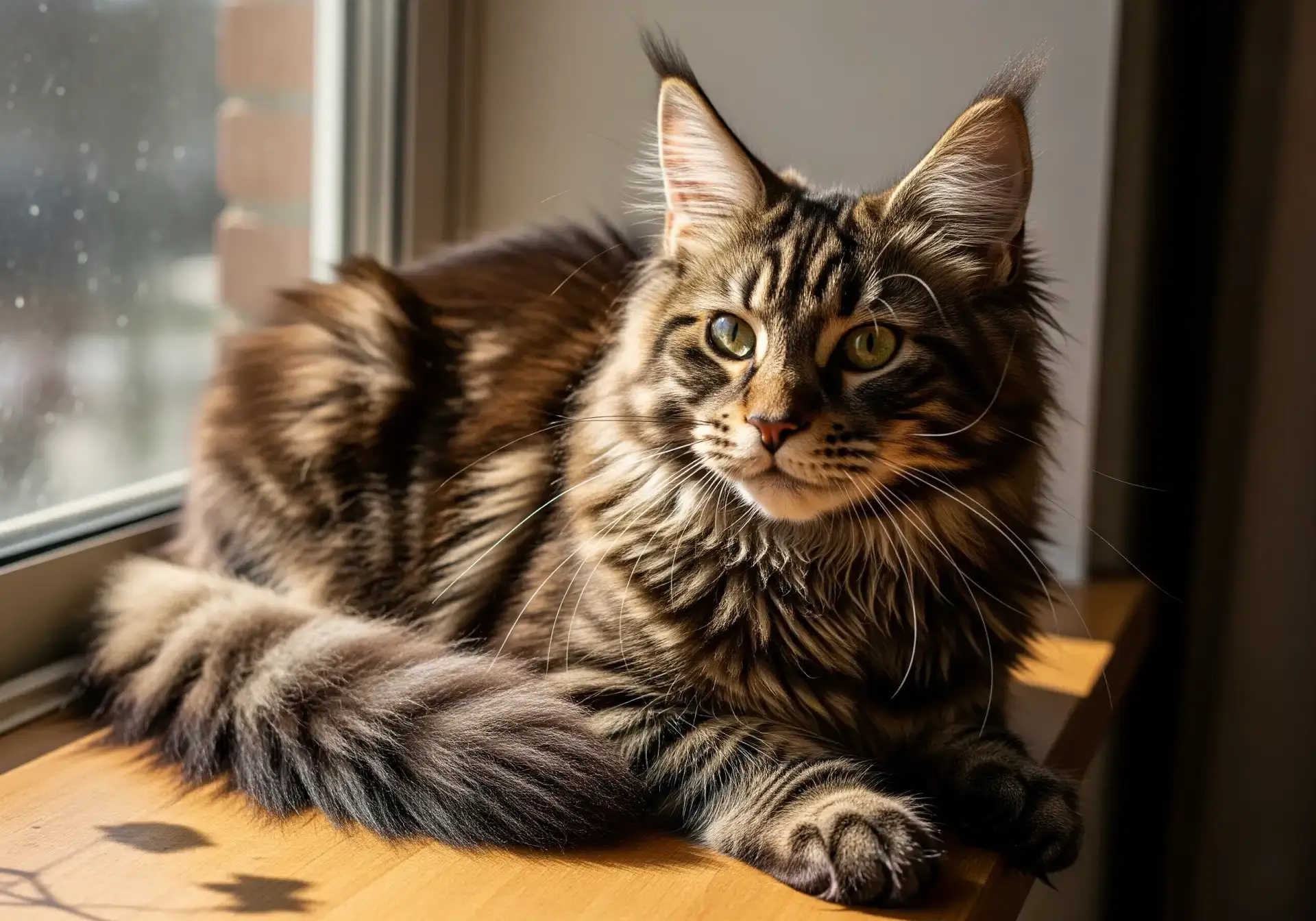
Families exploring Maine Coon cat breeders in Maryland can also ask how records and delivery are arranged. MeoWoff offers pickup by appointment in Wood Dale, Illinois, ground delivery from $600 and flight nanny delivery from $1,000.
How fast do Maine Coon kittens grow?
Maine Coon kittens grow fastest early in life, with the pace generally slowing as they get older. Their individual trend matters more than hitting a fixed monthly target, and kittens of the same age can differ considerably.
For examples of factors behind the Maine Coon cat growth rate, consider sex, inherited frame, nutrition and health together. A larger number on the scale is not automatically better: your veterinarian can judge whether your kitten is growing appropriately for its build.
How to track growth and spot concerns
Track growth by recording weights consistently and sharing the trend with your veterinarian, especially if growth stalls, weight drops or digestive changes persist. A Maine Coon size chart can help organize the information, but it cannot diagnose a problem.
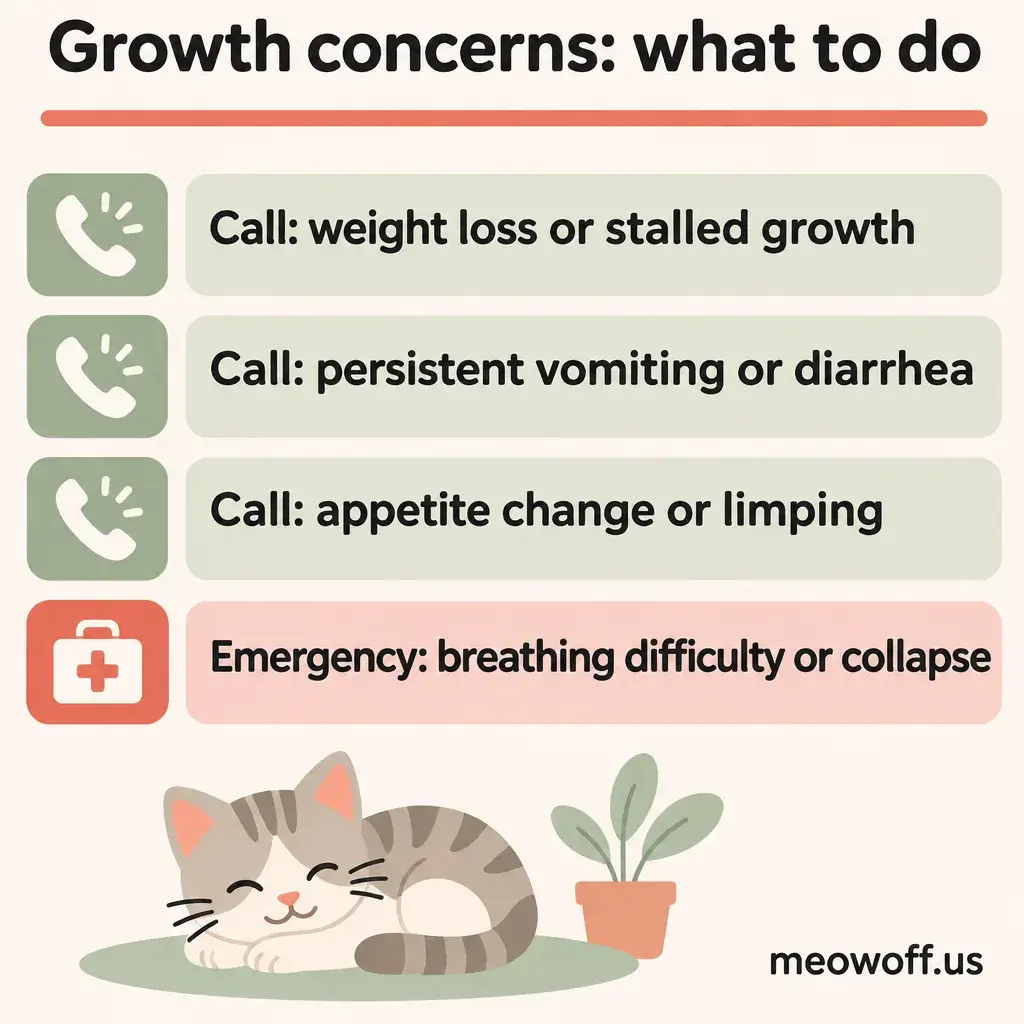
For a young kitten, use a suitable digital scale and record the date and weight weekly; newborns need daily weights. For a larger cat, weigh yourself holding the cat, then weigh yourself alone and subtract the second number. Use the same scale and similar conditions each time, and note appetite, activity and any symptoms.
Call your veterinarian for persistent vomiting or diarrhea, a change in appetite, weight loss, stalled growth or limping. Hip dysplasia is one possible cause of mobility trouble in Maine Coons, but an examination is needed to identify the cause. Hypertrophic cardiomyopathy is a heart condition that can occur in the breed; breathing difficulty or collapse is an emergency, whatever the cause, so go to an emergency veterinarian immediately.
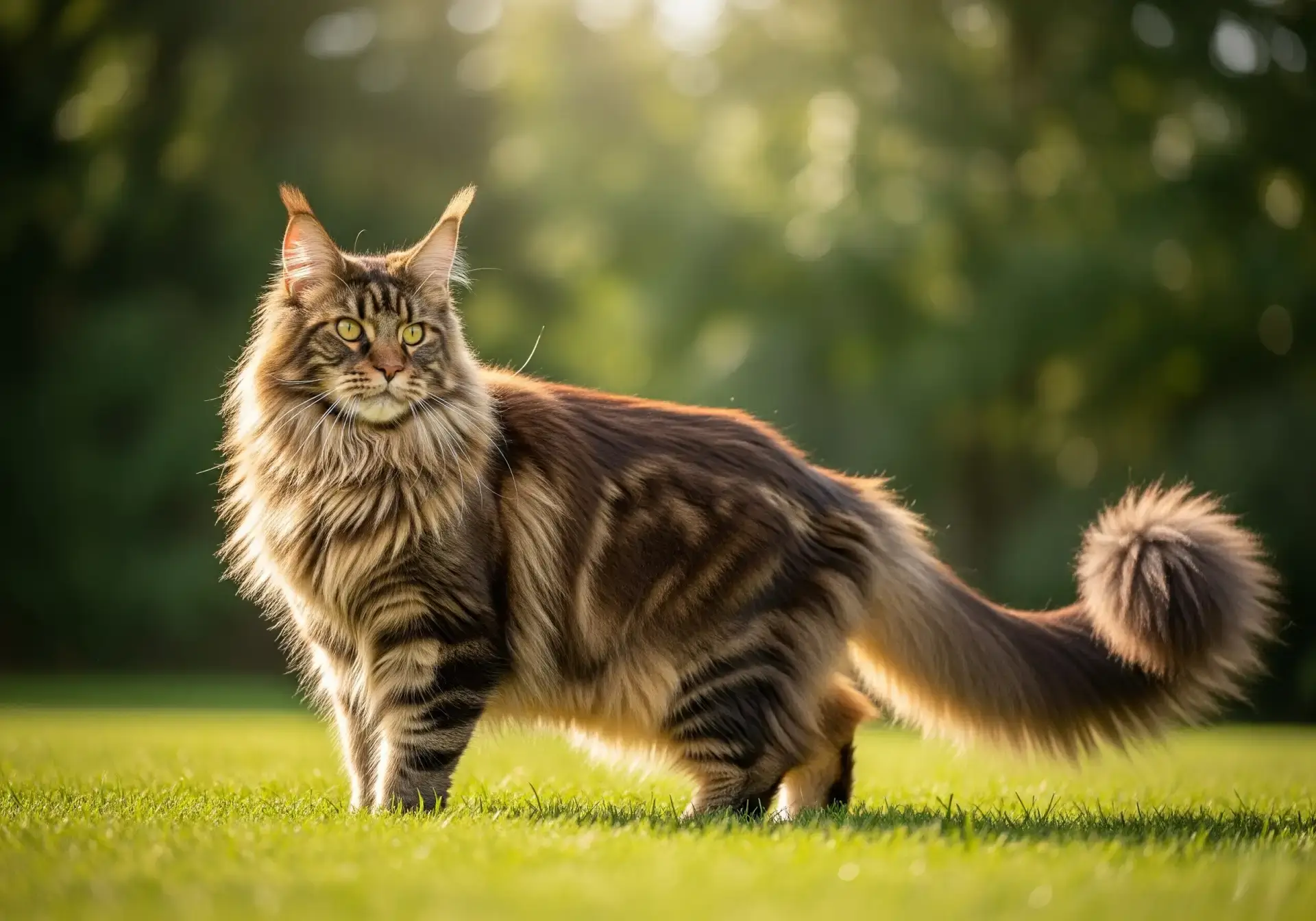
Questions about Maine Coon growth stages? Talk to MeoWoff
We can help you discuss a kitten’s development, prepare for its arrival and plan for the first weeks at home. Our Wood Dale showroom welcomes visits by appointment.
Call (773) 917-0073 or send us a message to talk with our team.