
Best cat tower for a Maine Coon
Best cat tower for a Maine Coon: choose a stable, properly rated tree with roomy beds and accessible levels. No single model fits every cat, so compare your cat’s measurements with the actual usable spaces and weight limits before buying.
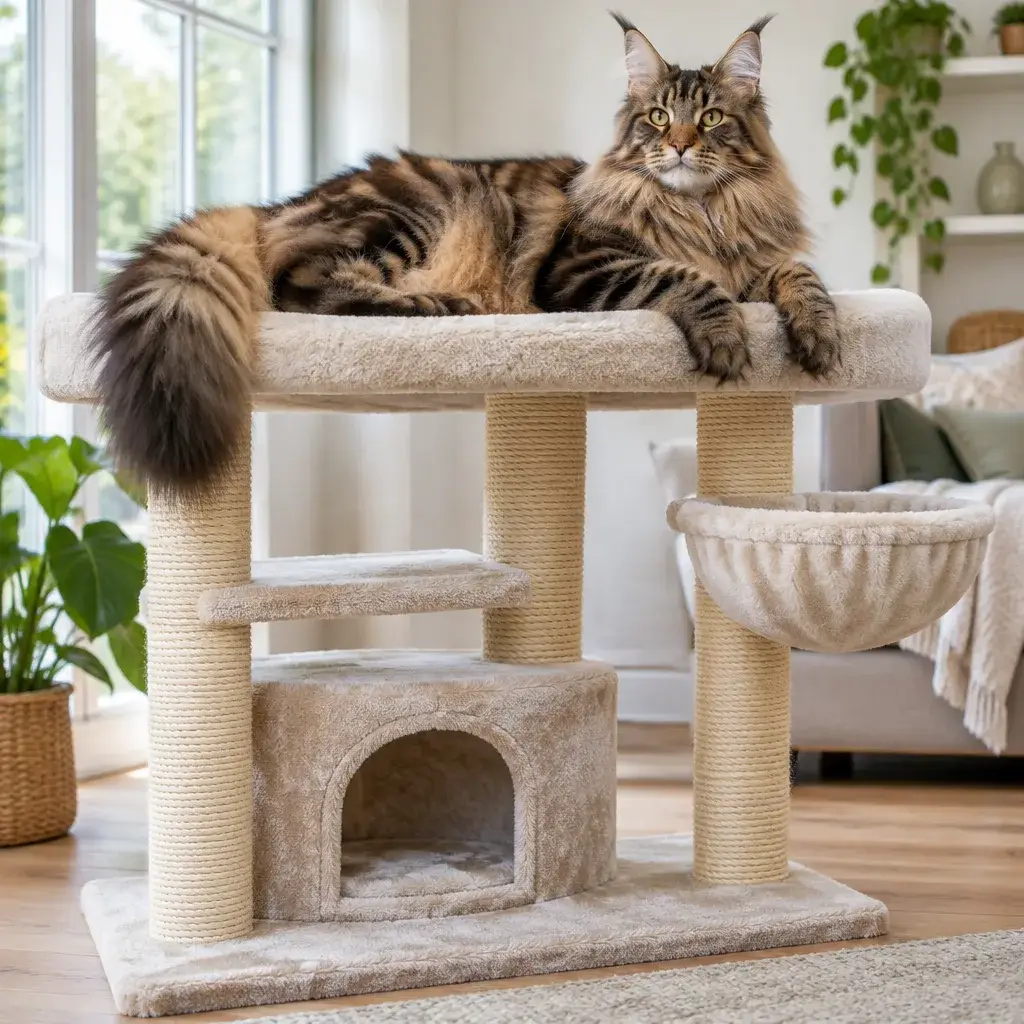
My priority is a tree that stays secure when a large cat climbs, turns and jumps down, not simply the tallest one in the room. If you are preparing for a Maine Coon kitten for sale, choose a design the kitten can navigate now and that will still fit as the cat grows.
Start with a wide, well-supported base, a comfortable perch and a scratching surface that lets your cat stretch. Check the limits for each bed or hammock as well as the tree as a whole, and follow the manufacturer’s anchoring instructions.
Why large cats need a sturdy cat tree
Large cats need a sturdy cat tree because their weight and movement put force on the base, joints and individual perches. A tall, narrow tree can be pulled off balance when a cat launches from one side, even if it feels steady when untouched.
Maine Coons are large cats, but a 38-pound male is not a representative sizing target for the breed. Adult males commonly weigh about 13–18 pounds and females about 8–12 pounds, although individual cats can fall outside those ranges.
A cramped perch can also make it hard for a cat to settle or turn around. A lower tree with generous platforms and sound supports may be a better purchase than a taller one labeled XXL. Measure your own cat and the furniture rather than relying on a size label.

How to choose the right cat tree
Choose the right cat tree for your Maine Coon by measuring your cat, your available space and the parts of the tree your cat will actually use. Then compare those measurements with the manufacturer’s limits for the whole structure and each component.
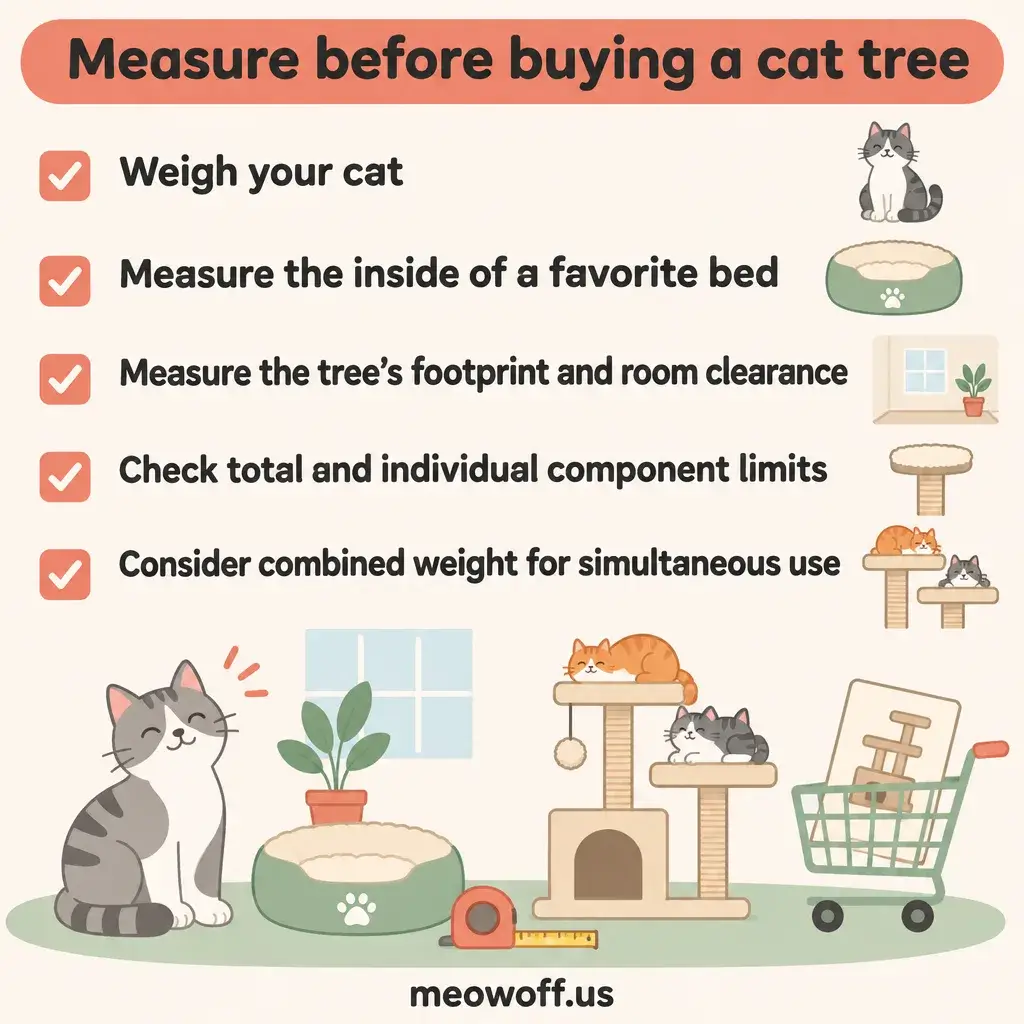
- Weigh your cat. Use a pet scale, or weigh yourself while holding your cat and subtract your own weight. Allow for a growing kitten when comparing limits; ask your veterinarian about a healthy weight rather than assuming a heavier cat is better.
- Measure a favorite bed. Note the usable inside length and width where your cat curls up or stretches out. Compare those dimensions with the inside of the proposed perch, not just its outside edge.
- Measure the room. Check the tree’s full base footprint and height, plus room around it for climbing and cleaning. Leave clearance from shelves, windows and furniture so a cat can land without hitting an obstacle.
- Check each load limit. Look for the total tree rating and separate ratings for platforms, beds and hammocks. A high overall rating does not tell you what a single hanging bed can hold.
- Plan for simultaneous use. In a multi-cat home, consider the cats’ combined weight when they are on the tree together and whether a shared platform is rated for both. Provide separate resting places so one cat does not have to crowd another.
For example, if two cats weigh 14 and 16 pounds, their combined weight is 30 pounds before allowing for movement. Check whether the manufacturer permits that simultaneous load on the tree and on any component they might share; do not assume a total rating applies to every perch.
For a kitten, repeat your fit checks as the cat grows. A bed that is generous at four months may become cramped, and a tree that fits an adult should still have steps low enough for a young cat to use comfortably.
Key features to look for
The key features in a cat tree for large cats are stability, secure connections, usable resting areas and scratching surfaces that stay attached. Construction and balance matter more than a particular post diameter or a label that says heavy-duty.
- Base: Look for a broad, substantial base relative to the tree’s height and layout. Check whether the design requires wall anchoring, and use the specified method.
- Joints and posts: Platforms and post connections should fit firmly without visible splitting or persistent wobble. Ask what the post cores are made of and how replacement parts attach.
- Scratching surface: Secure sisal or another durable scratching material should give your cat enough height to stretch. No single post diameter guarantees stability or makes a scratching post the best choice.
- Finish: Choose surfaces that can be cleaned and have no exposed sharp edges, loose staples or dangling material your cat could swallow.
Solid wood and engineered wood can both be used in cat furniture; the quality of the complete design and assembly matters. Before ordering, read the instructions and reviews for the exact model, especially if the base is narrow or heavy beds project far to one side.
Inspect beds, hammocks and platform supports
Inspect beds, hammocks and platform supports by checking the space inside them, the way they attach and the weight limit for each piece. A large-looking rim or deep cushion can make the usable sleeping area smaller than the advertised outside dimensions.
For a cave or enclosed bed, measure the entrance as well as the floor space: your cat should be able to enter, turn around and leave without squeezing. For a hammock, check the fabric, stitching and support frame, including where it connects to the posts. A sagging hammock may leave less room than a flat measurement suggests.
Compare the perch with your cat’s favorite sleeping position. A 24-by-17-inch lounge may suit one Maine Coon but is not guaranteed to fit every cat, particularly if raised sides reduce the usable area. Ask the seller for interior measurements, component ratings and replacement options if a listing does not provide them.

Choose a practical route between levels
Choose a practical route between levels by tracing how your cat can climb up and come down, with enough landing space at each step. Platforms should not require a kitten or less agile cat to make a long, awkward leap or twist around an obstruction.
Lower steps, broad platforms or a secure ramp can make a tree easier to use. Place the lowest level where the cat can reach it without using unstable furniture as a launching point. Watch the first few climbs and descents, and adjust the setup if your cat hesitates or seems trapped on a high perch.
Call your veterinarian if your cat develops new stiffness, limping or reluctance to jump, even if a lower tree seems to help. If your cat cannot stand or walk, has severe pain, or has a serious fall or injury, seek emergency veterinary care. Do not give human pain medicine.
Compare tower types and shopping options
Freestanding, wall-mounted and compact trees can all work for a Maine Coon if their actual dimensions, supports and ratings fit the cat. The best type depends on your floor space, installation options and the route your cat will use.
| Type | Good fit | Installation and trade-offs |
|---|---|---|
| Freestanding multi-level tree | Homes with floor space for a broad base and several roomy resting spots | Check balance and required anchoring; larger bases take up more room. |
| Wall-mounted shelves or tower | Rooms where floor space is limited and a safe climbing route can be planned | Install into suitable wall structure with the specified hardware; wall material and rental restrictions may limit placement. |
| Compact or corner unit | Smaller rooms and cats that prefer a simpler setup | Measure the base and beds carefully; a small footprint must not compromise stability or sleeping space. |
For wall-mounted designs, follow the manufacturer’s instructions for your wall construction and load. If you cannot confirm a secure installation, choose another design or have a qualified installer assess the wall. Check the route down as carefully as the route up.
When shopping, compare current listings from New Cat Condos, Prestige Cat Trees and Cat Tree King by the same criteria: usable bed dimensions, base footprint, total and component ratings, materials, anchoring and replacement parts. Each offers different designs, so a brand name alone cannot establish whether a particular model fits your cat.
Compare the delivered price, assembly requirements, return window and return shipping costs before ordering. If a seller cannot explain a missing hammock limit or the required wall fixings, ask before purchasing rather than guessing.

What do Reddit owners recommend?
Reddit owners’ recommendations can help you find models to investigate, but a favorable comment is not proof that a tree will fit or remain stable for your cat. Look for reports that identify the exact model and describe similarly sized cats using it over time.
Useful posts mention whether the base wobbled, whether beds stayed roomy and whether sisal or hardware needed replacement. Photos can help you judge layout, but they cannot confirm a platform’s load limit or the quality of an installation.
Once a model interests you, check the current listing and assembly instructions yourself. Confirm measurements, individual limits, replacement availability and return terms; a model may change even when its name remains familiar.
Make maintenance part of the comparison
Make maintenance part of the comparison by choosing a tree you can inspect, clean and repair without replacing the whole structure. Replaceable scratching posts, available hardware and removable washable covers can make a difference over the life of the tree.
Follow the assembly and anchoring instructions from the start, and keep them with the hardware information. Put the tree where you can reach the back and underside, not so tightly against furniture that you cannot see loose fittings or clean up shed fur.
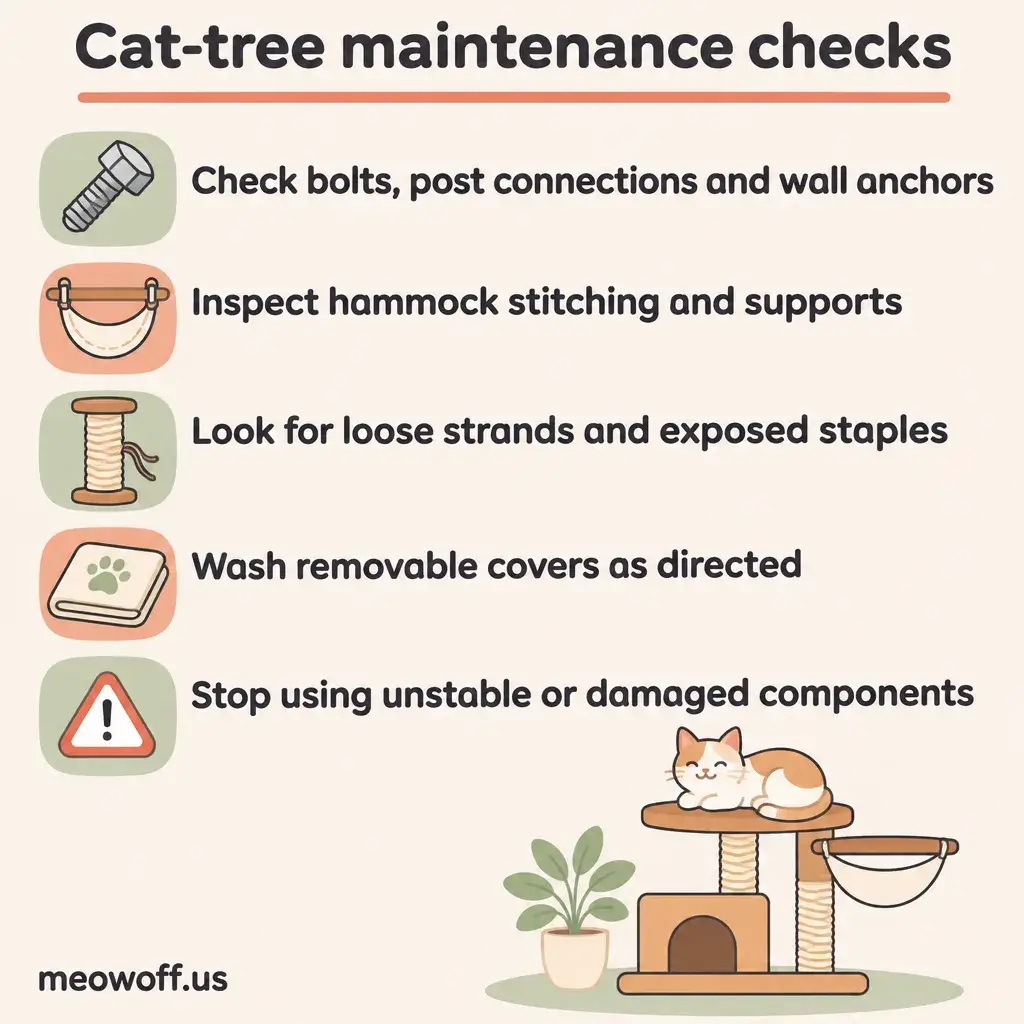
- Regularly check bolts, post connections and wall anchors for looseness or movement, following the manufacturer’s maintenance instructions.
- Look under beds and hammocks for worn stitching, cracked supports or fittings pulling away from the frame.
- Check sisal, carpet and toys for loose strands, exposed staples or pieces that could catch a claw or be swallowed.
- Vacuum fur and debris, and wash removable covers according to their care labels. Let them dry fully before replacing them.
- Stop using an unstable or damaged component until it is properly repaired or replaced. Keep cats away from a tree that could tip.
If your cat swallows string or part of a toy, call your veterinarian promptly, even if the cat initially looks normal. Repeated vomiting, a swollen or painful abdomen, collapse, or difficulty breathing warrants emergency care; do not pull on string visible from the mouth or rear.
A new kitten may need time to explore the tree without pressure. Our kitten care first week guide can help you prepare the wider home environment while your kitten settles in.
Sources and further reading
For further reading, use established feline-care guidance for scratching, environmental enrichment and changes in mobility, alongside the manufacturer’s instructions for the exact tower you are considering. Cornell Feline Health Center and the American Association of Feline Practitioners are useful places to look for general cat-care information.
For a purchase decision, request the current model-specific assembly, capacity and cleaning instructions from the seller or manufacturer. They are more useful for judging an individual hammock or wall fitting than a general claim that a tree is suitable for large cats.
Families considering Maine Coon kittens in New Hampshire can also plan a stable climbing and resting area before their kitten arrives. At MeoWoff, kittens go home at 12–16 weeks, after socialization and age-appropriate vaccines, with a microchip and veterinary records shared with the family.
Questions about Maine Coon cat towers? Talk to MeoWoff
We can help you prepare for a Maine Coon kitten’s arrival and offer guidance for the first 48 hours and first weeks at home.
Call (773) 917-0073 or send us a message to talk with our team.