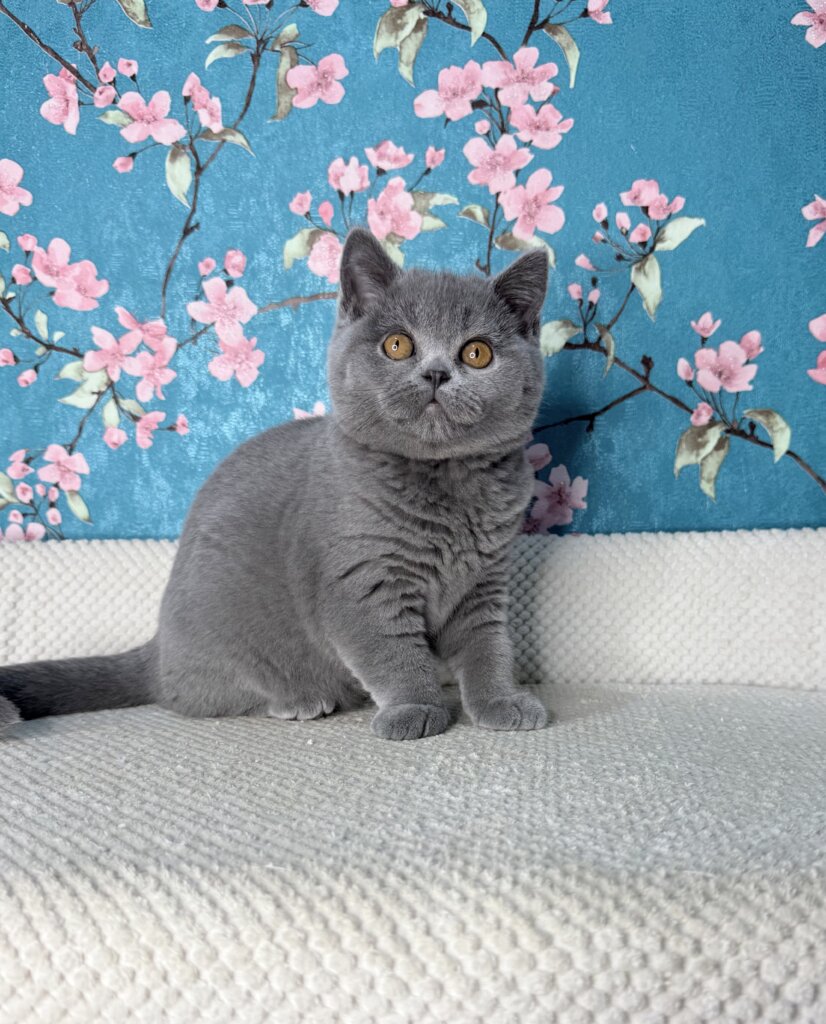

Savannah cat vs Maine Coon comparisons often come down to height versus substance: Savannahs often look taller and leggier, while Maine Coons are usually stockier. Neither breed is invariably bigger, and the right choice depends on the individual cat, your household and the care you can provide.
Savannah cat vs Maine Coon at a glance
A Savannah is generally a long-legged, short-coated cat with serval ancestry; a Maine Coon is a substantial domestic cat with a shaggy coat. Both can be playful companions, but their appearance does not tell you everything about their temperament.
| Feature | Savannah cat | Maine Coon |
|---|---|---|
| Build | Tall-looking, lean and long-legged | Muscular, broad and substantial |
| Coat | Short; spotted pattern is characteristic | Long, shaggy; many colors and patterns |
| Activity | Often very active and curious | Often playful and sociable |
| Grooming | Usually weekly brushing | More frequent combing to prevent mats |
| Ownership | Rules may depend on location and generation | Check ordinary local pet rules |
If you are comparing budgets, explore the Maine Coon cat price alongside the kitten’s health information and the services included. A purchase price alone does not tell you what lifelong care will cost.
Understanding the parent breeds
The Savannah cat was developed from crosses between the African serval, a wild feline, and domestic cats. An F1 Savannah cat is a first-generation cross with a serval parent; later filial generations are further removed from that ancestor.
For example, an F2 has a serval grandparent, while an F3 has a serval great-grandparent. Generation describes ancestry, not a guaranteed adult weight or personality. Ask for documented parentage rather than relying on an advertisement’s generation label.
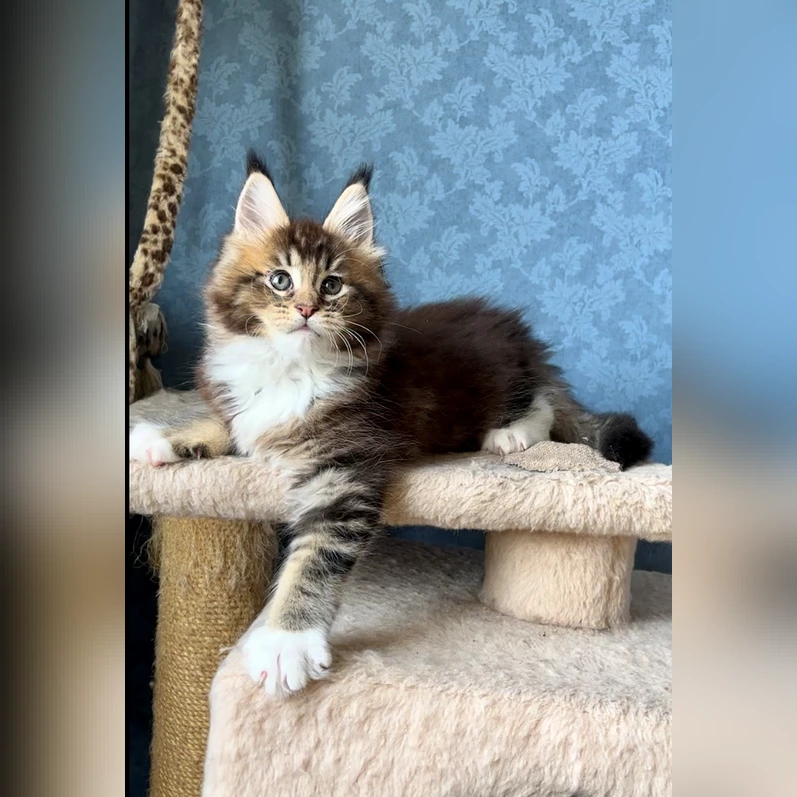
The Maine Coon, by contrast, is a domestic breed associated with New England and developed without the Savannah’s recent serval ancestry. For more about the Maine Coon foundation, see its history and characteristics.
TICA recognizes both Savannahs and Maine Coons as breeds; CFA recognizes the Maine Coon but not the Savannah. Breed recognition, registration and pedigree documentation are separate from a veterinarian’s assessment of an individual kitten’s health.
Is a Savannah cat bigger than a Maine Coon?
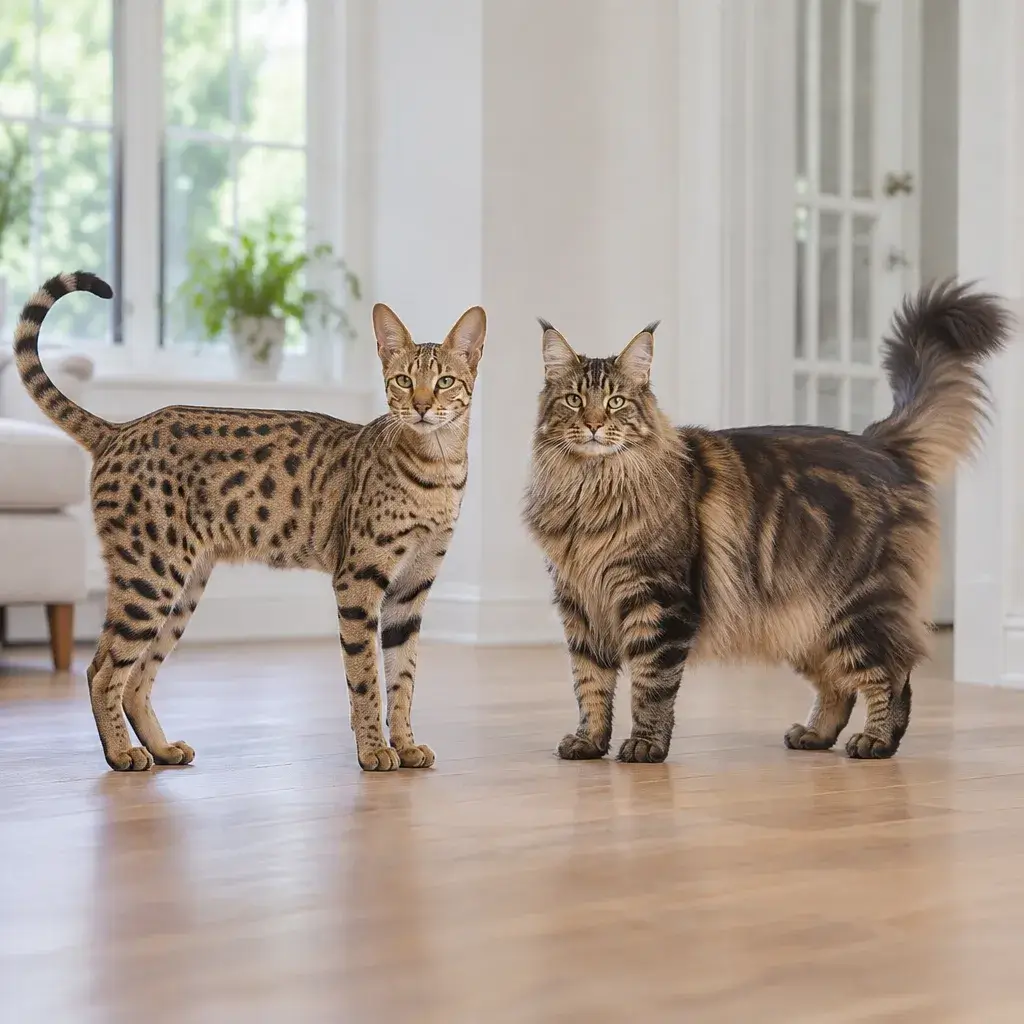
A Savannah can be taller than a Maine Coon, but it is not necessarily heavier. The Maine Coon’s broader body and heavier coat can make it look more substantial, while the Savannah’s legs give it a taller silhouette.
Maine Coon males commonly weigh about 13–18 pounds or more, and females about 9–13 pounds or more; some healthy individuals are larger. Savannahs vary considerably, with many adults weighing roughly 12–25 pounds, depending on sex, ancestry and the individual.
Early-generation Savannahs can be especially large, but an F1 label does not guarantee that a particular cat will outweigh every later-generation cat or Maine Coon. Neither breed should be overfed to reach an impressive number: body condition matters more than a target weight.
For a growing kitten, compare its progress with its own veterinary records rather than an adult cat’s weight. Our guide to Maine Coon female weight also explains how growth varies with age and sex.
When measuring space for either breed, consider the whole cat, including the tail, and leave room to turn around comfortably in carriers, litter boxes and sleeping spots. Choose sturdy furniture that will not tip when a large cat climbs or lands on it.

What do their coats and bodies look like?
Savannahs have long legs, large ears and a short coat, while Maine Coons have muscular bodies, shaggy coats and full, bushy tails. Both may have prominent ears, but their outlines are quite different when seen side by side.
Savannah: The characteristic pattern is dark spots on a contrasting background. TICA’s standard colors include brown spotted tabby, silver spotted tabby, black and black smoke; marbling is not the characteristic standard pattern.
Maine Coon: The coat is longer and often fuller around the neck, belly and tail. Common appearances include brown tabby, silver tabby, solid colors and tortoiseshell, with or without white; ear furnishings and toe tufts add to the shaggy look.
Photographs can help you compare outlines, but lighting, coat condition and a kitten’s age can change how each cat appears. Color alone is never a substitute for pedigree records or a health assessment.
Can a Maine Coon and Savannah cat have a mix?
Yes. A Maine Coon and a Savannah can produce offspring, but a Maine Coon x Savannah cross is not a recognized purebred breed. Registration options for an individual mixed cat are a separate question from recognition as a purebred breed.
A listing for a rare Maine Coon Savannah cat hybrid may describe an uncommon cross, but “rare” does not establish quality, parentage or health. A spotted coat, big ears or long fur alone cannot prove which cats produced a kitten.
Ask to see the parents’ identity and pedigree information, the kitten’s veterinary records and any relevant screening results. If the seller cannot document the claimed ancestry, treat the description as unverified and decide whether you are comfortable proceeding.
Mix size, physical traits and coat colors
A Savannah Maine Coon mix’s size and appearance can vary widely, even among kittens from the same litter. Adult size may overlap either parent breed’s range, but there is no dependable fixed weight range or guarantee of an exceptionally large cat.
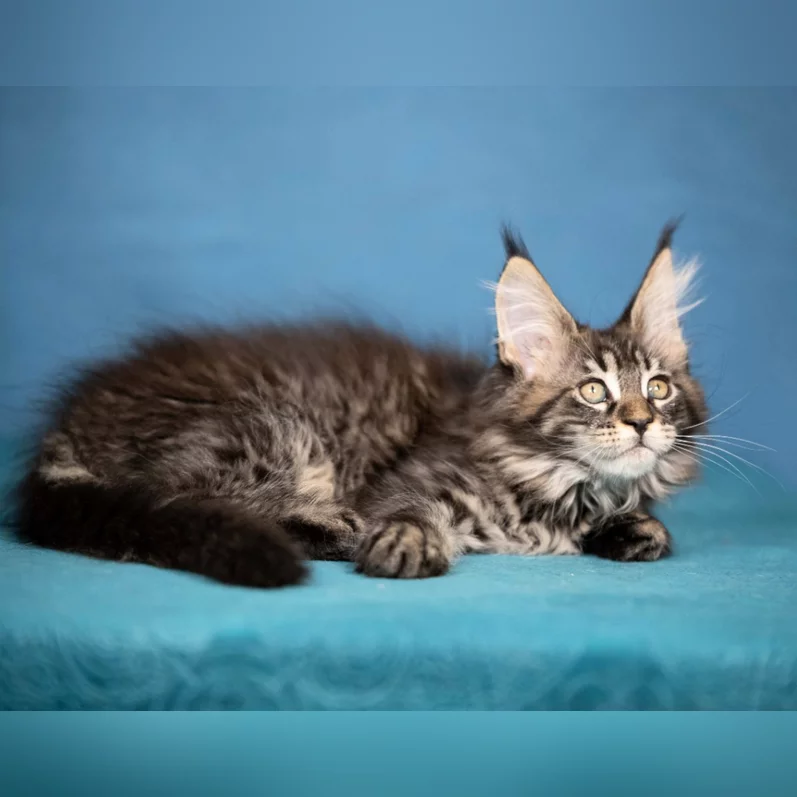
The physical characteristics of a Savannah cat Maine Coon mix may include a leaner or stockier build, large ears, and a short, medium or long coat. A long, spotted coat is possible, not guaranteed; tabby, solid, silver and other colors or patterns may also appear depending on the parents’ genetics.
For size and weight expectations, ask about both parents’ adult condition and growth, then follow your kitten’s individual development with your veterinarian. Parent size gives context, not a promise. A kitten’s nutritional needs and body condition are more useful guides than a seller’s projected adult weight.
How do personality and daily life compare?
Both breeds can be social and playful, although Savannahs often need especially active enrichment. Individual personality, early experiences and the home environment matter more than a simple breed label.
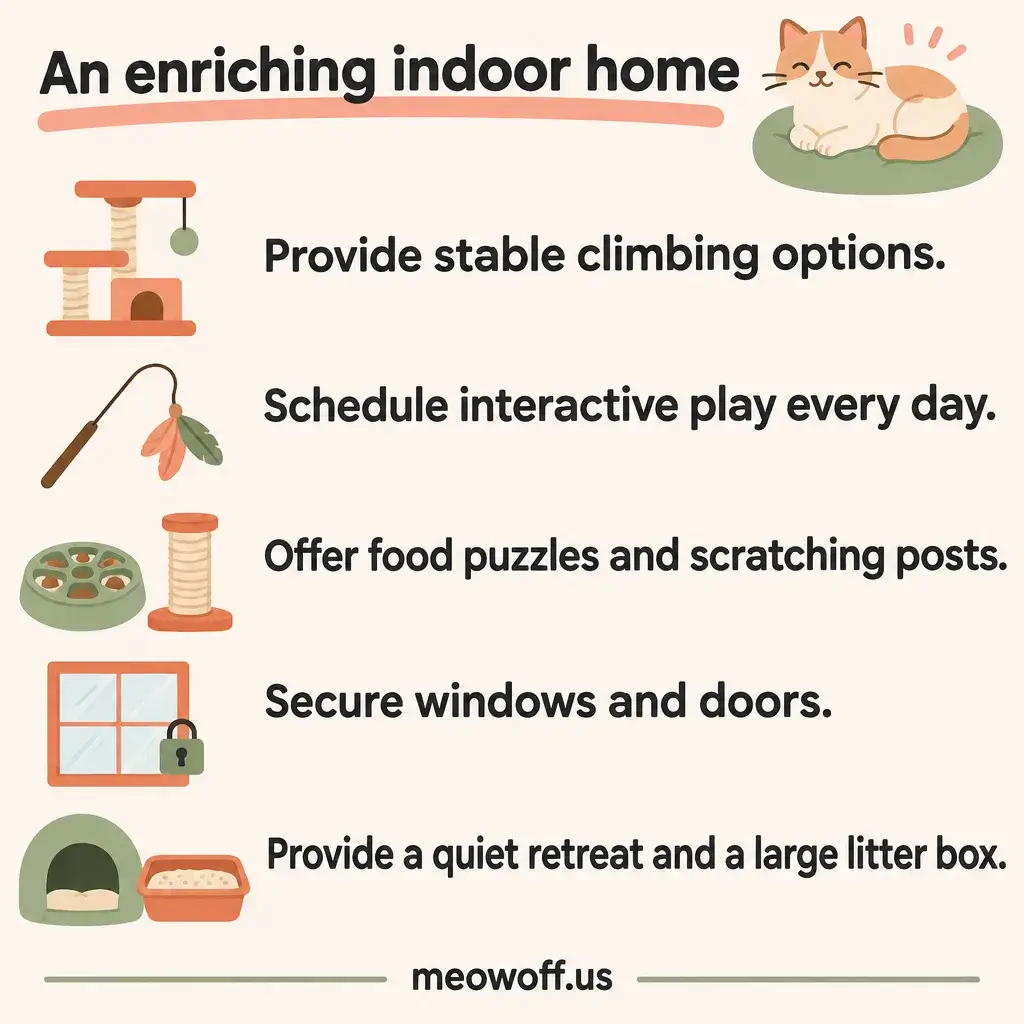
A Savannah can live as a house cat, including in an apartment, if the home is secure and the owner can provide suitable play, climbing space and attention. The same applies to a Maine Coon: floor area alone does not replace interaction, scratching surfaces and places to rest.
- Provide stable cat trees, shelves or other safe climbing options appropriate to the cat’s size.
- Schedule interactive play every day and rotate toys; let the cat catch a physical toy at the end of a chase.
- Use food puzzles, scratching posts and short reward-based training sessions to offer variety.
- Secure windows and doors, and introduce a harness indoors gradually if you plan supervised outdoor walks.
- Offer a quiet retreat, a large litter box and predictable feeding and rest areas.
Not every Savannah enjoys water or walks, and not every Maine Coon wants to sit on a lap. Ask how an individual kitten responds to handling, visitors and play instead of assuming a particular behavior from its pedigree.
Introduce resident cats or dogs gradually, beginning with separate spaces and scent exchanges before supervised meetings. Keep birds, rodents and other small animals securely separated; even a well-socialized cat can chase them. Teach children to let the cat approach and to avoid grabbing or cornering it.
Call your veterinarian if behavior changes suddenly, especially if a cat hides, avoids the litter box or becomes unusually irritable, because discomfort or illness may be involved. If the cat is straining to urinate without producing urine, struggling to breathe or collapses, seek emergency veterinary care immediately.
Who would win in a fight?
There is no predictable winner in a Maine Coon vs Savannah cat fight, and cats should never be made to fight. Size, confidence and individual circumstances vary, and either cat can suffer serious injuries.
If cats are fighting, do not put your hands between them. Use a barrier such as a large piece of cardboard to block their view and separate them into different rooms when safe, then give them time to settle.
Call your veterinarian promptly about bites, scratches, limping or persistent conflict; small punctures can become infected even when they look minor. Severe bleeding, breathing difficulty, collapse or inability to stand warrants emergency care. A veterinarian can check for pain and help you plan safer reintroductions or refer you for behavior support.
Health and grooming differences
Both breeds need preventive veterinary care, but Maine Coons generally need more coat maintenance. A mixed kitten can inherit health risks from either parent, so ask about both family lines rather than assuming a cross is automatically healthier.
Maine Coons can develop hypertrophic cardiomyopathy, a heart muscle disease. Ask about heart screening and any available genetic testing in the parents; a normal result or a negative genetic test does not guarantee that a cat will never develop heart disease. Learn more about Maine Coon health issues.
Call your veterinarian if you notice reduced appetite, unusual tiredness, coughing or a change in normal activity. Open-mouth breathing, labored breathing, collapse or sudden painful weakness or paralysis of the hind legs is an emergency: seek immediate veterinary care rather than waiting for an appointment.
Comb a Maine Coon several times a week, paying attention behind the ears, under the front legs and around the hindquarters, where tangles can form. A Savannah’s short coat usually needs a weekly brush; both benefit from regular nail checks and a veterinarian-guided dental-care routine.
Call your veterinarian about persistent scratching, inflamed skin, painful mats or a sudden change in grooming. Do not cut a tight mat close to the skin with scissors; ask a veterinarian or experienced groomer for help. Severe distress, uncontrolled bleeding or breathing difficulty requires emergency care.
Feed either cat a complete and balanced food labeled for its life stage, with fresh water always available. Kittens need food formulated for growth; ask your veterinarian about portions and feeding frequency. Raw meat is not necessary and can expose cats and people to harmful germs.
Price, restrictions and buying a kitten
Pedigree Maine Coon kittens commonly cost around $2,000–$6,000 in the United States, while Savannah prices can range from roughly $1,500 to $20,000 or more, particularly for early generations. A Maine Coon–Savannah mix has no dependable standard price; listings vary with the claimed parentage, location and seller.
At MeoWoff, typical kitten prices are $2,100–$5,800 depending on breed, pedigree and quality. A $500 deposit reserves a kitten and is part of its price. Optional heart ultrasound and genetic testing are $200 each; ask what is appropriate for the individual kitten and what the results can and cannot tell you.
Pickup is available in Wood Dale, Illinois; ground delivery starts at $600 and flight nanny delivery at $1,000. Budget separately for food, litter, routine veterinary visits, parasite prevention, supplies and unexpected care. Fees and medical needs vary by location and individual, so ask your local veterinary clinic for estimates.
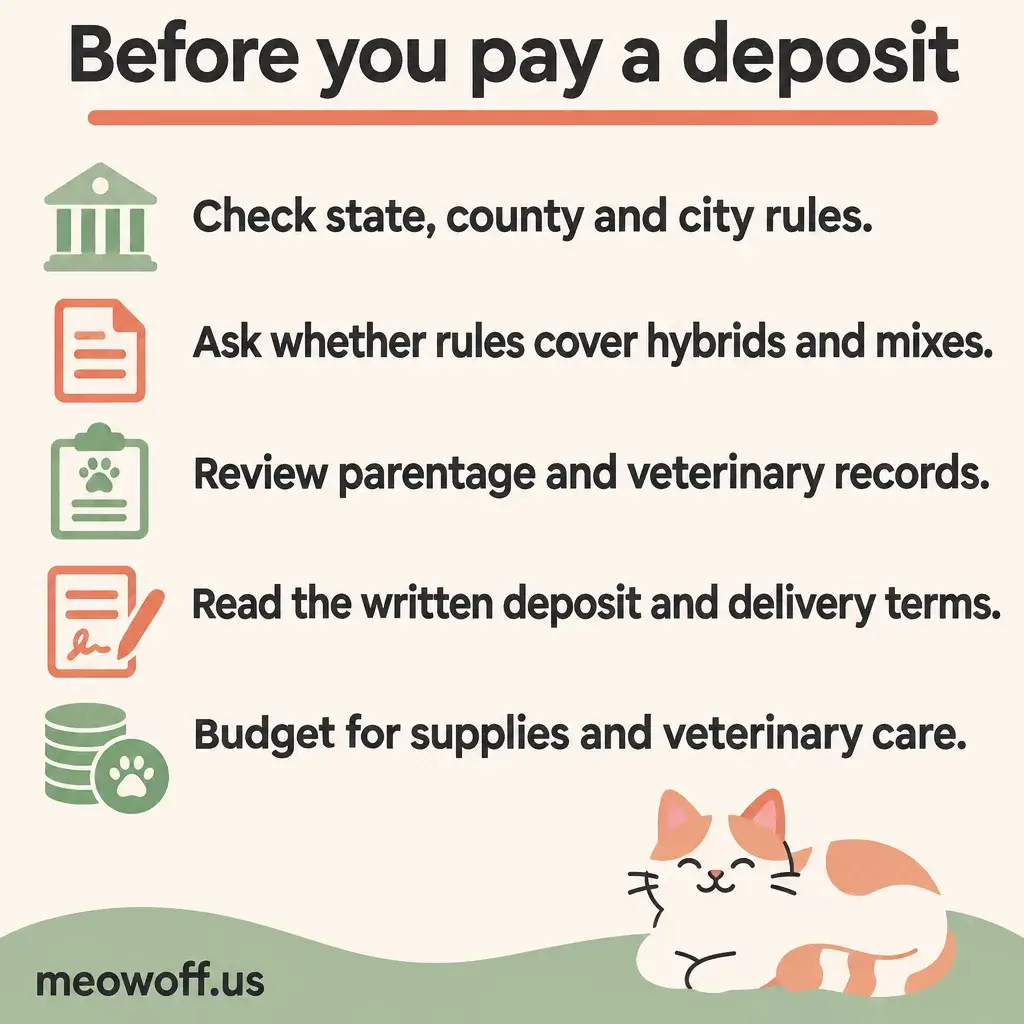
Before paying a deposit for a Savannah or a mix, check current state, county and city rules where the cat will live. Restrictions may depend on generation or apply to hybrids and mixes; some places require permits or prohibit certain cats. Ask the relevant animal-control or wildlife authority directly, and also check lease, homeowners association and insurance requirements.
Ask the seller for a written agreement explaining the deposit, total cost, records and pickup or delivery arrangements. Review documented parentage, screening and the kitten’s socialization, not just coat color. Our explanation of Maine Coon pedigree describes why lineage can affect price.
We put health, genetics and temperament before looks and do not chase rare colors. MeoWoff kittens go home at 12–16 weeks, after socialization and age-appropriate vaccines; they are microchipped, and their veterinary records are shared with the family.
Which cat fits your household?
A Maine Coon may suit someone who enjoys a substantial, playful companion and is willing to maintain a long coat; a Savannah may suit someone prepared for a frequently energetic cat and careful ownership checks. Neither description guarantees how an individual kitten will behave.
Before choosing, consider who will play and groom the cat, whether existing pets have safe separate spaces, and how you will provide care during travel or long workdays. Meet or discuss the individual kitten with its breeder, and ask how it responds to handling and everyday household activity.
Plan a quiet starter room with food, water, a litter box, a bed and hiding space. Our first week with a new kitten guide can help you prepare the transition. For families considering a Maine Coon in North Dakota, confirm travel arrangements and local requirements before committing.
For more background on the breed’s appearance and everyday needs, read these Maine Coon cat facts. My advice is to choose the cat whose temperament and care needs match your household, rather than the one expected to grow biggest.
Questions about Savannah cats and Maine Coons? Talk to MeoWoff
We can help you discuss an individual kitten’s temperament and prepare for the first weeks at home. Visits to our Wood Dale showroom are by appointment.
Call (773) 917-0073 or send us a message to talk with our team.