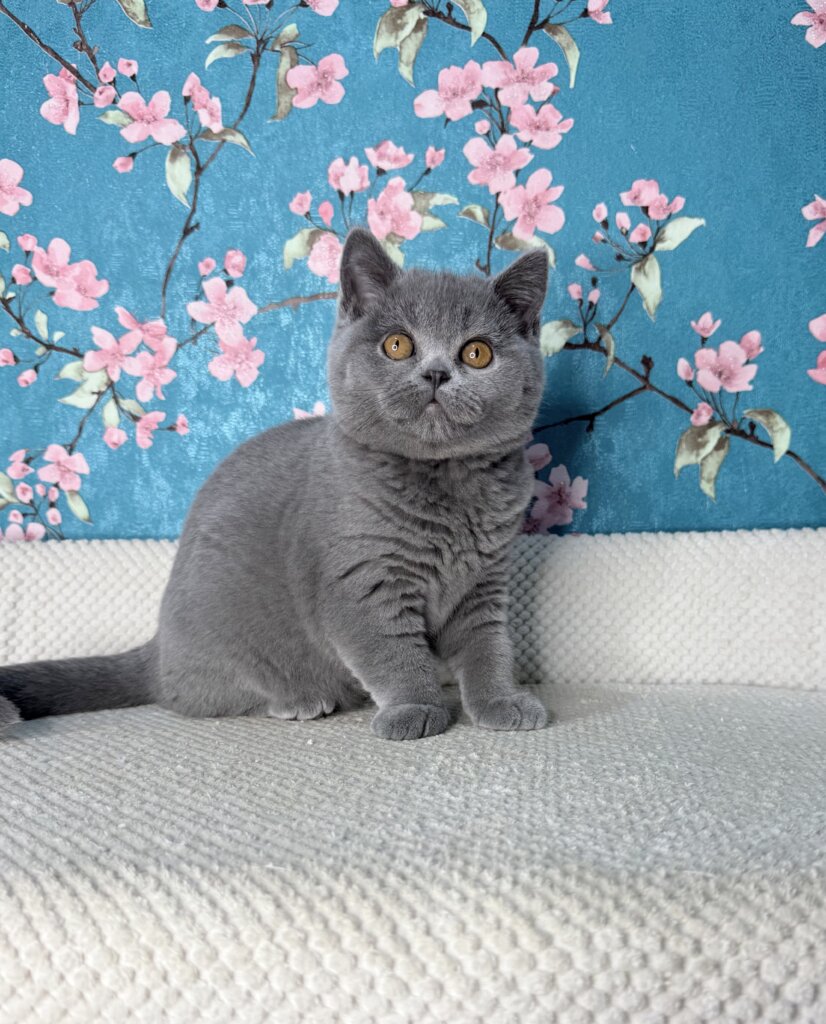

Maine Coon eye color can be green, gold, green-gold, yellow or copper; blue eyes and two differently colored eyes are also possible. Green and gold are common, while an individual kitten’s adult shade can take time to develop.
What colors can Maine Coon eyes be?
Maine Coon eyes can range from green through yellow and gold to copper, and some cats have blue or odd-colored eyes. The same eye shade can appear with several coat colors, so a kitten’s fur does not give you a guaranteed eye-color match.
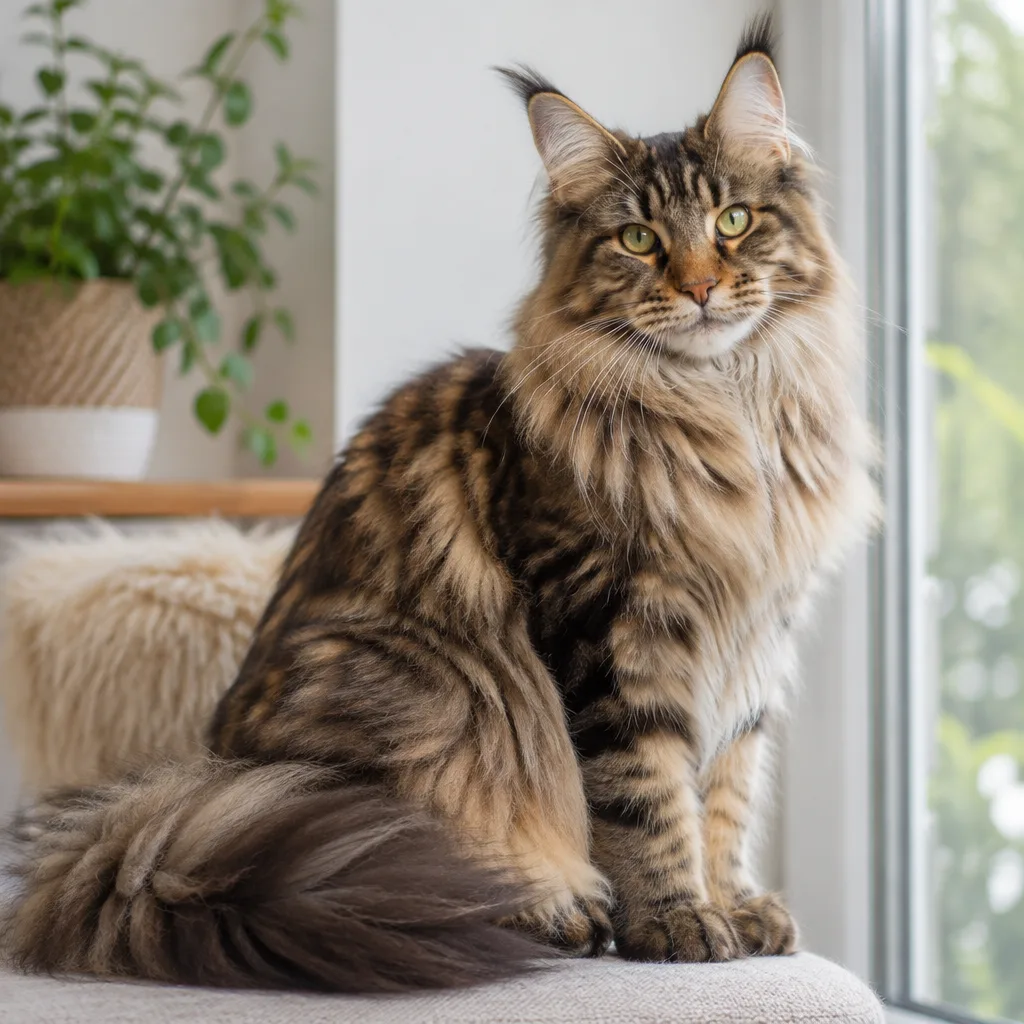
People use overlapping names for intermediate shades. A green-gold iris may look mostly green in one light and more golden in another; a warm gold may be described as amber. These are descriptions of appearance, not separate health categories.
If you are looking at a Maine Coon for sale, ask for recent photos and the kitten’s age rather than relying on a color label alone. At MeoWoff, health, genetics and temperament come before a particular look.
Maine Coon eye color chart
A Maine Coon eye color chart shows the shades you may see, but it cannot predict an individual cat’s eyes from coat color alone. The examples below describe possibilities, not required pairings.
| Eye appearance | What it can look like | Coat context |
|---|---|---|
| Green | Light green to a deeper green | A green-eyed Maine Coon can have a range of coat colors and patterns. |
| Yellow or gold | Yellow, warm gold or a mixture of green and gold | Possible with many coat colors, including tabby coats. |
| Copper | A deep, warm orange-gold appearance | Possible in Maine Coons; not limited to a particular coat color. |
| Blue | Pale to deeper blue | Seen in some white or white-spotted cats and in some other genetic lines. |
| Odd eyes | One blue eye and one green or gold eye, for example | Can be associated with white coat or spotting genetics; coat alone is not a diagnosis. |
For example, a brown tabby Maine Coon with green eyes and a yellow-eyed Maine Coon with a different coat pattern can both be typical-looking cats. A Maine Coon with copper eyes is also possible; copper does not by itself indicate illness or establish that a cat is purebred.
There is no need to rank every shade by rarity when choosing a companion. Individual descriptions and photographs are more useful than an unsupported claim that one shade is the rarest.
Can Maine Coons have blue eyes?
Yes, a Maine Coon can have blue eyes. A white Maine Coon with blue eyes is one possibility, and blue eyes can also occur with white spotting or in some nonwhite lines with a dominant blue-eye trait.
The connection is pigmentation: some inherited traits that affect where pigment develops in the coat can also affect pigmentation in one or both irises. A white coat does not guarantee blue eyes, and a blue eye does not automatically mean the entire cat must be white.
A gray Maine Coon with blue eyes is possible, although a young gray kitten’s blue-looking eyes may be an early developmental stage rather than its final color. In cat coat terminology, gray is often called blue; a blue coat and blue eyes are two different descriptions.
If an adult gray or otherwise nonwhite Maine Coon has blue eyes, ask about its family history and any known genetic testing rather than assuming its appearance proves a particular inheritance pattern. Our discussion of rare Maine Coon colors covers coat appearances separately from eye color.
Blue-eyed kittens deserve the same careful health review as any others. For a white or white-spotted kitten, a useful additional question is whether its hearing has been assessed, as explained below.
What is heterochromia in a Maine Coon?
Maine Coon heterochromia means that the irises differ in color, such as one blue eye and one green or gold eye. A cat with one blue and one differently colored eye is often called odd-eyed.
Differences in pigmentation during development can produce this appearance, and white-related genetics can be involved. A cat may also have more than one color within an individual iris; a description such as “green with a gold ring” helps distinguish that from two entirely different-looking eyes.
A stable difference that has been present since kittenhood is not the same thing as an eye that suddenly changes. If an adult cat develops a new difference in color or a new cloudy area, call your veterinarian promptly; sudden vision loss or an eye injury needs emergency care.
Take note of the original appearance in normal light, including which eye is blue. That record can help you describe a later change, but a photograph cannot tell you whether an eye is healthy or whether the cat hears normally.
When do kitten eye colors change?
Kitten eyes open after birth and initially look blue; their color usually starts changing around six to eight weeks and continues developing over subsequent months. At 12–16 weeks, a kitten’s emerging shade can be informative, but it is not a promise of the final adult color.
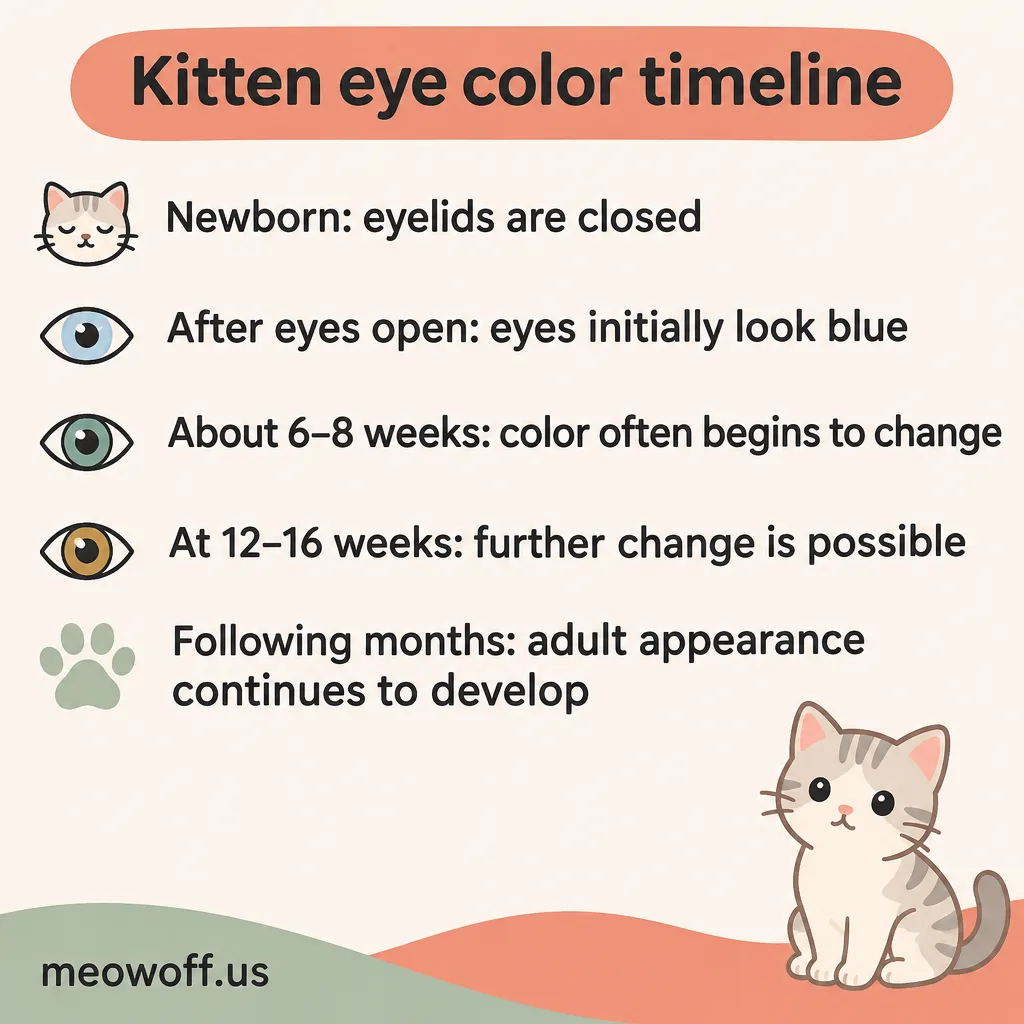
Newborn kittens have closed eyelids, so you cannot assess their eye color at birth. Once the eyes open, the early blue appearance gradually gives way to the shade produced as iris pigmentation develops, unless the cat retains blue eyes.
| Stage | What an owner may notice |
|---|---|
| Newborn | Eyelids are closed; eye color is not yet visible. |
| After the eyes open | Eyes initially look blue. |
| About 6–8 weeks | Color often begins to change, though timing varies. |
| 12–16 weeks | An emerging shade may be visible, but further change is possible. |
| Following months | The adult appearance continues to develop; some cats retain blue eyes. |
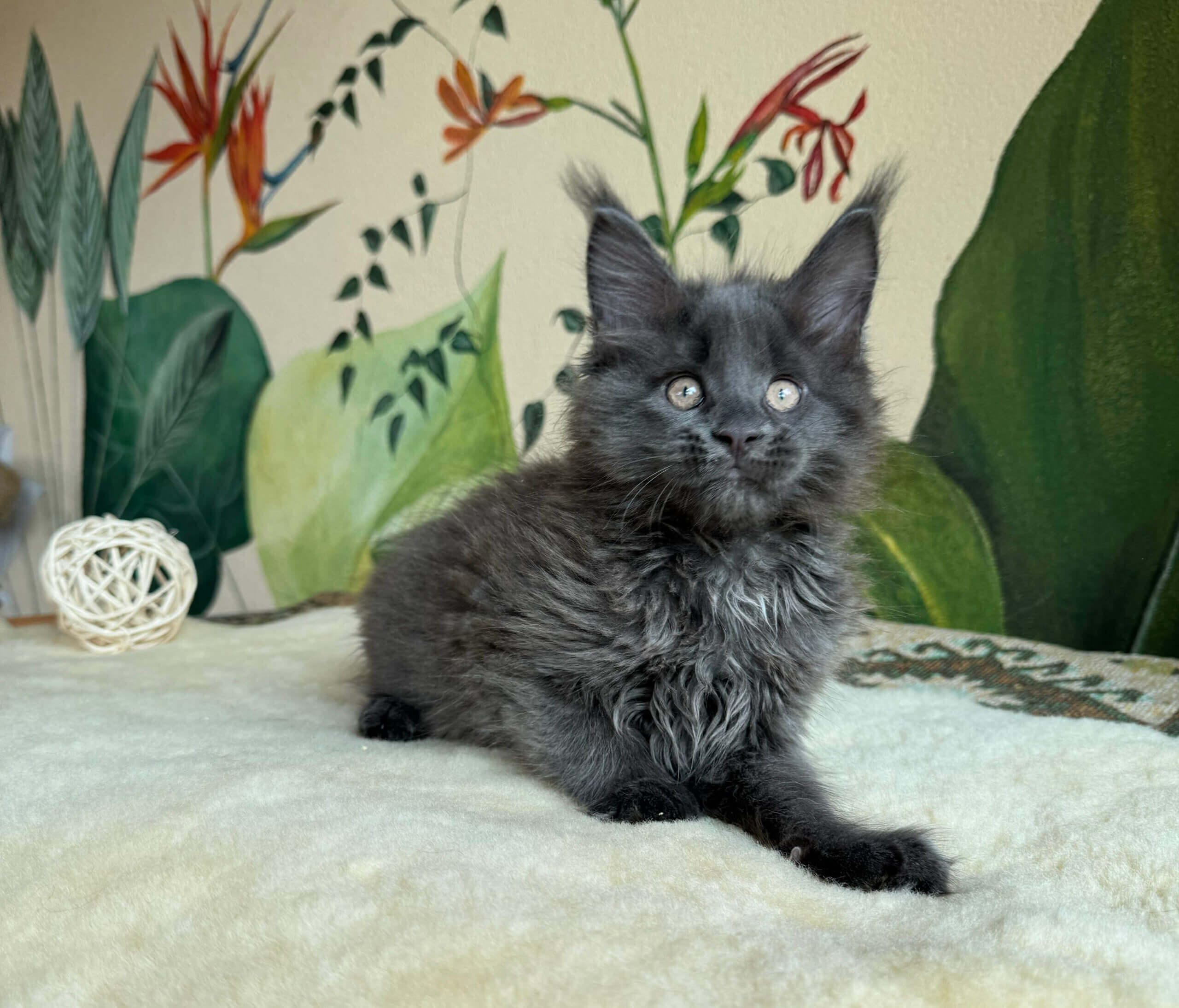
For example, a 14-week-old kitten may have a blue-gray outer iris with a warmer ring near the pupil. That can be part of normal development, but neither that ring nor a parent’s eye color guarantees the kitten will become green-eyed or gold-eyed.
MeoWoff kittens go home at 12–16 weeks, after socialization and age-appropriate vaccines. I do not recommend choosing an earlier release simply to see a preferred eye color in person: kittens should go home when they are developmentally ready.
Ask for photos taken at different ages in similar light, and use them as a record rather than a guarantee. Cloudiness, discharge or squinting is not a normal color milestone; call a veterinarian, and seek emergency care for an injured eye or sudden vision loss.
How do genetics and breed standards affect eye color?
Genetics influences how pigment develops in the iris, while breed standards describe which appearances are accepted in a particular show context. Neither a coat-color prediction nor a registry label can guarantee a kitten’s final eye shade.
Melanin is a pigment involved in iris color. Blue eyes have little iris pigment, and their appearance comes from the way light interacts with the eye’s structures rather than from blue pigment. Green, gold and copper reflect different appearances associated with pigmentation.
The dominant white gene and the white spotting gene can affect pigment distribution, which helps explain why blue or odd eyes occur in some white or white-spotted cats. These are not interchangeable labels for every white marking, and a white kitten does not necessarily have blue eyes.
Dominant Blue Eye, often shortened to DBE, describes inherited blue-eye traits that can occur without an entirely white coat. Different genetic variants can produce similar-looking eyes, and PAX3 is one gene associated with certain dominant blue-eye variants in cats. The name alone does not identify the precise variant in a particular kitten or predict that kitten’s hearing.
Coat dilution changes coat pigmentation, but a dilute coat such as blue or cream does not reliably predict a paler iris. Parents and pedigree can provide clues, yet eye color does not follow a simple one-gene chart that lets a buyer accurately calculate every kitten’s result.
A Maine Coon color calculator can help you think about possible coat inheritance, but it is not an eye-color guarantee. Ask what a calculation includes before using it to make a decision.
CFA and TICA breed standards distinguish the show treatment of blue and odd eyes according to coat context, so check the current standard and show rules for the organization involved. Registration and eligibility for a particular show class are separate questions; neither should be inferred from eye color alone.
Does eye color affect health or hearing?
Eye color alone does not tell you whether a Maine Coon is healthy or can hear. White cats, especially white cats with blue eyes, have an increased risk of congenital hearing loss, but many can hear.
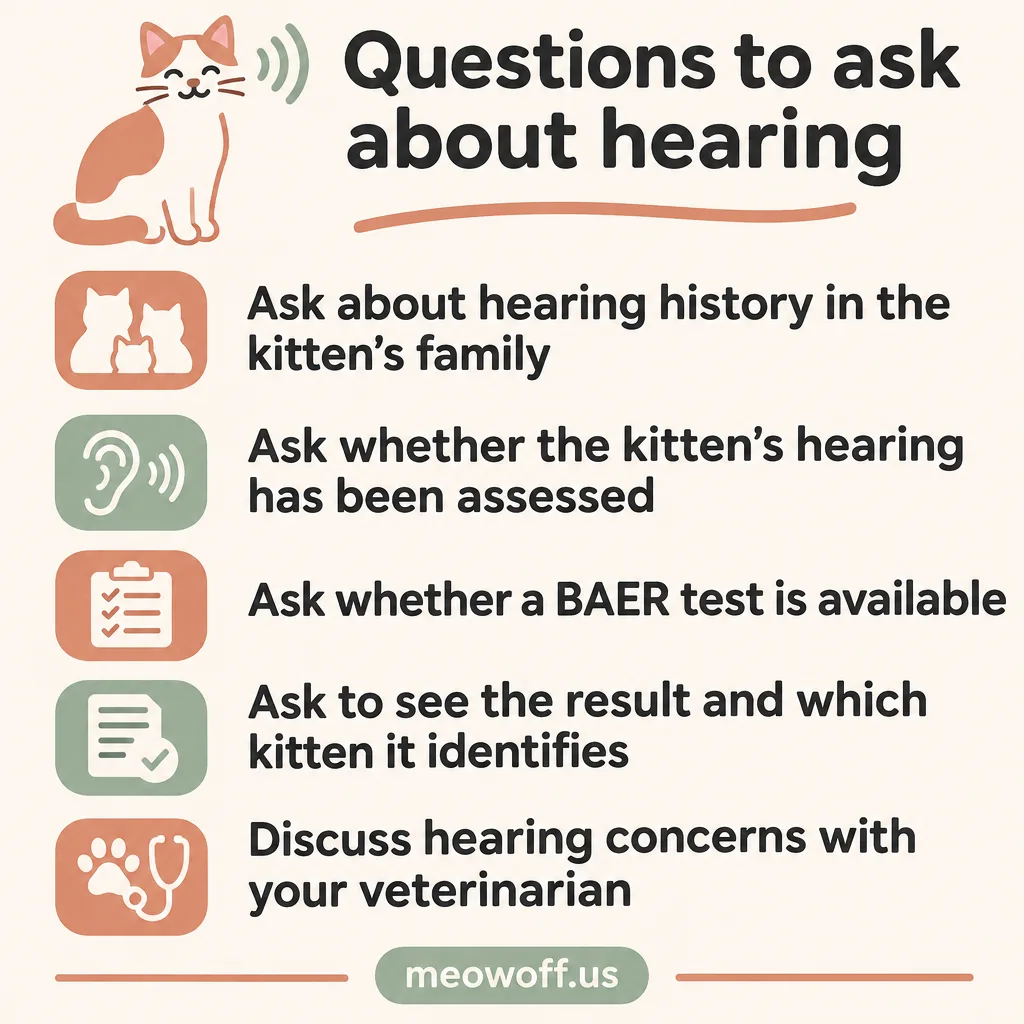
Hearing loss may affect one ear or both, and a kitten that responds to vibrations or another cat’s movements can appear to hear even when it has a hearing problem. Odd eyes do not automatically mean deafness, and not every blue-eyed cat has the same genetic background or risk.
Ask the breeder whether there is a hearing history in the kitten’s family, whether the kitten has been assessed and whether a BAER test is available. BAER stands for brainstem auditory evoked response: it measures electrical responses to sound and can assess each ear separately.
Ask to see the actual result and which kitten it identifies. If no BAER result is available, that does not establish that the kitten is deaf or hearing normally; discuss whether testing is appropriate and where it can be arranged with your veterinarian.
If your cat does not respond as expected to sounds, call your veterinarian to discuss a hearing examination. If the change is sudden or accompanies head injury, loss of balance or other acute illness, seek urgent veterinary advice; a severe injury or inability to stand warrants emergency care.
A deaf cat can still be a rewarding companion, but the family needs a safe plan. Keep the cat securely indoors, approach where it can see you, use visual cues for routines and make sure everyone understands not to startle it while it sleeps.
My priority is health, genetics and temperament before novelty. Ask about the whole kitten, not just the appeal of a blue eye: an unusual appearance is not a substitute for veterinary records or a thoughtful discussion of the family’s needs.

When should an eye change be checked?
Call your veterinarian promptly for a sudden color change, cloudiness, squinting, redness or unequal pupils; do not assume cloudiness is normal kitten development. An eye injury or sudden loss of vision merits emergency care, and a painful, rapidly worsening or bulging eye also needs urgent assessment.
Problems such as uveitis and glaucoma can affect how an eye looks and require veterinary evaluation, not a diagnosis from a photo. The Cornell Feline Health Center also offers educational information about feline eye disease; until your cat is examined, avoid human eye drops or leftover medication and prevent rubbing if you can do so safely.
What should you ask when choosing a kitten?
Ask for the kitten’s age, recent photos, pedigree and available health records, as well as any relevant hearing information. Eye color alone cannot establish breed, temperament, hearing or future health.
- Photos: Request clear pictures of both eyes in similar, indirect light, and ask when each was taken. Avoid judging a shade from an edited image or a single photo with flash.
- Development: Ask whether the visible shade is still changing. Treat descriptions such as “likely green” as observations, not promises.
- Pedigree: Ask to review the kitten’s available pedigree and registration information, especially if show participation matters to you.
- Health: Review available veterinary records and ask what health screening has been performed or discussed for the parents and kitten. Ask your veterinarian how to interpret the results.
- Hearing: For a white, blue-eyed or odd-eyed kitten, ask about family hearing history and any BAER results. A lack of testing is not an answer about either ear.
- Temperament and timing: Ask how the kitten behaves and when it will be ready to leave. A preferred eye color should not determine an early homecoming.
At MeoWoff, kittens go home at 12–16 weeks, are microchipped, and have received socialization and age-appropriate vaccines. We share veterinary records and provide guidance for the first 48 hours and first weeks at home; our kitten first week guide can help you prepare a quiet space and routine.
Typical MeoWoff kitten prices are $2,100–$5,800 depending on breed, pedigree and quality. A $500 deposit reserves a kitten and is part of the price, not an additional charge; ask about the individual kitten’s price rather than assuming a particular eye color determines it.
Families can pick up in Wood Dale by appointment. Ground delivery starts at $600 and flight nanny delivery at $1,000; for example, families exploring Maine Coon kittens for sale in West Virginia can ask us about delivery options for their situation.
An optional heart ultrasound and an optional genetic test are $200 each. Ask what each test covers and review its limitations with your veterinarian; neither is a guarantee against every future health problem.
Maine Coon eye color FAQ
Maine Coon cat eyes are generally large and expressive, but their shape and color do not prove pedigree. Eye shade can complement a cat’s coat, yet neither feature predicts personality.
Can a Maine Coon have green or yellow eyes? Yes. Green, green-gold, yellow and gold are all possible; the name used for a shade can vary with the observer and lighting.
Are copper eyes possible? Yes. A warm copper or orange-gold appearance can occur, and it is not automatically a sign of an eye problem. Call your veterinarian if an established eye color suddenly changes; injury, sudden vision loss or a rapidly worsening painful eye needs emergency care.
Will a kitten with blue eyes keep them? Sometimes, but many kittens’ eyes change as pigment develops. A photo at 12–16 weeks gives you a useful look at the current shade, not a guarantee of the adult color.
Can a gray Maine Coon have blue eyes as an adult? Yes, adult blue eyes can occur in some nonwhite lines. A gray kitten’s early blue-looking eyes can also change, so ask about its age and family rather than assuming the adult result.
Does a blue-eyed white cat always have hearing loss? No. Risk is increased, but appearance cannot determine whether either ear hears; ask about BAER testing and discuss any concern with your veterinarian. Sudden hearing changes or accompanying acute illness need urgent veterinary advice.
Can I identify a purebred Maine Coon by its eyes? No. Review the available pedigree and registration information instead, and consider the whole cat rather than one feature. For the rest of the breed’s appearance, read about Maine Coon body shape.
Are eye color and coat pattern the same thing? No. For a short guide to the separate coat question, see Maine Coon cat colors.
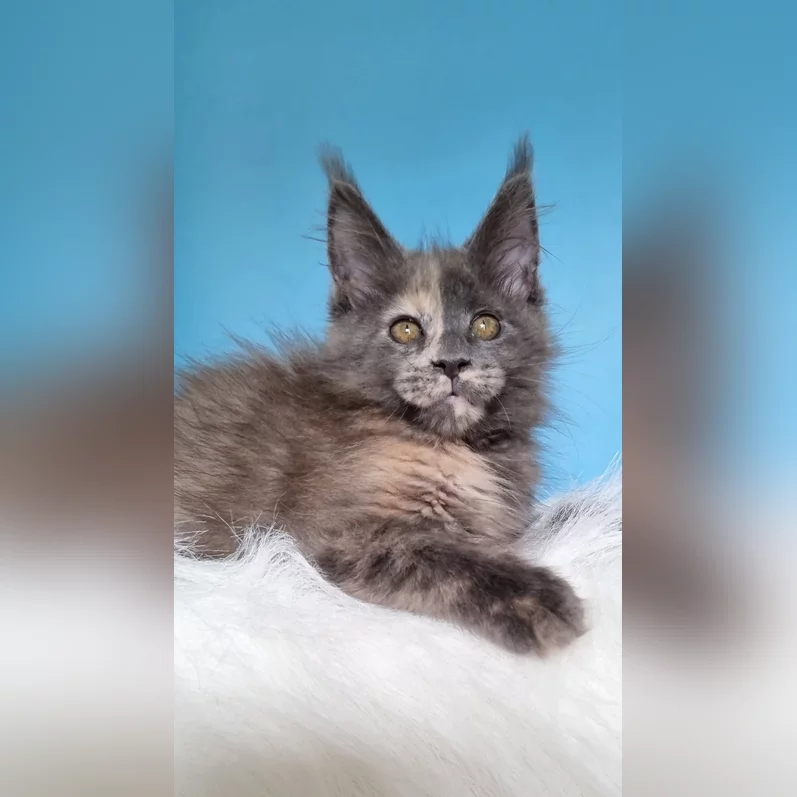
Questions about Maine Coon eye colors? Talk to MeoWoff
We can help you discuss a kitten’s current eye color, available records and what to expect as it settles into your home. Our Wood Dale showroom visits are by appointment.
Call (773) 917-0073 or send us a message to talk with our team.