

British Shorthair vs Scottish Fold is a choice between two round-faced cats with overlapping personalities but an important difference in inherited health risk. British Shorthairs generally have upright ears and a stockier build, while a Scottish Fold’s folded ears are linked to a cartilage condition that can cause painful joint disease.
Both can be affectionate companions, but no breed label guarantees a kitten’s personality or future health. My advice is to compare individual kittens, ask for health information and consider whether you are prepared for the Fold’s particular care needs.
British Shorthair vs Scottish Fold at a glance
The British Shorthair is usually the stockier cat, while the Scottish Fold is distinguished by ears that fold forward and down. Both can enjoy a calm home and regular interaction, but their individual temperaments vary.
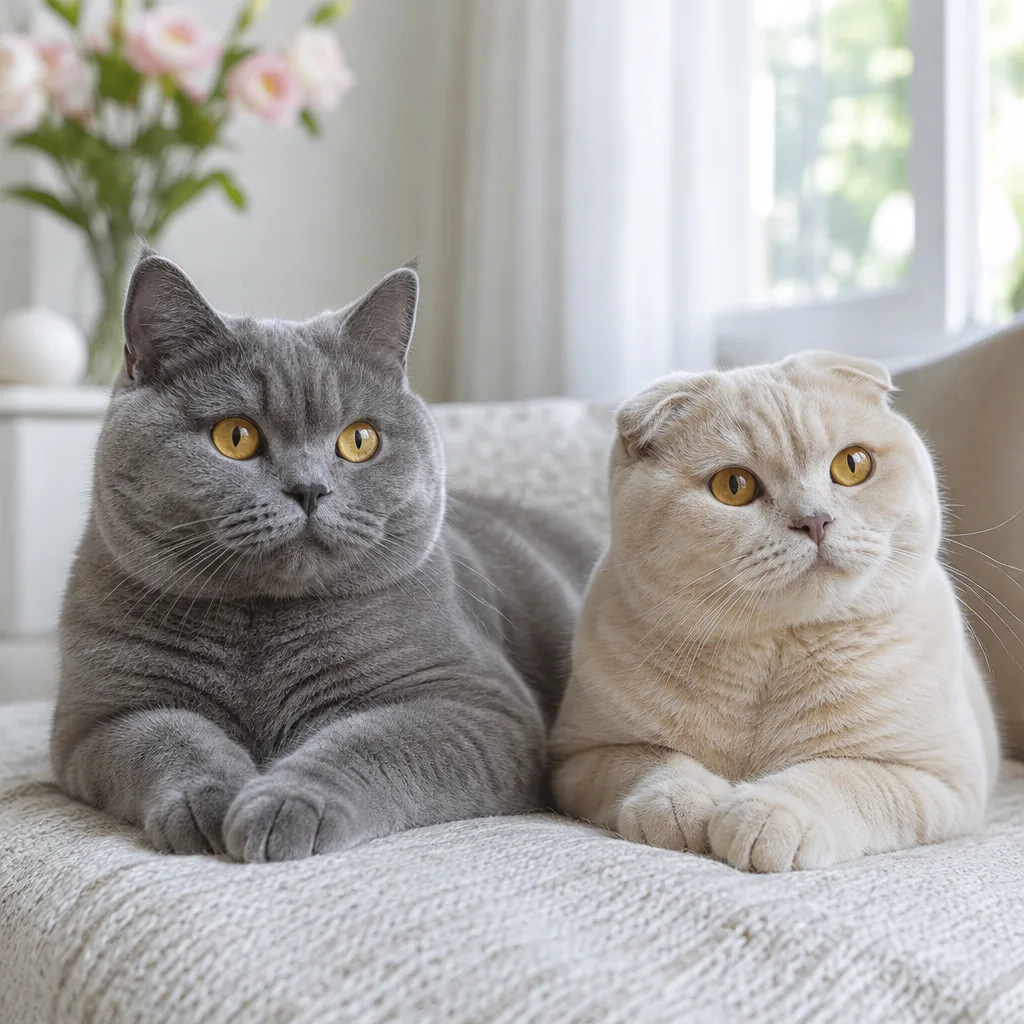
| Feature | British Shorthair | Scottish Fold |
|---|---|---|
| Ears | Upright | Folded forward and down |
| Build | Broad, sturdy and often heavier | Rounded, generally less stocky |
| Temperament | Often calm and content to sit nearby | Often affectionate and people-oriented |
| Grooming | Weekly brushing, more during heavy shedding | Weekly for short coats; more often for long coats |
| Inherited joint risk | No folded-ear-related cartilage disorder | Folded-ear trait is associated with osteochondrodysplasia |
These are starting points, not promises about a particular cat. If you are beginning your search, you can look at a British kitten for sale and ask about the kitten’s behavior, care and family health history.
Are Scottish Folds smaller?
Scottish Folds are often smaller and lighter than British Shorthairs, although their adult weight ranges overlap. A cat’s frame and body condition matter more than hitting a particular number on a scale.
British Shorthair females typically weigh roughly 7–12 pounds and males 9–17 pounds, while Scottish Fold females often weigh about 6–9 pounds and males 9–13 pounds. These are adult ranges, not targets for growing kittens, and an individual cat can fall outside them.
A broad, muscular British Shorthair should not simply look round because of excess fat. Ask your veterinarian to assess body condition and help you adjust portions as your kitten grows; a sudden weight change or a kitten that is not growing as expected deserves a call.
Both breeds need room to move, climb and play, even in an apartment. Choose a sturdy carrier and litter box with enough space for the adult cat to turn comfortably, rather than buying solely for a kitten’s current size.
What colors can Scottish Fold cats be?
Scottish Folds can be white, blue, black, cream, red or silver, among other colors, and may have tabby, tortoiseshell, bicolor or other patterns. They come in both short-haired and long-haired coats; the long-haired variety is often called a Highland Fold.
Registry standards differ in which colors and patterns they accept, so ask which registry applies if showing matters to you. TICA and CFA maintain breed standards, while WCF is another registry you may encounter when discussing pedigrees.
British Shorthairs also come in more than blue: black, white, cream, lilac, tabby and shaded coats are examples. Eye color varies with coat color, so a copper-eyed blue cat is not the only possible look.
A color described as unusual does not tell you whether a kitten is healthy or suited to your household. I put genetics, health and temperament ahead of looks and do not recommend choosing a kitten simply because a color is marketed as rare.
British Shorthair vs Scottish Straight
A Scottish Straight has upright ears like a British Shorthair, but it is a distinct Scottish breed rather than simply a British Shorthair with another name. British Shorthairs are generally stockier, with a broad face, sturdy frame and dense plush coat; Scottish Straights often have a less heavily built appearance.
A straight-eared cat does not show the characteristic folded-ear trait. That distinction matters when considering the Fold-associated cartilage condition, but straight ears are not a guarantee against unrelated illnesses or joint problems.
Compare each kitten’s movement, comfort and response to people rather than deciding from a photograph alone. If you like the Scottish look without folded ears, ask about individual Scottish Straight kittens and their health information.
What is the so-called dream gene?
The so-called dream gene is an informal name sometimes used for the dominant trait that produces a Scottish Fold’s folded ears; it is not a gene that gives a kitten a health benefit. The same cartilage change is associated with osteochondrodysplasia, which affects bone and cartilage beyond the ears.
Scottish Fold kittens are born with straight ears, and the ears of kittens that develop the fold generally change during the first few weeks. The timing varies, so an exact day should not be treated as a reliable promise about a young kitten’s appearance.
Dominant means a kitten can show the folded-ear trait with one copy of the relevant variant. The visible fold is therefore not just a cosmetic feature to select for: it signals a genetic change that can affect welfare throughout the cat’s life.
What is a Scottish Fold and British Shorthair mix?
A Scottish Fold and British Shorthair mix is a kitten with parentage from both breeds; depending on the parents’ genetics, its ears may be folded or straight. A folded-eared kitten retains the Fold-associated risk of cartilage and joint disease, even when the other parent is a British Shorthair.
Two folded-eared parents can produce kittens with two copies of the Fold variant, which can cause more severe skeletal disease. Pairing a Fold with a straight-eared cat avoids that two-copy combination when the straight-eared parent does not carry the variant, but it does not remove the risk from folded-eared offspring.
Ask who the parents are, whether their ears are folded or straight, and what health information is available for both. A seller’s description of a kitten as a mix, a designer cat or a particular color is less useful than clear answers about parentage, veterinary care and how the kitten moves.
Registration and naming rules for crosses depend on the registry, so do not assume a mix qualifies for a particular pedigree or show class. Ask to see the applicable records and clarify what they describe before placing a deposit.
How do health risks compare?
The major difference is that the Scottish Fold’s signature ears are linked to an inherited cartilage disorder, while British Shorthairs do not have that Fold-specific risk. Neither breed is free from health problems, and an individual kitten’s future cannot be guaranteed by its appearance or paperwork.
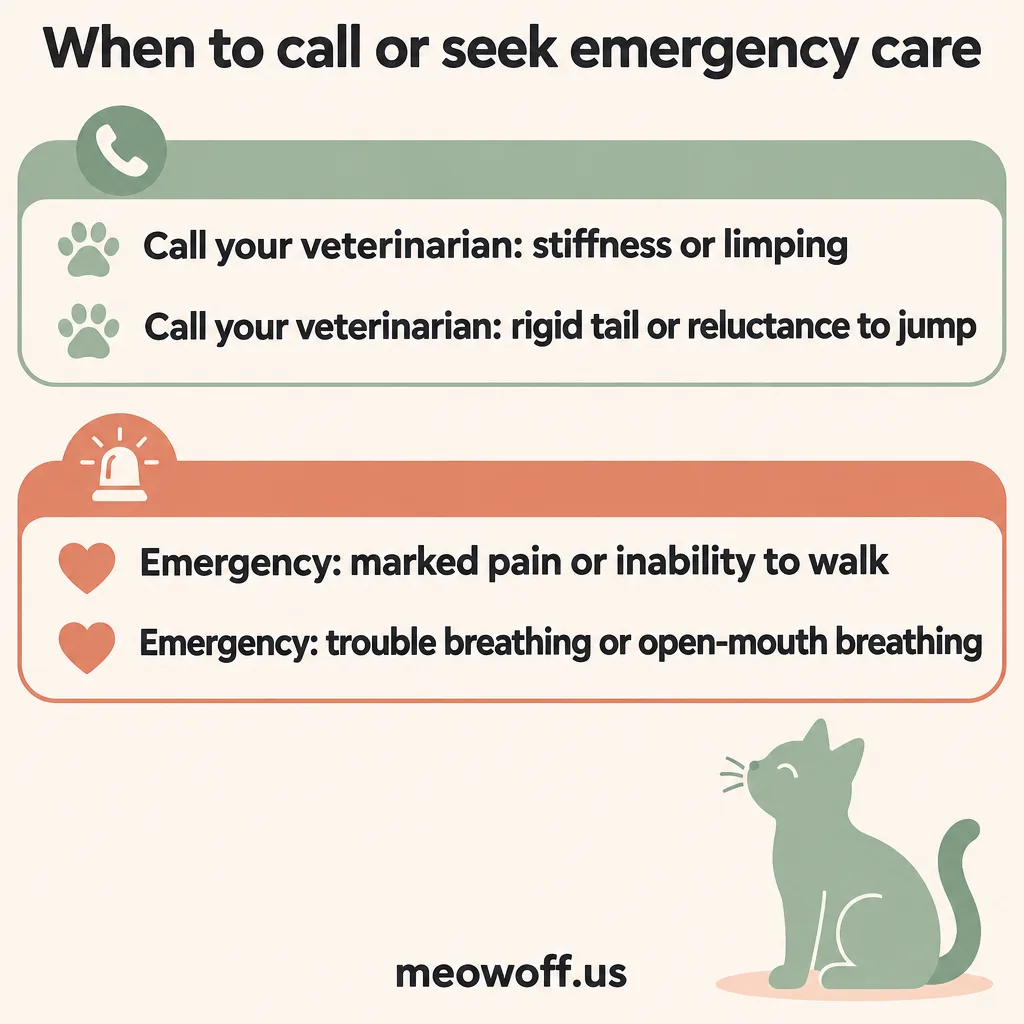
In a Fold, osteochondrodysplasia can lead to abnormal bone and cartilage development and painful arthritis. Severity varies, and a cat may initially hide discomfort. Call your veterinarian if you notice stiffness, a rigid tail, limping, a change in gait, difficulty grooming or reluctance to jump; do not bend the tail to test it.
Seek emergency veterinary care for marked pain, an inability to walk or sudden paralysis. Trouble breathing or open-mouth breathing is also an emergency in either breed, whether or not a joint problem is present.
There is no cure that reverses the inherited cartilage change, but a veterinarian can assess discomfort and recommend an individual care plan. Imaging may be useful when the examination or symptoms warrant it; ask your veterinarian whether it is appropriate rather than assuming every Fold needs X-rays on a fixed schedule.
British Shorthairs can develop hypertrophic cardiomyopathy (HCM), a heart muscle disease, and polycystic kidney disease (PKD), as well as obesity. Ask about family history, cardiac ultrasound results for the parents and relevant PKD testing; a normal result is useful information, not a lifetime guarantee.
There is no broadly validated DNA test that rules out HCM in British Shorthairs, so a genetic panel should not be presented as a substitute for appropriate cardiac assessment. PKD testing can inform breeding decisions, but it does not establish how common the disease is in a particular line.
For possible kidney disease, call your veterinarian about increased thirst or urination, poor appetite, vomiting or weight loss. For possible heart disease, call about reduced activity or changes in breathing at rest; sudden breathing distress, collapse or sudden painful weakness of the hind legs warrants emergency care.
Welfare concerns about breeding for folded ears have led to restrictions in some places. Rules differ by location and can change, so check current local requirements if you plan to breed or relocate with a cat; a straight-eared pairing does not settle the welfare question for folded kittens.
A pedigree can help document ancestry, but European origin or registry affiliation alone does not establish superior health testing or welfare. Ask for the actual results and dates, and discuss what they mean with your veterinarian.
Do Scottish Folds get along with dogs?
Many Scottish Folds can live comfortably with dogs, but success depends on the individual animals, their past experiences and a gradual introduction. The same approach helps when introducing a British Shorthair or Scottish Straight to a dog.
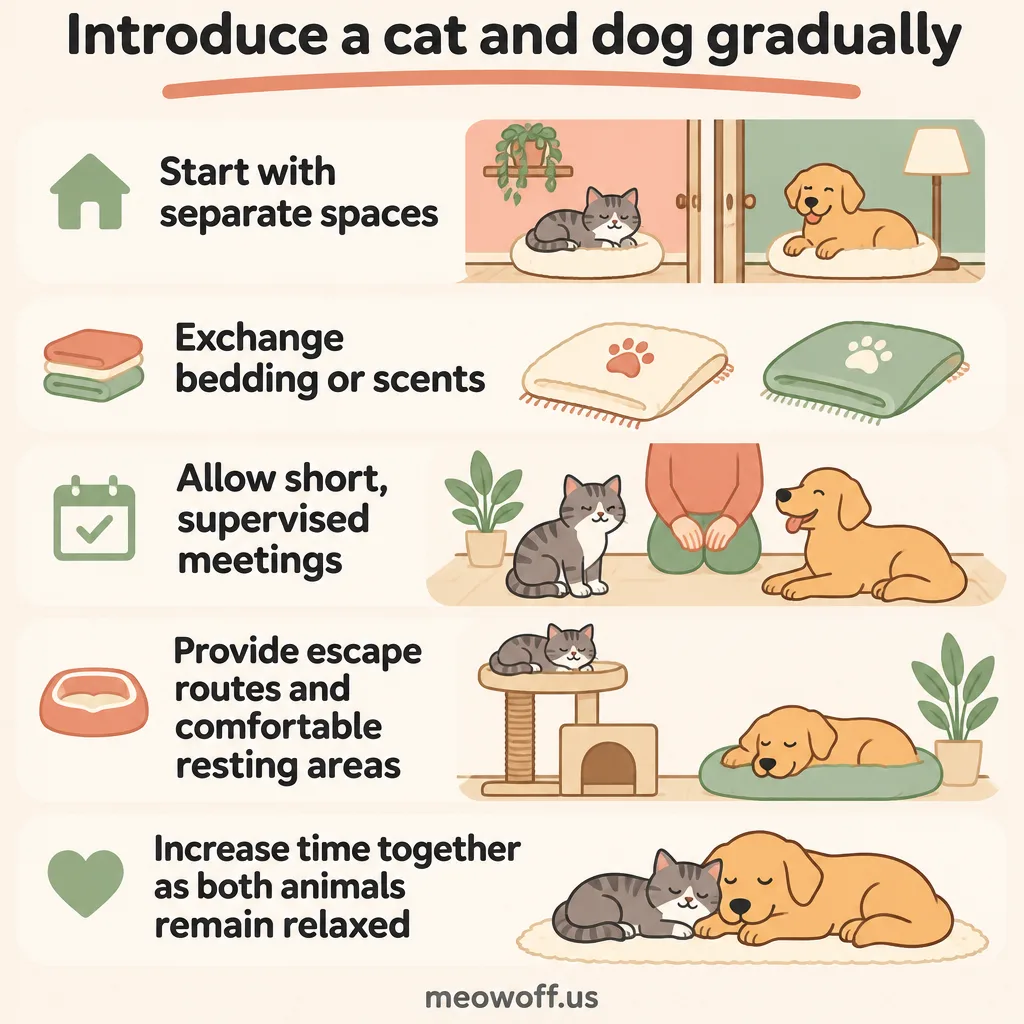
- Start with separate spaces, giving the cat food, water, a litter box and a quiet hiding place.
- Exchange bedding or scents before arranging a face-to-face meeting.
- Allow short, supervised meetings with the dog calm and controlled, and let the cat retreat.
- Provide escape routes and raised resting areas the cat can reach comfortably; never force contact.
- Increase time together only as both animals remain relaxed, and separate them when you cannot supervise early on.
A cat that hides briefly in a new home may need time to adjust. If either animal repeatedly stares, chases, growls or cannot settle, slow down and ask your veterinarian or a qualified behavior professional for help.
Teach children to let the kitten approach, support its body gently and leave it alone while it eats, sleeps or uses the litter box. Call your veterinarian if handling seems painful or the cat becomes unusually reluctant to move; seek emergency care for severe pain or inability to walk.
What is daily care like?
Both breeds need measured meals, fresh water, daily play, a clean litter box and regular veterinary care. Short coats usually benefit from weekly brushing, while a long-haired Fold may need brushing several times a week to prevent tangles.
Use a soft brush and keep sessions brief and positive. Brush more often during heavy shedding, and check for mats where a long coat rubs, such as behind the ears and under the legs; do not pull out a tight mat against the skin.
Check ears gently as part of your routine, but do not force the fold open, insert cotton swabs into the ear canal or clean a normal ear unnecessarily. Call your veterinarian for discharge, odor, redness, frequent scratching or head shaking; sudden loss of balance or severe distress needs prompt emergency assessment.
Keep a Fold’s tail and joints comfortable: avoid forcing them into position, and offer easy access to favorite sleeping spots, food and litter. A low-entry litter box or a small step can help a cat with mobility difficulties, but a new limitation still deserves a veterinary assessment.
For both cats, use interactive toys and scratching surfaces to encourage movement, and weigh them periodically. Ask your veterinarian about food portions and body condition instead of putting a growing kitten on a restrictive diet.
Plan for routine examinations, vaccines recommended for your cat’s age and circumstances, parasite prevention and dental care. Pet insurance or a dedicated savings fund may help with unexpected costs; read policy exclusions and waiting periods carefully, especially for inherited or pre-existing conditions.
Which kitten is right for your home?
A British Shorthair may suit someone who likes a calm companion that often enjoys being nearby without constant handling; a Scottish Fold may appeal to someone who enjoys a people-oriented cat and understands its inherited joint risk. Neither description guarantees that a particular kitten will be independent, cuddly or comfortable with every household member.
If the folded-ear health concern is decisive for you, consider a British Shorthair or a Scottish Straight and assess that kitten individually. For more on the British Shorthair’s quiet confidence at home, consider how its usual companionship style fits your schedule.
Before committing, watch the kitten walk, play and interact without forcing it to be held. Ask about any observed stiffness or medical concerns, the parents’ health history and available test results, the kitten’s vaccination and veterinary records, and the food and routine it is used to.
MeoWoff works with partner catteries registered with WCF and TICA. Our Wood Dale showroom is at 126 E Irving Park Rd, Wood Dale, IL 60191, and visits are by appointment; we also deliver to all 50 states, including for families looking for British kittens in Wyoming.
Our kittens go home at 12–16 weeks, after socialization and age-appropriate vaccines; they are microchipped, and veterinary records are shared with the family. We do not release kittens before they are developmentally ready, and we provide guidance for the first 48 hours and first weeks at home.
| Expense | MeoWoff pricing |
|---|---|
| Kitten | Typically $2,100–$5,800, depending on breed, pedigree and quality |
| Reservation deposit | $500, included in the kitten price |
| Wood Dale pickup | Ask when arranging your appointment |
| Ground delivery | From $600 |
| Flight nanny delivery | From $1,000 |
| Optional heart ultrasound or genetic test | $200 each |
For example, a $3,000 kitten reserved with a $500 deposit has $2,500 of its kitten price remaining; delivery and optional tests, if selected, are additional. Ask what a particular test covers and review the results with your veterinarian rather than treating any single test as a promise of future health.
Budget separately for food, litter, routine veterinary visits, preventive care and possible emergencies. Before your kitten arrives, prepare a quiet starter room and arrange a veterinary visit so you can review the records and plan the next steps for your individual cat.
Questions about British Shorthairs and Scottish Folds? Talk to MeoWoff
We can help you compare kittens, discuss their available health information and prepare for the first weeks at home.
Call (773) 917-0073 or send us a message to talk with our team.


