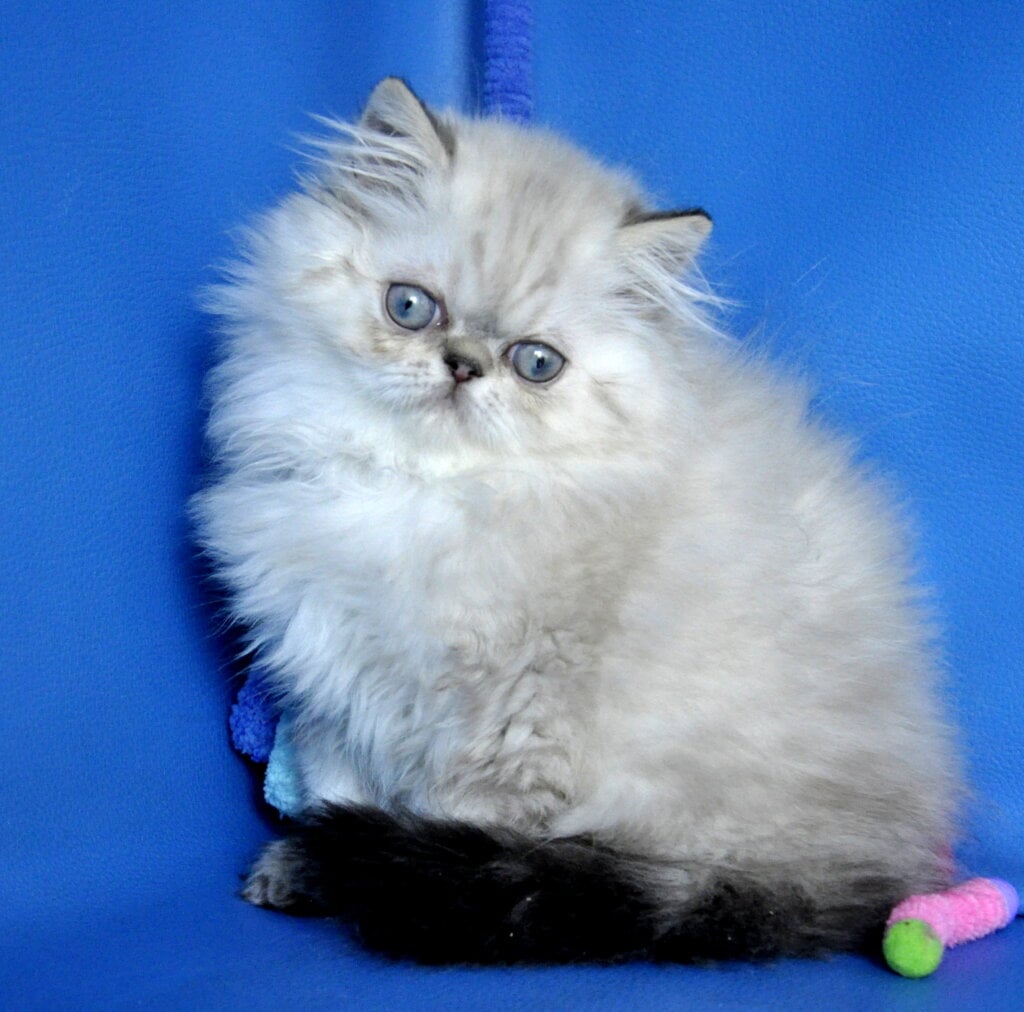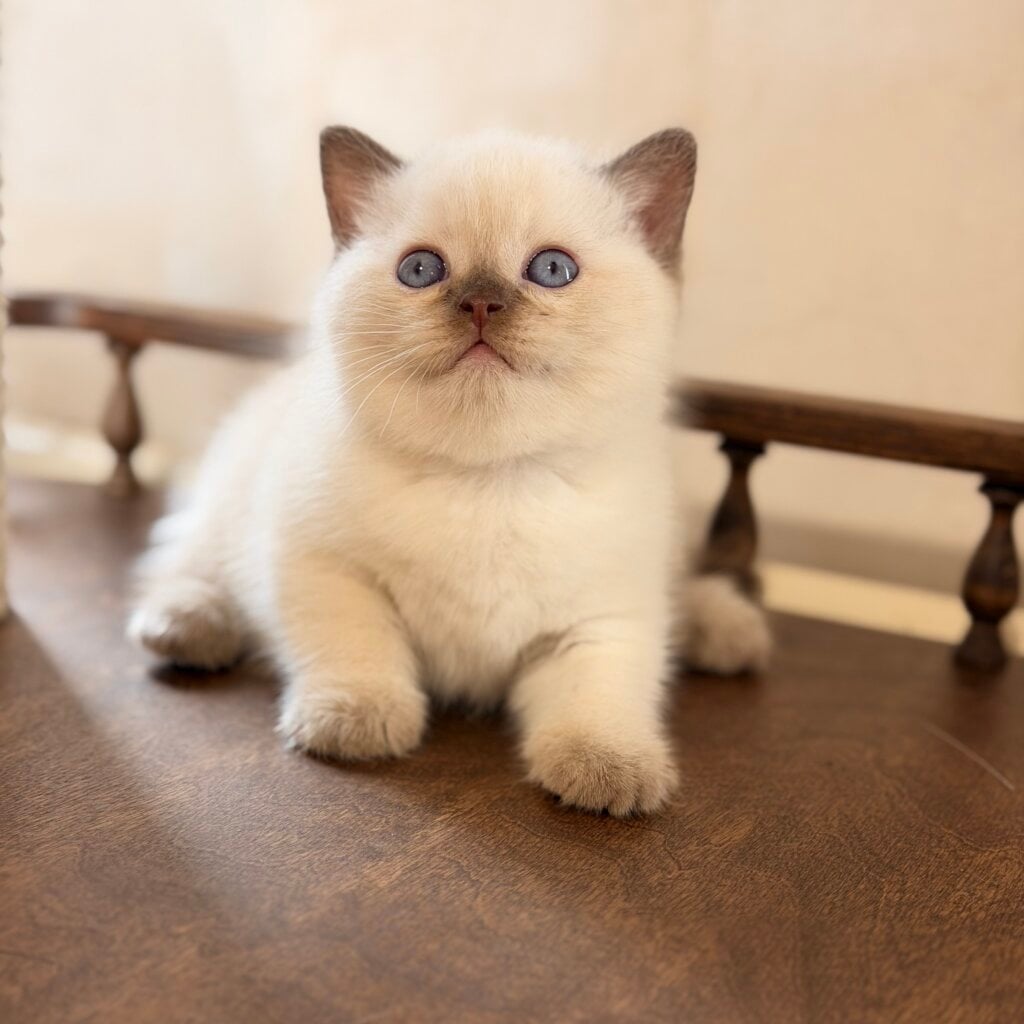

Most people choose a cat breed the way they fall in love – by looking. A photo stops the scroll, the eyes do the rest, and within a week someone is searching for “Bengal kitten near me” with their heart already decided.
The look is real. But the look fades into the background within a month of bringing a kitten home. What remains is the living with – the morning demands, the grooming, the noise, the energy, the fifteen-plus years of companionship and care. A cat that photographs like a dream can quietly become a daily mismatch if its temperament collides with your life.
That is what this guide is for. Think of it as a cat breed compatibility test: ten honest questions that move you past the photograph and toward the right match. Answer them truthfully and you will know not just which breed you want, but which breed wants a life like yours.
And when you are ready, a fully documented European purebred kitten from MeoWoff turns the right answer into a healthy, papered companion delivered safely to your door.
Why a “Compatibility Test” Beats a Wish List
A wish list asks what you want a cat to look like. A compatibility test asks what you want a cat to be – in your home, on a Tuesday, for the next decade and a half.
The difference matters because breeds are not interchangeable. They were shaped over generations to behave in particular ways. Some crave constant company; others prize their independence. Some narrate the entire day; others move like shadows. Some are content in a quiet apartment; others need height, motion, and a job to do.
When breed and lifestyle align, ownership feels effortless and joyful. When they clash, both you and the cat spend years compensating. The ten questions below are designed to surface that fit before you commit – so the kitten you reserve becomes the companion you keep.
Question 1: How Much Daily Attention Can You Honestly Give?
Be realistic, not aspirational. How many hours a day is someone actually home, and how much of that time is hands-on?
- If your days are full and often away from home, lean toward independent, self-assured breeds that tolerate alone time gracefully – calm companions content to nap and greet you warmly at day’s end.
- If you work from home or want a constant shadow, the deeply bonded “velcro” breeds will reward you with relentless affection – but they genuinely struggle with loneliness and neglect.
The benefit of getting this right is a cat that is neither anxious nor under-stimulated, and a household free of the stress that comes from a companion whose emotional needs you can’t meet.
Question 2: What Does Your Living Space Actually Look Like?
Square footage matters less than you’d think; what your space offers matters more.
- Apartment dwellers do beautifully with adaptable, lower-energy breeds – provided you supply vertical space, a window perch, and enrichment.
- Large, athletic breeds want room to run and climb. Cramped into a small flat without outlets, their intelligence curdles into mischief.
- Homes with gardens or catios can comfortably host more active, curious breeds that crave exploration.
Matching the breed’s energy to your environment means a calmer cat, intact furniture, and a home that feels shared rather than besieged.
Question 3: How Much Grooming Are You Prepared to Do?
Coat care is a daily and weekly commitment, not a one-time decision.
- Luxurious longhairs (think dense, flowing coats) need frequent brushing to prevent painful mats – often several sessions a week.
- Short, plush coats are far more forgiving, asking only a weekly once-over.
- Hairless breeds flip the equation: no brushing, but regular bathing, because the skin oils a coat would normally absorb build up instead.
Choosing a grooming load you’ll genuinely sustain protects your cat’s comfort and skin health – and spares you the guilt of a routine you quietly abandon.
Question 4: Does Anyone in Your Home Have Allergies?
This single answer can reshape your entire shortlist – and ignoring it leads to heartbreak when a beloved kitten has to be rehomed.
No cat is completely allergen-free; the real trigger is the Fel d 1 protein in saliva and skin, not fur. But some breeds are markedly more allergy-friendly – certain low-shedding or lower-Fel d 1 breeds can make feline companionship possible for sensitive households.
- If allergies are a factor, prioritize breeds with a reputation for lower allergen loads, and arrange to test your reaction in person before committing.
- Pair the right breed with smart habits – air filtration, a cat-free bedroom, and regular grooming – for daily comfort.
The payoff is profound: a cat you can actually live with, instead of a dream you keep at arm’s length.
Question 5: Who Else Shares Your Home – Children, Seniors, or Other Pets?
A cat doesn’t join you; it joins your whole household, and temperament fit is everything.
- Families with young children thrive with patient, sturdy, even-tempered breeds that tolerate noise and handling with grace.
- Multi-pet homes need sociable cats that accept other animals rather than ruling by intimidation.
- Quieter homes with seniors often suit gentle, affectionate breeds that offer calm companionship without overwhelming energy.
Getting this right means a harmonious home from week one – no hiding cat, no stressed child, no simmering territorial standoff.
Question 6: How Active a Companion Do You Actually Want?
Energy is a spectrum, and mismatched energy is one of the most common sources of frustration.
- High-drive breeds are brilliant, athletic, and endlessly curious – wonderful for play-loving owners, exhausting for those who wanted a lap cat.
- Laid-back breeds are serene and cuddly, content to lounge beside you – blissful for calm households, frustratingly placid for someone who craves interactive play.
Be honest about whether you want a playmate or a companion. The reward is a cat whose rhythm matches yours, so neither of you is forever waiting for the other to slow down or speed up.
Question 7: How Do You Feel About a Talkative Cat?
Sound is a quality of life issue people rarely consider until they’re living it.
- Vocal breeds will discuss their day, their dinner, and your decisions – delightful if you want a conversation partner, taxing if you crave quiet or work from home on calls.
- Quiet breeds communicate softly and sparingly, ideal for tranquil spaces and light sleepers.
Choosing the right “volume” means a home that feels peaceful or lively exactly as you intended – never accidentally loud.
Question 8: Are You Ready for a 15-to-20-Year Commitment – and the Health Care It Entails?
This is the question that separates an impulse from a decision.
A well-cared-for purebred cat commonly shares your life for well over a decade – frequently into the mid-to-late teens, and sometimes beyond twenty. That is a profound, beautiful commitment spanning life stages, moves, and milestones.
It also means health responsibility. Some breeds carry known hereditary risks worth understanding before you buy:
- HCM (a serious heart condition) appears more often in several popular breeds and can develop early in life.
- PKD (an inherited kidney disease) is associated with certain breed families.
- Other conditions – hip dysplasia, progressive retinal issues, and more – are linked to specific breeds.
Here is the reassuring part, and the reason pedigree matters: responsible breeders screen their breeding cats with DNA tests (a simple cheek swab) for conditions like HCM and PKD, which follow predictable inheritance patterns. Choosing a kitten from a program that tests and documents its lines dramatically reduces these risks. Budget, too, for the long arc – quality food, routine veterinary care, and the occasional unexpected bill.
The benefit of facing this squarely is a healthier cat, fewer crises, and the peace of mind that comes from knowing exactly what you’re bringing home.
Question 9: What Is Your Real Budget – Purchase and Lifetime?
Honesty here prevents disappointment later.
The purchase price for a quality purebred kitten varies widely by breed, lineage, and breeder reputation. Across the U.S. market, reputable breeders commonly price popular breeds anywhere from roughly nine hundred dollars to four or five thousand and up, with show-quality lines and rare colors reaching considerably higher. Fully health-tested European kittens with complete documentation sit at the premium end of these ranges – and the price reflects the medical care, genetic screening, and heritage behind them.
Then there is the lifetime cost: food, litter, grooming, preventive care, insurance, and supplies, year after year. A premium kitten is the beginning of the investment, not the whole of it.
- Plan for the purchase as a one-time, meaningful investment in health and lineage.
- Plan for the years so your cat never wants for care.
- Factor in transport if importing – safe, professional pet transport is part of the budget.
Clarity on budget means you choose with confidence and never resent the cost of doing right by your companion.
Question 10: Why Do You Want This Cat?
End where most people begin – but ask it more deeply.
Are you seeking a devoted family member to grow alongside your children? A loyal companion for quiet evenings? The quiet prestige of owning something rare and exquisitely bred? A particular look that simply moves you?
There is no wrong answer – but naming the real one aligns everything else. Someone who wants serene companionship and someone who wants an athletic, interactive partner should be looking at very different breeds, even if both started with the same admiring glance at a photo.
When your why is clear, the right breed often becomes obvious – and the joy of ownership deepens, because the cat you chose is the cat you actually wanted.
Turning Your Answers Into the Right Match
Lay your ten answers side by side and a portrait emerges: how much time and attention you offer, the space and energy of your home, your tolerance for grooming and noise, the people and pets you live with, your budget, and your deepest reason for wanting a cat.
No single answer decides the breed. The pattern does. A busy professional in a stylish apartment who wants a calm, quiet, low-shedding companion is pointed toward a very different cat than an at-home family craving a playful, vocal, child-friendly giant.
This is precisely where an experienced breeder becomes invaluable. At MeoWoff, we read those patterns for a living – translating your answers into the breed, and the individual kitten, most likely to make your home complete.
Why a European Purebred Is in a Class of Its Own
Once you know the right breed, where you source it shapes everything that follows.
Anyone can find a cat. Securing a healthy, fully pedigreed kitten from an established European cattery is something else entirely – and discerning families seek it out for good reason.
European breeding programs registered with recognized international bodies operate under exacting standards for health, conformation, and temperament. Generations of careful, documented breeding produce kittens that are not only beautiful but genetically sound and predictable in personality – so the temperament you matched to your lifestyle is the temperament you actually receive.
There is real prestige in this, and it deserves naming. To bring home a rare European purebred is to own something genuinely exclusive: a living expression of heritage, expertise, and refined taste – the kind of companion that makes guests stop and ask, “What breed is that?” It is status and substance in equal measure.
The MeoWoff Promise: Transparency You Can Verify
Trust in this field is not a tagline. It is documentation you can hold and a breeder willing to answer every question. Each MeoWoff kitten arrives with:
- A veterinary health certificate confirming examination by a licensed veterinarian and fitness to travel.
- Complete vaccination records with every date.
- A verifiable pedigree tracing lineage through recognized international registries.
- DNA and health screening appropriate to the breed – including testing of breeding lines for conditions like HCM and PKD where relevant.
- Microchip identification registered to you.
- A written purchase agreement and health guarantee, plus regular photos and video as your kitten grows.
We welcome questions, references, and detailed conversations about the specific kitten you’re considering. A breeder confident in their program has nothing to hide – and everything to show you.
From Match to Doorstep: Selection, Reservation, Purchase, and Delivery
A premium kitten should arrive with reassurance at every step. Here is the journey from first conversation to the moment your cat curls up at home.
Step 1 – Consultation and matching
We begin with your ten answers. Together we identify the breed and the individual kitten that fits your life, temperament preferences, household, and budget. Where allergies are involved, we help you assess your own reaction before you commit.
Step 2 – Reserving your kitten
The best kittens are claimed early, often before weaning. A reservation typically involves a deposit – commonly a few hundred dollars – that secures your place and applies toward your kitten’s total. Reserving early also lets you choose first as litters become available.
Step 3 – Documentation and pre-flight preparation
Before travel, your kitten is fully vaccinated, microchipped, examined by a veterinarian, and issued a health certificate alongside the export paperwork required by the country of origin. Everything is prepared well in advance – nothing rushed, nothing missed.
Step 4 – International transport and U.S. customs
This step worries people most, so here are the facts, stated plainly.
The United States updated its pet import rules effective August 1, 2024. The encouraging news for cat owners: cats face far fewer federal requirements than dogs. There is no federal rabies-vaccination requirement for cats entering the U.S., and USDA APHIS does not impose animal-health import requirements on pet cats arriving from abroad. What authorities do require is simple – your cat must appear healthy on arrival. Cats are subject to inspection at the port of entry and may be denied entry only if they show signs of a disease posing a public-health concern.
A few things to plan around:
- State rules differ. Some states require rabies vaccination after arrival – easily handled with your local vet.
- Hawaii and Guam maintain their own quarantine requirements; if you live there, we plan accordingly.
- We exceed the minimum. Even though federal cat rules are light, your MeoWoff kitten travels fully vaccinated and documented – because doing it properly protects your kitten and your peace of mind.
For transport itself, safety is non-negotiable. Kittens travel in IATA-compliant carriers, on direct or carefully routed flights, in climate-controlled conditions. Whenever possible, an experienced pet courier (“flight nanny”) keeps your kitten in the cabin and hand-delivers it to you – no cargo hold, no anonymous handoffs.
Step 5 – Arrival and aftercare
We don’t vanish once your kitten lands. You receive guidance for the first days at home, breed-specific feeding and grooming routines, and a real person to call with questions. The goal isn’t a transaction – it’s the start of a friendship measured in years.
A Decision You’ll Be Glad You Made
The cat you choose with your eyes might be beautiful. The cat you choose with these ten questions will be right – a companion whose rhythm matches yours, whose temperament suits your home, and whose presence makes ordinary days feel fuller.
That is the quiet reward of doing this well: a green-eyed shadow following you to the kitchen, a warm weight settling onto your lap each evening, a friend woven into family life for the next fifteen years and more. A European purebred from MeoWoff delivers all of it – plus the assurance of verified health, transparent documentation, and a journey handled with care from match to doorstep.
Frequently Asked Questions
- How do I actually know which cat breed is right for me?
Work through the ten questions in this compatibility test honestly – your available time and attention, your living space, grooming tolerance, allergies, the people and pets in your home, the energy and noise level you want, your readiness for a long-term commitment, your budget, and your real reason for wanting a cat. No single answer decides it; the overall pattern points to the right breed. From there, an experienced breeder can match you to the specific kitten that fits best.
- What if I love a breed that doesn’t suit my lifestyle?
It happens often, and it’s worth pausing on. The look that attracts you fades into the background within weeks; the temperament you live with every day does not. If a breed’s energy, grooming, or vocal needs clash with your reality, the kindest choice – for you and the cat – is to find a breed with a similar appeal that genuinely fits. We’re happy to suggest alternatives that capture what you love without the mismatch.
- How long will a purebred cat live, and what health risks should I plan for?
A well-cared-for purebred cat commonly lives well over a decade – frequently into the mid-to-late teens or beyond. Some breeds carry hereditary risks such as HCM (a heart condition), PKD (a kidney condition), and a few others linked to specific breeds. Reputable breeders DNA-test their breeding cats for these conditions, which significantly lowers the risk in their kittens. Plan for routine veterinary care and the occasional unexpected cost across your cat’s lifetime.
- How does buying and shipping a kitten from Europe to the U.S. work – and is it safe?
It begins with a consultation and a reservation deposit, followed by full documentation: vaccinations, microchip, a veterinary health certificate, and the export paperwork required by the origin country. Federal U.S. rules for cats are light – cats simply must be healthy on arrival and may be inspected at the port of entry – but we go beyond the minimum. Whenever possible, an experienced courier keeps your kitten in the cabin and hand-delivers it to you, using IATA-compliant carriers and climate-controlled, carefully routed flights. We also flag any state-specific requirements before travel.
- What documentation comes with a MeoWoff kitten?
Every kitten arrives with a veterinary health certificate, complete vaccination records, verifiable pedigree and registration papers, breed-appropriate DNA and health screening, microchip registration, and a written purchase agreement with a health guarantee. We also share photos and video as your kitten grows, and we welcome references and questions at any stage.
Reserve Your Kitten Today
You’ve done the honest work – now make it count. The healthiest, best-matched kittens from elite European lines are also the most sought after, and they are reserved early.
Contact MeoWoff to schedule your consultation, share your compatibility answers, and reserve the European purebred kitten that fits your life – before this season’s litters are claimed. Your perfect companion is closer than you think. Let’s find each other.