
Maine Coon grooming starts with gentle combing two or three times a week, along with regular checks of the claws, teeth, ears and skin. Most cats can learn to enjoy short sessions, and a routine tailored to the individual coat helps prevent uncomfortable mats.
Maine Coon grooming needs and schedule
Yes, Maine Coons benefit from help with grooming even though they groom themselves. Their long coats can tangle, especially where hair rubs together, so start with two or three combing sessions a week and increase them if knots develop.
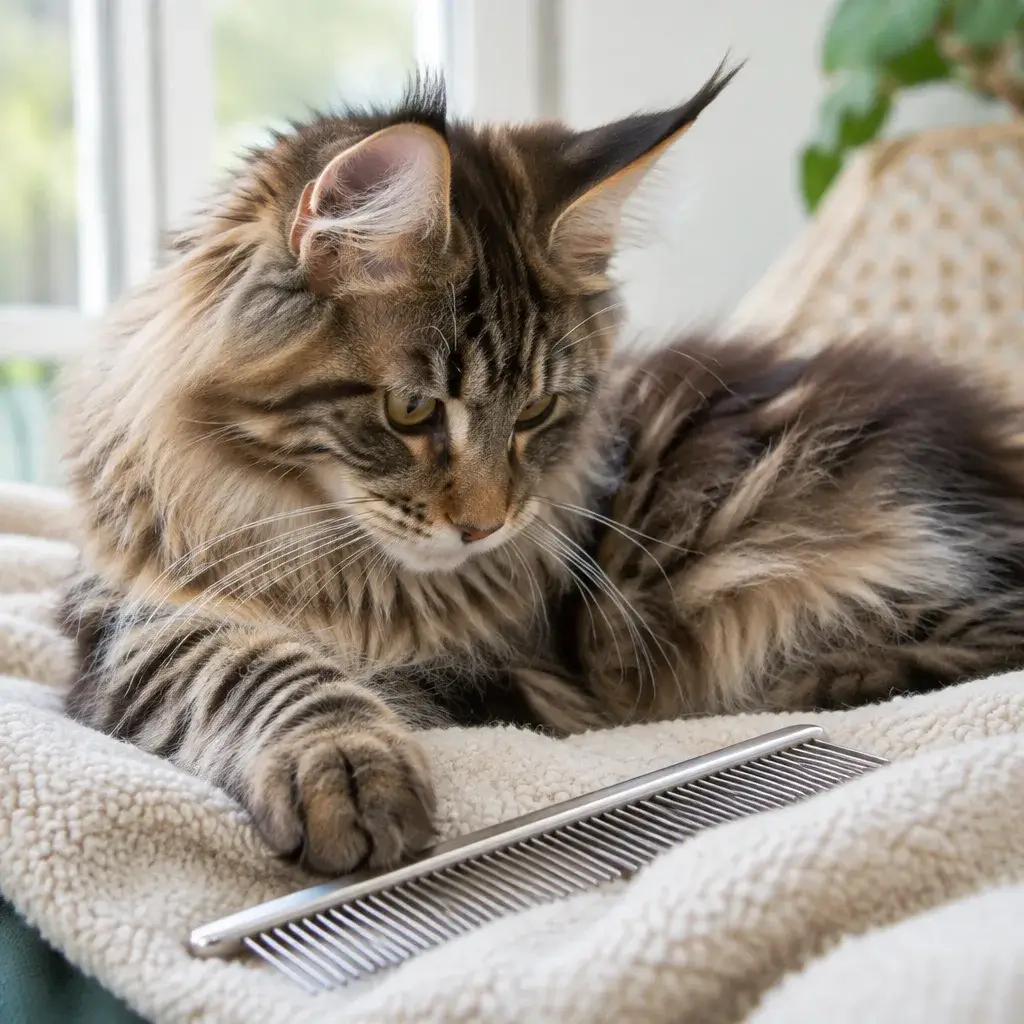
How often do Maine Coons need to be groomed? The answer depends on coat texture, shedding and how well the cat can reach its own fur. A kitten may need only brief practice sessions, while a senior with reduced mobility may need more frequent help and a veterinary check if self-grooming declines.
| Task | Starting schedule |
|---|---|
| Comb the coat | Two or three times weekly; more often if tangles develop |
| Check claws and ears | Weekly; trim claws or clean ears as needed |
| Brush teeth | Aim for daily |
| Bathe | When dirty or advised by your veterinarian |
| Professional grooming | As needed for the individual cat |
If you are considering Maine Coon kittens for sale, plan for coat care before your kitten comes home. At MeoWoff, kittens go home at 12–16 weeks, after socialization and age-appropriate vaccines, and we share their veterinary records with the family.
Grooming tools to have on hand
Start with a wide-tooth metal comb, a gentle brush, cat nail clippers and cat-safe shampoo for occasional use. A soft toothbrush and toothpaste made for cats complete a practical home kit.
Choose tools that move through the coat without scraping or pulling; our guides to Maine Coon brushes and Maine Coon grooming products explain the options. You do not need a bladed dematting tool to begin.

How to brush and comb a Maine Coon
To groom a Maine Coon cat at home, work in small sections with a light touch and reward the cat for cooperating. Start on the back and sides, where handling is often easier, then move gradually to sensitive areas.
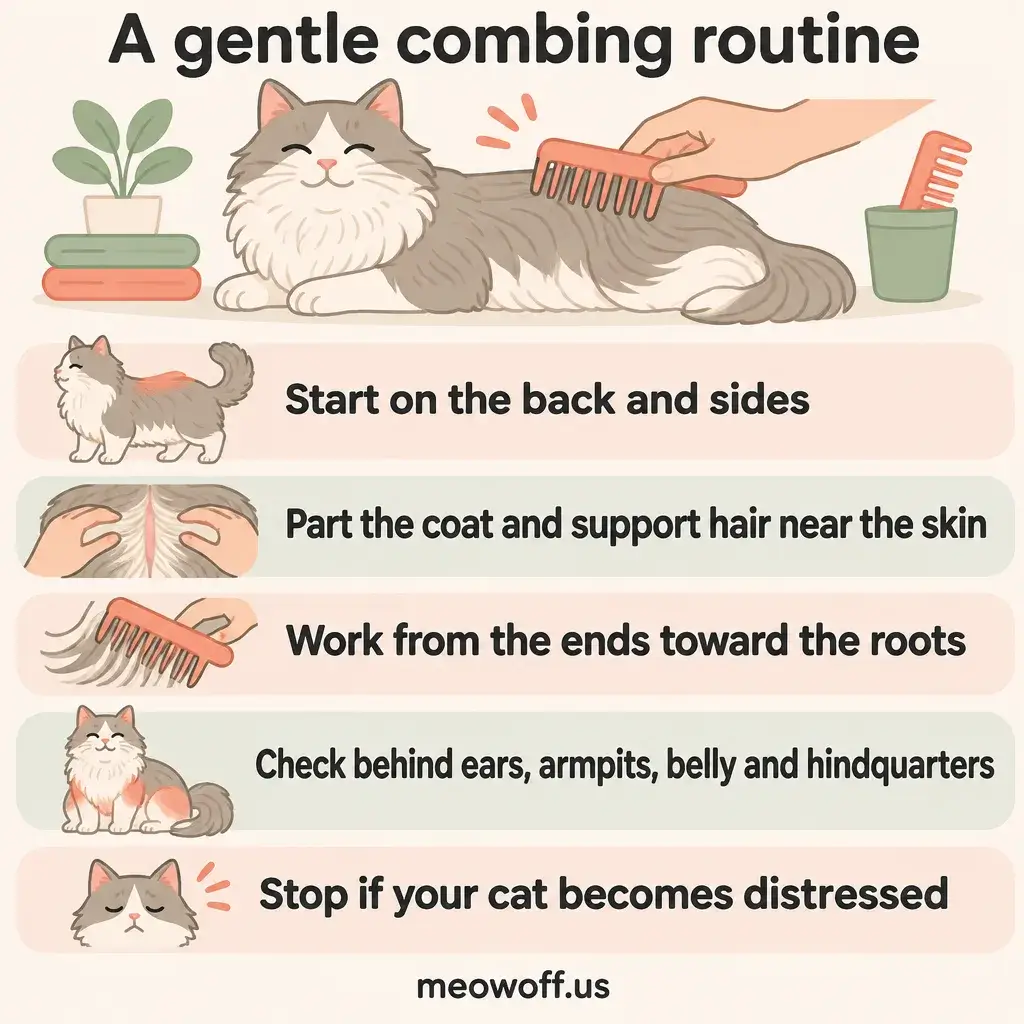
- Let your cat sniff the comb and offer a treat. Choose a calm moment and begin with a few gentle strokes.
- Part the coat so you can see the hair beneath the surface. Support the hair near the skin to avoid pulling it.
- Work from the ends toward the roots, using the comb gently in the direction of hair growth. If it catches, stop rather than pulling through.
- Check behind the ears, the chest, armpits, belly and hindquarters. These spots may need separate, very short sessions.
- Finish with a reward and stop before your cat becomes distressed. You can cover the rest of the coat later.
Run the comb through each section carefully rather than smoothing only the surface. If you find a new lump, sore or patch of hair loss, call your veterinarian instead of brushing over it.

How to handle tangles and mats
Small, loose tangles may be separated gently with your fingers and a comb; tight mats need professional help. Never pull a mat or cut it with scissors, because delicate skin can be drawn into the clump and injured.
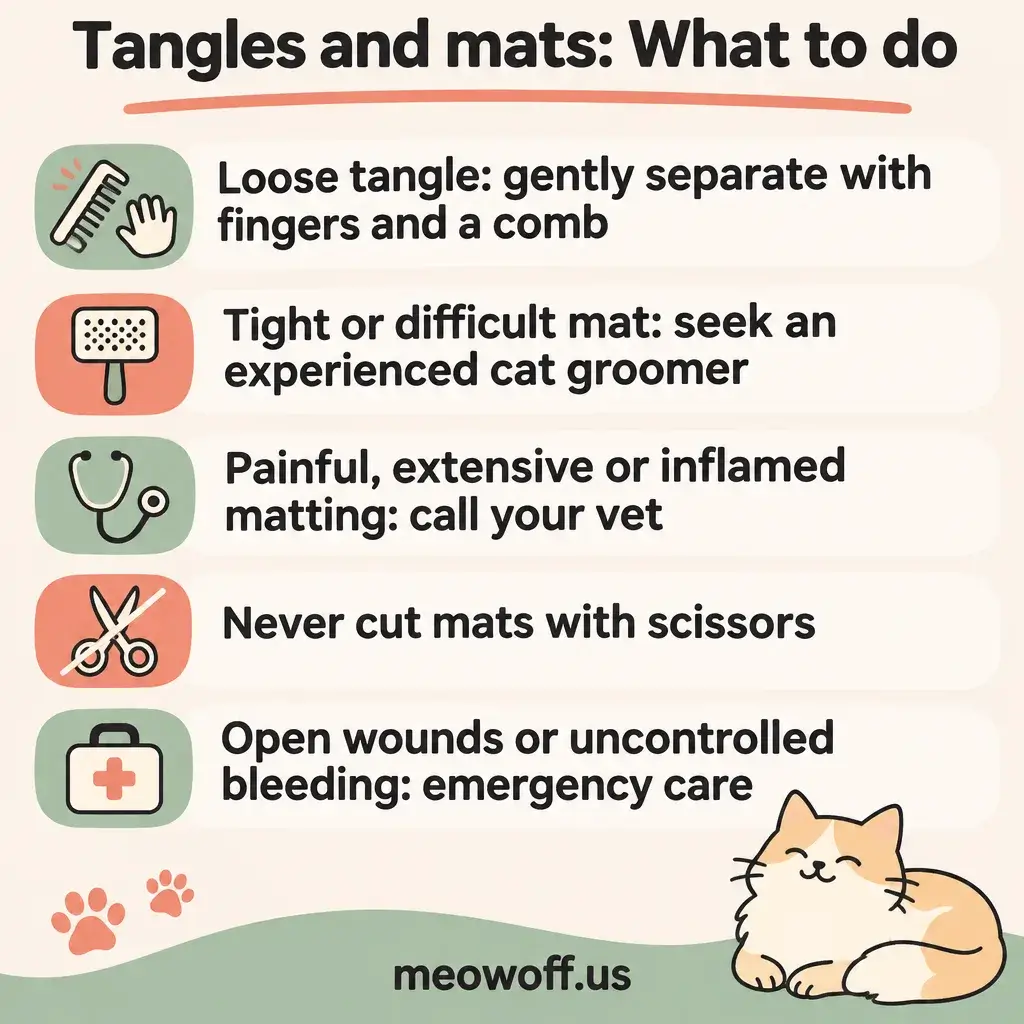
Hold the hair near the skin, loosen the ends with your fingers and work inward a little at a time. Stop if the tangle does not yield easily, your cat reacts painfully or you cannot see where the skin is. An experienced cat groomer can assess a difficult mat; call your veterinarian for painful, extensive or inflamed matting, or a sudden decline in self-grooming.
Call your vet if you notice scaling, bald patches or broken hairs: ringworm is one possible cause and can spread to people and other pets. Until advised otherwise, limit contact with the affected area and wash your hands after handling your cat. Open wounds, uncontrolled bleeding or a cat that seems severely ill warrant emergency veterinary care.
Deshedding treatments and undercoat rakes
A deshedding treatment for cats is a brush-out that removes loose hair; it does not stop normal shedding. A wide-tooth comb is a gentle starting choice, while an optional non-bladed undercoat rake should be used lightly in the direction of hair growth, without pressing on skin or going through mats; stop if it pulls.
If you are wondering whether Maine Coons shed a lot, expect some loose hair and adjust your routine to the coat. Learn more about the shedding seasons and how they can affect grooming.
Bathing and drying
Most Maine Coons do not need routine baths; bathe when the coat is dirty or your veterinarian recommends it. Address loose tangles first, since wetting a matted coat can make it harder to manage.
Set out a towel, cat-safe shampoo and a nonslip mat. Use lukewarm water, keep water and shampoo away from the eyes and ears, and rinse thoroughly. Gently pat with a towel rather than rubbing, keep your cat warm while the coat dries, and stop if the bath causes significant distress.
Call your veterinarian about persistent grease or irritated skin rather than repeatedly bathing it. If a potentially hazardous substance gets on the coat, prevent licking and call your veterinarian or an animal poison-control service immediately for substance-specific instructions; do not assume shampoo is safe for every exposure. Trouble breathing, collapse or seizures are emergencies.
Nails, teeth and ears
Check claws and ears regularly, and aim to brush your cat’s teeth daily with cat toothpaste. These small tasks are easier when introduced separately, one paw, tooth or ear check at a time.
- Claws: Gently press the toe pad to extend the claw and clip only the sharp tip, well away from the pink quick. Check about weekly and trim when needed; a claw catching on fabric or curling toward the pad needs attention. If you cut the quick, apply gentle pressure with clean gauze and call your vet for advice; bleeding that does not stop or a deeply injured claw needs urgent care.
- Teeth: Let your cat taste cat toothpaste, then gradually brush the outer tooth surfaces with a soft pet toothbrush. Daily brushing is the preferred goal, not a replacement for veterinary dental assessments. Call your vet for bad breath, red gums that may indicate gingivitis, drooling or difficulty eating; seek urgent care for severe mouth injury or inability to eat or drink.
- Ears: Look for redness, odor, discharge or frequent scratching. Healthy ears do not necessarily need cleaning; if your vet recommends it, use their suggested cat ear cleaner and wipe only the accessible outer area. Never insert a cotton swab into the ear canal. Call your vet about abnormal signs; a head tilt, loss of balance or severe distress warrants urgent assessment.
For a new arrival, pair these habits with the rest of your kitten care basics, including a veterinary visit and a quiet place to settle in.

Can you cut a Maine Coon’s hair?
Yes, a sanitary trim around the hindquarters or professional clipping of a severely matted coat can be useful, but routine shaving is unnecessary. A lion cut clips much of the body coat short while leaving longer hair around areas such as the head and tail.
Clipping carries a risk of cuts and exposes more skin, and regrowth varies by cat and coat. I recommend discussing the reason for a haircut with a cat-experienced groomer; ask your veterinarian first if the skin is sore or your cat cannot tolerate handling. Call the vet for irritation after clipping, and seek urgent care for a significant cut or bleeding that will not stop.
How often should cats be professionally groomed?
There is no single professional grooming interval that suits every cat. Book according to coat condition, how well home care is working and your cat’s tolerance, and ask a cat-experienced groomer to suggest a schedule.
A basic professional cat grooming appointment may cost roughly $75–$150 in the United States, with difficult matting or additional services increasing the price. Ask for a local quote that specifies the bath, brush-out, nail trim and any mat-removal fees. If sedation is needed, it is a veterinarian’s decision and may involve a separate veterinary charge.
Tell the groomer about sensitive areas and ask how they handle stress and mats. A groomer can help with coat care but cannot replace a veterinary examination or professional veterinary dental treatment.
Helping a cat accept grooming
Build tolerance gradually with brief, rewarding sessions rather than holding a resisting cat down. Let your cat investigate each tool, reward a calm touch, then progress to one stroke or one gently handled paw.
Watch for pinned ears, tail flicking, growling or attempts to leave. Stop and give your cat space; try again later at an easier step. For example, a four-month-old kitten might start with a treat for sniffing the comb, then practice one stroke on the back at the next session.
If resistance is new, call your veterinarian: pain or illness may make handling uncomfortable. If handling is unsafe even after gradual practice, ask your vet or an experienced cat groomer for help. Sudden severe pain, collapse or difficulty breathing is an emergency.
Families considering Maine Coon kittens in Illinois can also plan a gentle grooming routine before pickup. Our Wood Dale showroom is open by appointment, and we provide guidance for the first 48 hours and first weeks at home.
Questions about Maine Coon grooming? Talk to MeoWoff
We can help you prepare a gentle grooming routine for a Maine Coon kitten and answer questions about the first weeks at home.
Call (773) 917-0073 or send us a message to talk with our team.