

Ragdoll vs. Maine Coon is a choice between two large, affectionate cats with overlapping sizes and different typical activity levels. Ragdolls often prefer a calmer pace, while Maine Coons are often more active and exploratory; the individual kitten matters more than either generalization.
Ragdoll vs. Maine Coon at a glance
Both breeds need companionship, play, grooming, and veterinary care. A Maine Coon may need more coat maintenance, while a Ragdoll is not guaranteed to be a lap cat.
| Feature | Ragdoll | Maine Coon |
|---|---|---|
| Adult weight | Females 10–15 lb; males 15–20 lb | Females 8–12 lb; males 13–18 lb |
| Personality | Often relaxed and people-oriented | Often curious and playful |
| Grooming | Brush several times a week | Brush several times a week; check frequently for tangles |
| Health | Ask about heart screening | Ask about heart screening, SMA, and hips |
| MeoWoff kitten price | Typically within $2,100–$5,800 | Typically within $2,100–$5,800 |
To meet the types of kittens you are comparing, explore our Maine Coon kittens for sale and Ragdoll kittens. Look at each kitten’s temperament and records, not just its photograph.

Ragdoll cat or Maine Coon: size and appearance
Ragdoll cat size vs. Maine Coon size is closer than many people expect: both are large, and their adult weight ranges overlap. Maine Coon males commonly weigh about 13–18 pounds and females 8–12 pounds; Ragdoll males commonly weigh about 15–20 pounds and females 10–15 pounds.
Maine Coons are among the largest domestic cat breeds, but an individual Ragdoll can outweigh an individual Maine Coon. Weight alone does not tell you whether a cat is healthy: body condition, frame, and muscle matter too.
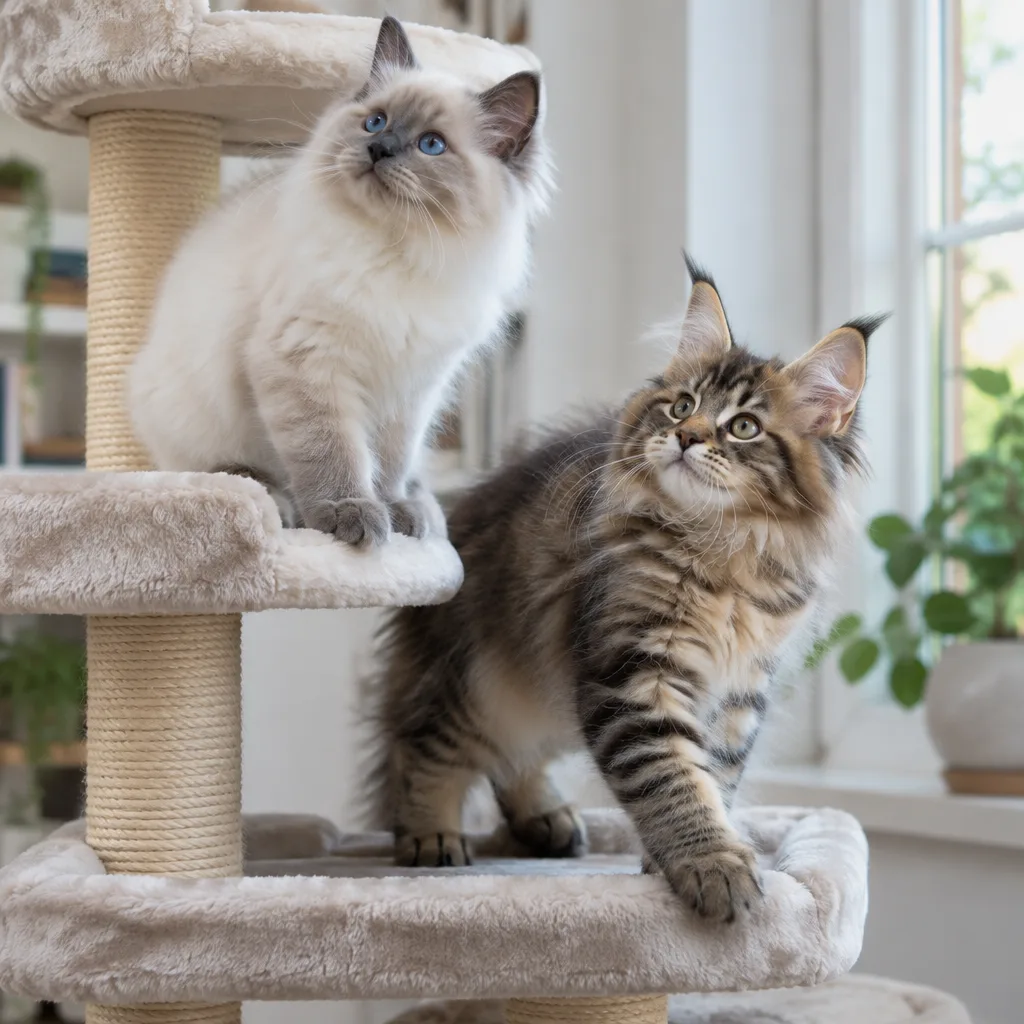
A Maine Coon generally has a long, rectangular body, a shaggy coat, a bushy tail, and tufted ears. Colors include brown tabby, solid black, and tortoiseshell; eyes may be green, gold, or copper, among other colors.
A Ragdoll has a substantial body and a silky, semi-long coat with darker points on the face, ears, legs, and tail. Traditional Ragdolls have blue eyes and come in colors such as seal and blue, with colorpoint, mitted, or bicolor patterns.
CFA and TICA breed standards describe these features, but no kitten will match every generalization. For more on Maine Coon size and the rugged giant, compare build as well as weight.
Both breeds mature slowly, so a kitten’s present weight is not a reliable prediction of its adult size. If you are wondering whether your large-breed kitten is on track or how much a Maine Coon cat weighs at different ages, track growth with your veterinarian rather than trying to make a kitten reach a target number.
Ragdoll vs. Maine Coon personality
Ragdolls are often described as relaxed and affectionate, while Maine Coons tend to be curious, interactive, and playful. Both can learn games and enjoy human company, but neither breed is inherently guaranteed to be smarter or friendlier.
Are Ragdolls the calmest cats? They are widely known for a laid-back temperament, but there is no meaningful ranking that makes every Ragdoll calmer than every other cat. A young kitten of either breed may be energetic and need several play opportunities throughout the day.
Do Maine Coons dislike being held? Some enjoy it and some prefer to sit beside you; the same is true of Ragdolls. Support a cat’s chest and hindquarters, keep handling brief at first, and put the cat down if it struggles or tries to leave.
A Maine Coon may develop a favorite person or share its attention among the household. Ragdolls are often considered the more clingy of the two, but either breed may follow you around or prefer occasional solitude. Maine Coons may chirp or trill, while Ragdolls often have softer voices; individual cats vary.
Grooming and coat care
Both breeds shed and benefit from brushing several times a week; Maine Coons often need closer attention to tangles in their shaggier coats. Check behind the ears, under the legs, and around the collar, using a gentle comb and rewarding short, calm sessions.
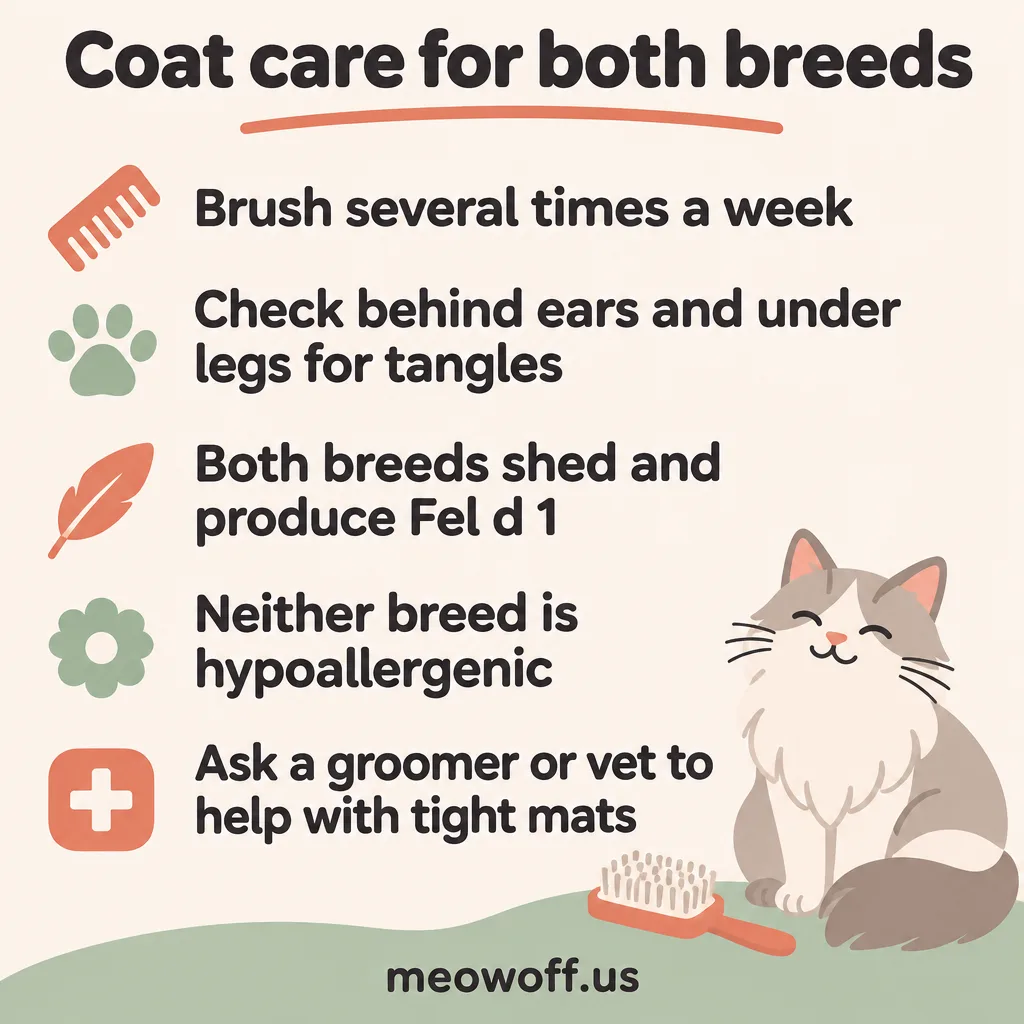
Neither breed is hypoallergenic: both produce Fel d 1, a protein involved in many cat allergies. If someone in your household is allergic, spend time around individual cats and discuss the situation with an allergist before committing; brushing cannot guarantee an allergy-free home.
Do not cut a tight mat close to the skin with scissors, because cat skin can be injured easily. Ask a groomer or veterinarian for help; call your veterinarian if the skin is red, sore, or has a persistent wound.

Health and lifespan
Both breeds commonly live around 12–15 years, although some cats live longer or shorter lives. Regular examinations, appropriate preventive care, and attention to changes at home help your veterinarian identify problems.
Hypertrophic cardiomyopathy (HCM), a disease that thickens the heart muscle, can affect both breeds. Ask for the parents’ cardiac screening results, including heart ultrasound information, and any relevant breed-specific DNA results. A DNA test checks particular variants and cannot rule out every cause of HCM; an ultrasound is a snapshot, not a lifetime guarantee.
Maine Coons can also be affected by spinal muscular atrophy (SMA) and hip dysplasia. Ask about relevant SMA DNA testing and any hip assessments in the family. Polycystic kidney disease can occur in cats, but its relevance and testing depend on the family line and the variant being considered.
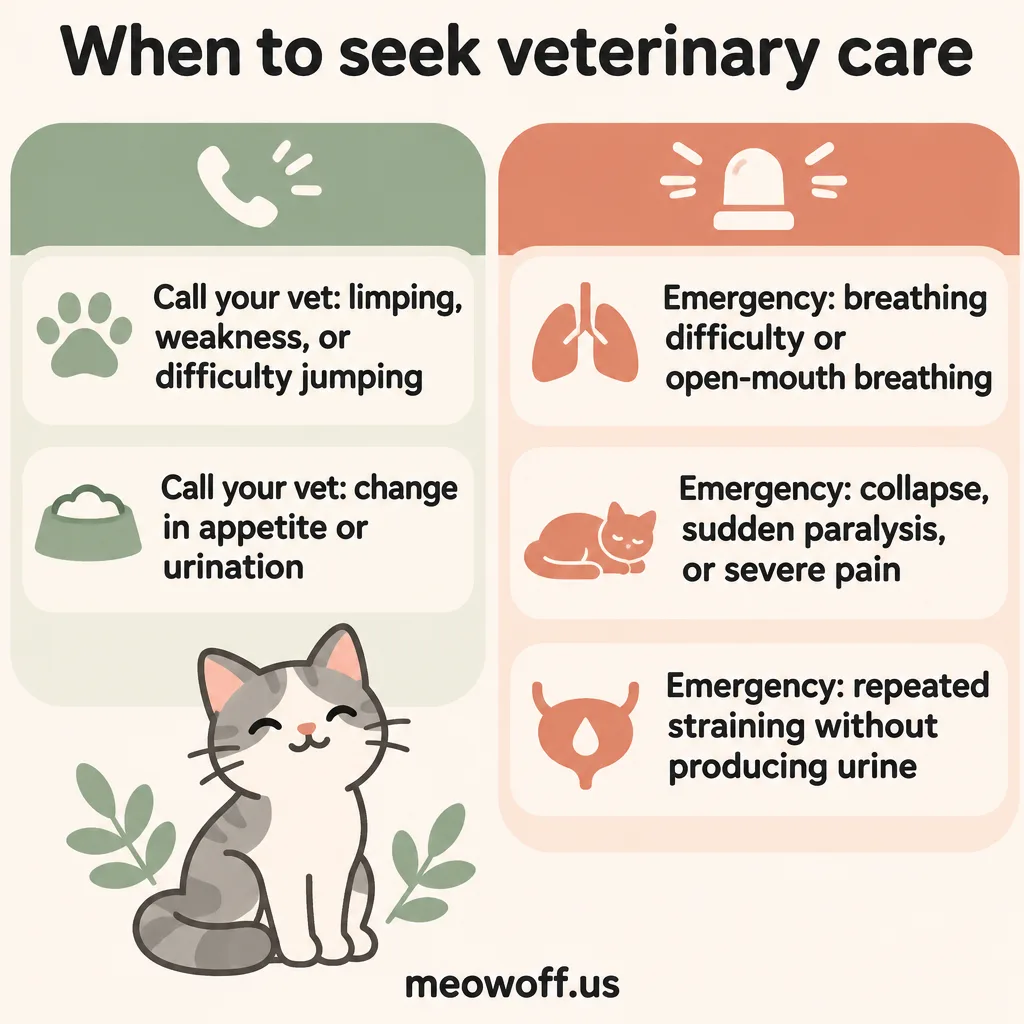
Call your veterinarian if a cat develops limping, weakness, difficulty jumping, or a change in appetite or urination. Breathing difficulty, open-mouth breathing, collapse, sudden paralysis or severe pain, or repeated straining without producing urine are emergencies: seek veterinary care immediately.
Feed a complete and balanced diet labeled for the cat’s life stage, following an AAFCO nutritional adequacy statement. Portion meals for both breeds, adjust with your veterinarian as the cat grows, and plan for checkups, vaccines, parasite prevention, and dental care. Veterinary costs depend on location and services, so ask your local clinic for an estimate and keep a separate emergency fund.

Which breed fits your home?
Either breed can live indoors, including in an apartment, if it has suitable space, enrichment, and attention. Neither needs unrestricted outdoor access; a secure window perch and supervised play can make indoor life more interesting.
Choose sturdy scratching posts, a stable cat tree, and a litter box large enough for an adult cat to turn around comfortably. Offer daily interactive play and puzzle feeders, then allow quiet rest. A Maine Coon may enjoy more climbing and exploration, while a Ragdoll may prefer a quieter routine, but watch what your own cat chooses.
Maine Coon and Ragdoll cats can live together, and either may share a home with children or a cat-friendly dog. Success depends on the animals’ personalities and a careful introduction, not their breeds alone.
- Give the new cat a separate room with food, water, a litter box, and a hiding place.
- Exchange bedding and let the animals investigate each other’s scent before a visual meeting.
- Arrange brief, supervised meetings with escape routes; reward calm behavior and separate them if either becomes distressed.
- Give each cat access to its own resources, including litter boxes and resting places, and let children learn to handle cats gently.
Move at the animals’ pace rather than forcing contact. Call your veterinarian if a cat stops eating, hides persistently, or shows a marked behavior change; seek emergency care for breathing difficulty, collapse, or serious injury.
Ragdoll vs. Maine Coon kitten price
At MeoWoff, kittens of either breed typically cost $2,100–$5,800, with the individual price depending on breed, pedigree, and pet, show, or breeding quality. A larger adult size does not automatically mean a higher price, and this site-wide range is not a separate market price for each breed.
The $500 reservation deposit is part of the kitten’s price, not an additional charge. For example, a $3,000 kitten reserved with a $500 deposit would have $2,500 of the kitten price remaining; delivery and optional services are separate.
Pickup is available in Wood Dale; ground delivery starts at $600 and flight nanny delivery at $1,000. An optional heart ultrasound and genetic test are $200 each. Ask what is included for the particular kitten and budget separately for food, supplies, routine veterinary care, and unexpected treatment.
If you are asking whether Maine Coon cats are expensive, look beyond the purchase price. A Maine Coon pedigree can also help explain differences between individual kittens’ prices.
How much does a Maine Coon Ragdoll mix cost?
A Maine Coon Ragdoll mix, sometimes called a Ragcoon, has no dependable breed-wide price: adoption fees and seller prices vary by location, source, and care provided. Ask for the actual fee and what it includes rather than assuming it will match a purebred kitten’s price.
A mix is not guaranteed to combine either breed’s size, coat, or temperament in a predictable way. Request available parentage and health documentation, ask what veterinary care the kitten has received, and choose based on the individual animal’s needs.
How to choose an individual kitten
Choose the kitten whose health history, temperament, and care fit your household, rather than choosing by color or expected size alone. My priority is health, genetics, and temperament before looks, and I do not recommend chasing a rare color at the expense of those qualities.
When you meet a kitten, observe how it explores, plays, rests, and responds to gentle handling without insisting that it behave a certain way. Ask about the parents’ screening, what records are available, and how the kitten has been socialized. Registration with an organization is useful pedigree information, but it does not replace health screening.
At MeoWoff, kittens go home at 12–16 weeks, after socialization and age-appropriate vaccines; they are microchipped, and vet records are shared with the family. Our partner catteries are registered with WCF and TICA, and we offer guidance for the first 48 hours and first weeks at home.
Visits to our showroom at 126 E Irving Park Rd, Wood Dale, IL 60191, are by appointment. Families looking for Maine Coon kittens in Oklahoma can also ask us about delivery; we deliver to all 50 states.
Questions about Ragdolls and Maine Coons? Talk to MeoWoff
We can help you compare individual kittens, discuss available records, and prepare for your new companion’s first weeks at home.
Call (773) 917-0073 or send us a message to talk with our team.


