

Cat breeds that are easy to take care of include the British Shorthair for a quieter home, while a Ragdoll may suit someone seeking companionship and a Bengal can be a good match for active play. The best kitten breeds for your family and home are those whose individual temperament and care needs fit your routine, not a promise of a perfect breed.
Which kitten breed is best for your family?
A British Shorthair, Ragdoll, or Bengal can be a good starting point, depending on how much grooming, interaction, and play your household can provide. The best breed of cat to own is the one whose needs you can meet throughout its life.
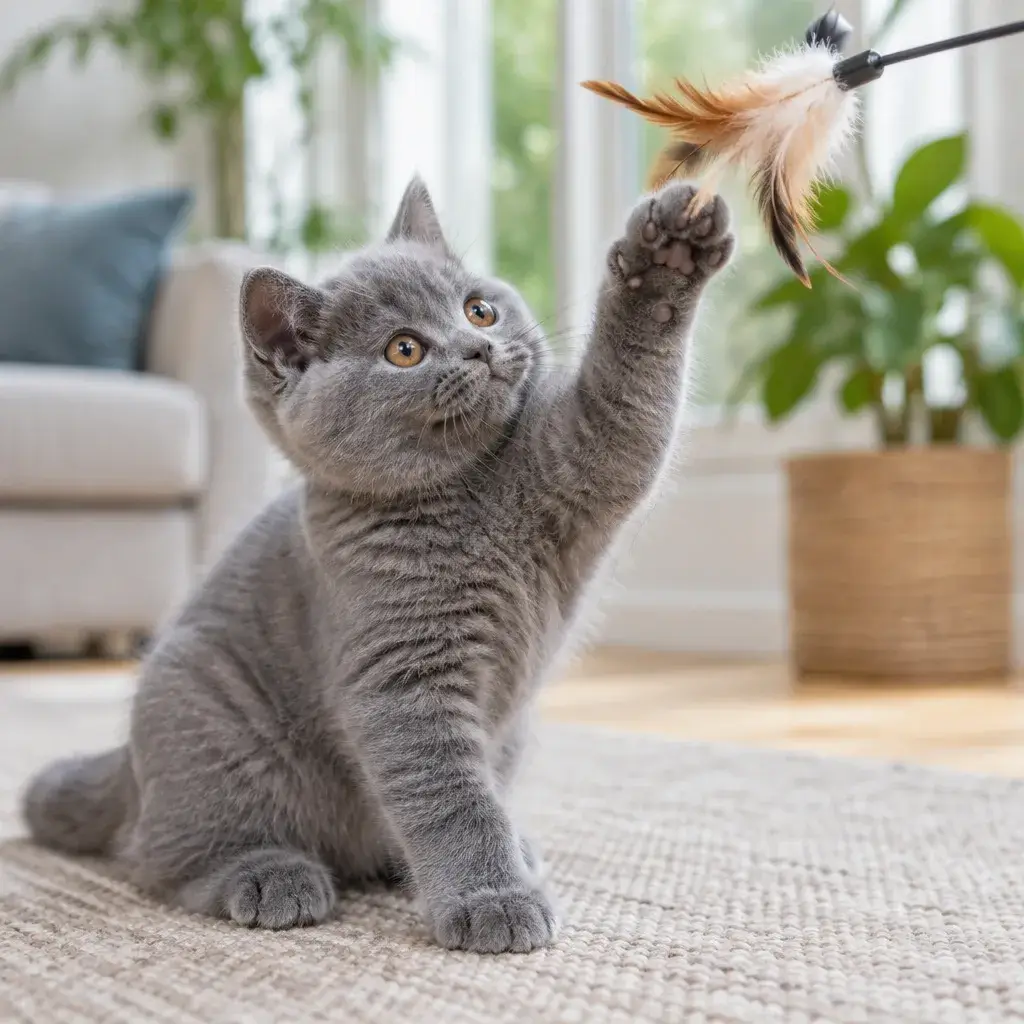
I advise families to look beyond appearance. A kitten that approaches people, plays comfortably, and recovers after a gentle interruption may fit an engaged household, but even siblings can have different personalities. Ask how each kitten behaves across ordinary days, not just during one visit.
Our purebred kittens for sale are a place to start comparing individual kittens. Tell us about your schedule, children, other pets, and grooming preferences before choosing by color or photograph.
What types of kittens can you bring home?
The main types of kittens include pedigree kittens from recognized breeds and domestic shorthair or longhair kittens of mixed or unknown ancestry. Tabby describes a coat pattern, not a breed; both pedigree and domestic cats can have tabby markings.
A pedigree offers information about ancestry and breed tendencies, while a shelter or rescue may have kittens and adults with varied appearances and personalities. Ask either source about health records, observed behavior, and the care already provided. Mixed ancestry does not guarantee better health, just as a pedigree does not guarantee freedom from disease.
Shelter fees and included services vary, so ask whether vaccines, microchipping, and spay or neuter are included. When buying, request written terms and health documentation before paying a deposit.

How do popular kitten breeds compare?
British Shorthairs are often relatively settled, Bengals tend to be active, and Ragdolls are often sociable, but each kitten is an individual. Use this table to compare the daily work behind those tendencies.
| Breed | Typical energy and sociability | Grooming | Household trade-off |
|---|---|---|---|
| British Shorthair | Moderate; often enjoys company without constant handling | Regular brushing of a dense short coat | May prefer sitting nearby to being carried |
| Maine Coon | Moderate to active; often social and playful | Regular combing of a long coat | Large adult size means room for sturdy equipment |
| Ragdoll | Moderate; often people-oriented | Regular combing of a semi-long coat | Companionship matters; not every cat enjoys being held |
| Bengal | High; often curious and interactive | Short coat, generally easy to brush | Needs substantial play and enrichment |
| Russian Blue | Moderate; can be reserved with unfamiliar people | Regular brushing of a short, dense coat | May appreciate a predictable routine |
| Siamese | Active, social, and often vocal | Short coat, generally easy to brush | Needs interaction; vocalizing may not suit everyone |
| Sphynx | Active and often social | Regular skin and ear care | Little coat does not mean little grooming |
For a closer look at Bengal cat size vs. Maine Coon, compare their space and activity needs as well as their appearance. Families looking for a Maine Coon for sale in Arkansas can also discuss delivery with our team.
Which cat breeds are easy to take care of?
British Shorthairs and many individual domestic shorthairs have relatively manageable coats, making them reasonable choices if you prefer less brushing. No breed is maintenance-free: every cat needs daily food and water, litter care, play, companionship, and preventive veterinary care.
Brush a short coat regularly and check for knots or skin changes. A Persian’s long coat generally calls for daily combing, while a Sphynx needs skin care despite having little hair. Ask your veterinarian how to clean a Sphynx’s skin and ears safely; call if you notice a rash, sores, persistent scratching, or discharge.
A Devon Rex has a short, delicate coat that benefits from gentle handling. For routines beyond grooming, our complete cat care guide covers everyday care.
Which breeds suit different households?
British Shorthairs and Ragdolls can suit quieter routines, Maine Coons can suit engaged families, and Bengals can fit people ready to provide active enrichment. The same household label does not predict every family’s schedule, so choose for your actual day rather than your address.
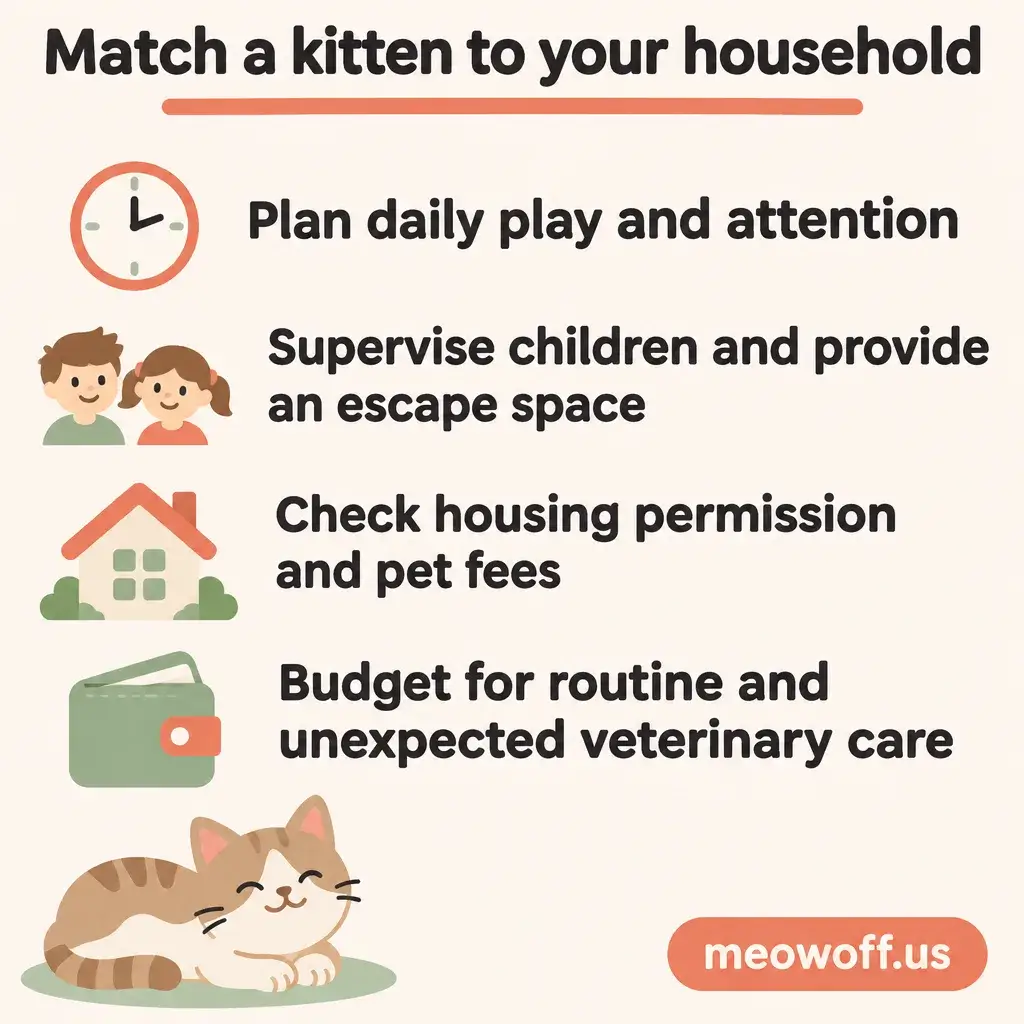
- Homeowners: The best kitten breeds for homeowners depend on available playtime, not just floor space. A British Shorthair may suit a quieter routine; a Bengal needs climbing, games, and attention even in a large house.
- Newlyweds: A Ragdoll or British Shorthair may be appealing if you want a companion for a settled routine. Discuss who feeds, cleans litter, pays for care, and takes the cat to appointments when plans change.
- Parents and new moms: Consider a sociable Maine Coon, Ragdoll, or an adult cat whose behavior is already known. An adult must supervise children, teach gentle contact, and give the cat an escape space that children cannot invade.
- Students: An individual domestic shorthair or British Shorthair may have manageable grooming, but a kitten still needs daily attention. Check housing permission, pet fees, travel plans, and who will care for the cat during exams or breaks.
An apartment can work with safe climbing space, scratching posts, and daily play; owning a house does not make outdoor roaming necessary. For existing pets, begin in separate spaces, exchange scents, and progress to supervised meetings as everyone remains comfortable. Introduction timing should follow the animals’ behavior and your veterinarian’s advice, not a fixed number of days.
Budget for food, litter, supplies, routine veterinary visits, and unexpected illness as well as the initial price. Ask local clinics for estimates and consider a savings fund or insurance; costs vary by location and individual needs.

What makes a cat affectionate or intelligent?
Affectionate cats may follow people, sit nearby, rub against a hand, or initiate contact; they do not have to enjoy being picked up. Ragdolls and Maine Coons are possibilities for people seeking companionship, but neither is guaranteed to be a lap cat.
Let a kitten approach, offer a hand, and notice whether it returns after play or chooses to rest nearby. A shy kitten may need more time in a new setting, so ask the caregiver what behavior they see at home. Personality can change with experience, environment, and health throughout a cat’s life.
Bengals and Siamese are often interactive and can enjoy puzzle feeders or reward-based training. Rather than ranking the smartest house cat, look for an individual that enjoys the games you can offer. An Oriental cat is another option to explore if you enjoy a sociable, communicative companion.
Which breeds should you avoid?
Avoid a mismatch between the cat’s needs and your capacity rather than labeling an entire breed bad. Reconsider a Bengal if you cannot provide regular active play, or a Persian if daily coat care is impractical.
Scottish Fold ears are associated with an inherited cartilage disorder that can also cause painful joint disease. Discuss the welfare implications and family health history with a veterinarian before considering one. Call your veterinarian for stiffness, limping, or reluctance to jump; seek emergency care if a cat cannot stand or walk, has severe pain, or has suffered a serious injury.
My priority is health, genetics, and temperament before appearance. An unusual look or rare color is not a substitute for a careful discussion of welfare and documented health screening.
Should you choose a kitten or an adult cat?
Choose a kitten if you can provide close supervision, socialization, and patient training; consider an adult if you want behavior that is often easier to observe before bringing the cat home. Both need play, companionship, and veterinary care, and neither age guarantees a particular temperament.
Ask a shelter, rescue, or breeder how the individual responds to people, handling, other animals, and a normal routine. An adult may already have litter habits, while a kitten will need more help learning household rules. Either can need time to adjust, and behavior can change after a move.

How do you narrow your choices?
Start with the time you have for play, the household’s needs, and the grooming you can realistically maintain. Shortlist a few cats, then compare their observed behavior rather than choosing from breed descriptions alone. Our cat compatibility questions can help you organize those priorities before contacting a breeder or shelter.
What if someone in your home has cat allergies?
No cat is guaranteed allergen-free, including a Siberian, Russian Blue, Devon Rex, or Sphynx. Fel d 1 is a major cat allergen, and reactions vary by person and cat; a brief visit cannot rule out later symptoms. Consult an allergist before committing and compare the practical considerations in our guide to hypoallergenic cat breeds.
What should you ask before reserving a kitten?
Ask about the kitten’s observed temperament, socialization, health history, and breed-relevant screening before paying a deposit. Request the available veterinary records and written purchase terms, and ask what the kitten still needs from your own veterinarian.
- How does this kitten respond to play, gentle handling, visitors, and everyday sounds?
- What health screening was performed on the parents or kitten, and can I review the results?
- Which vaccines has the kitten received, and when should my veterinarian review the next steps?
- What does the deposit cover, and what are the written cancellation and delivery terms?
MeoWoff works with partner catteries registered with WCF and TICA. Our kittens go home at 12–16 weeks, after socialization and age-appropriate vaccines; they are microchipped, and veterinary records are shared with the family. A $500 deposit reserves a kitten and is part of the price.
Typical MeoWoff kitten prices are $2,100–$5,800, depending on breed, pedigree, and pet, show, or breeding quality. Pickup is in Wood Dale; ground delivery starts at $600 and flight nanny delivery at $1,000. An optional heart ultrasound and genetic test are $200 each; ask which screening is appropriate for the individual kitten and what each test covers.
Before arrival, arrange a veterinary appointment and prepare a quiet room with food, water, a bed, scratching surface, and litter box away from food. Secure cords, remove toxic plants and small swallowable objects, and give the kitten a carrier. We offer guidance for the first 48 hours and first weeks at home; Months Two and Three at Home: What to Expect From Your Kitten After the Initial Adjustment can help with the next stage.
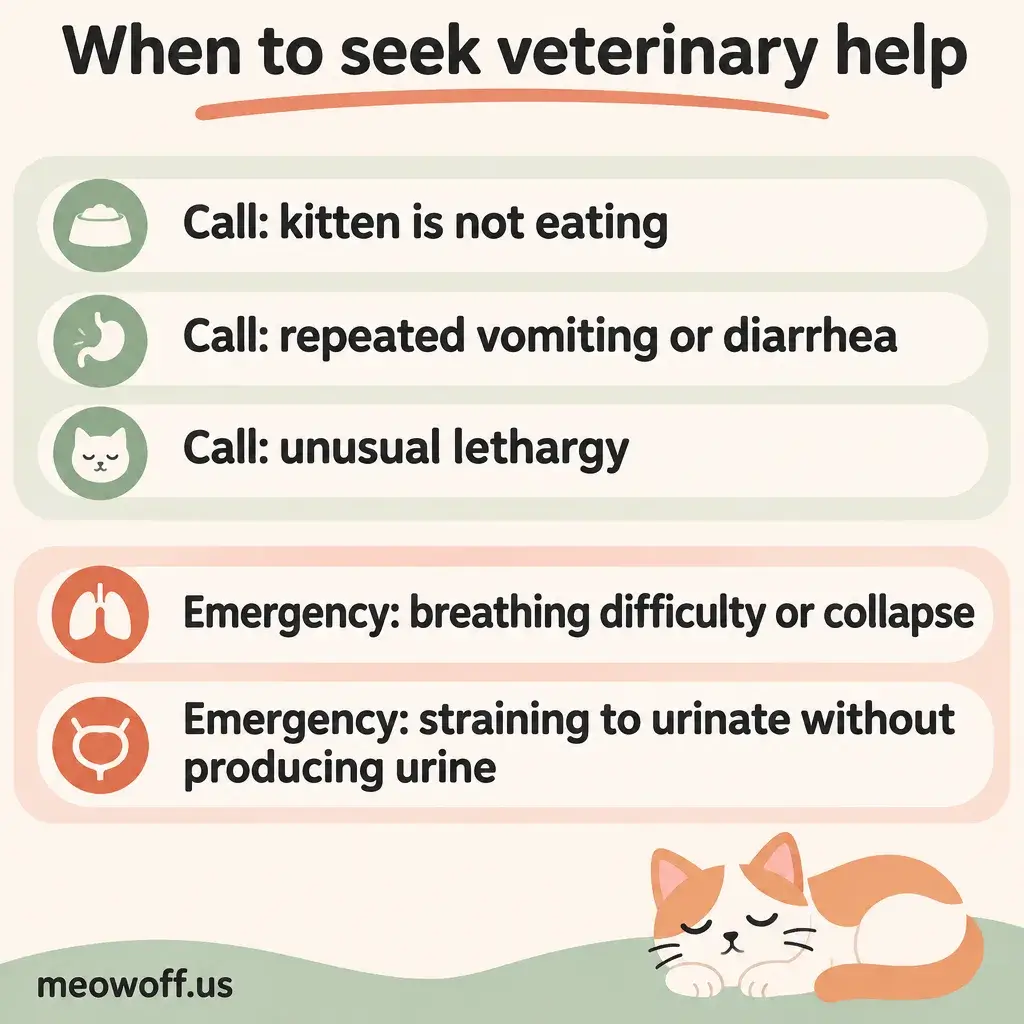
Some hiding after a move can be normal, but monitor eating, drinking, litter use, and activity. Call your veterinarian promptly if a kitten is not eating, has repeated vomiting or diarrhea, or seems unusually lethargic. Breathing difficulty, collapse, or straining to urinate without producing urine is an emergency: seek urgent veterinary care immediately.
Visit our showroom by appointment at 126 E Irving Park Rd, Wood Dale, IL 60191, or call (773) 917-0073 to discuss a kitten and your household.


Questions about choosing a kitten breed? Talk to MeoWoff
Tell us about your household, schedule, and preferences, and we can help you compare individual kittens and prepare for their arrival.
Call (773) 917-0073 or send us a message to talk with our team.


