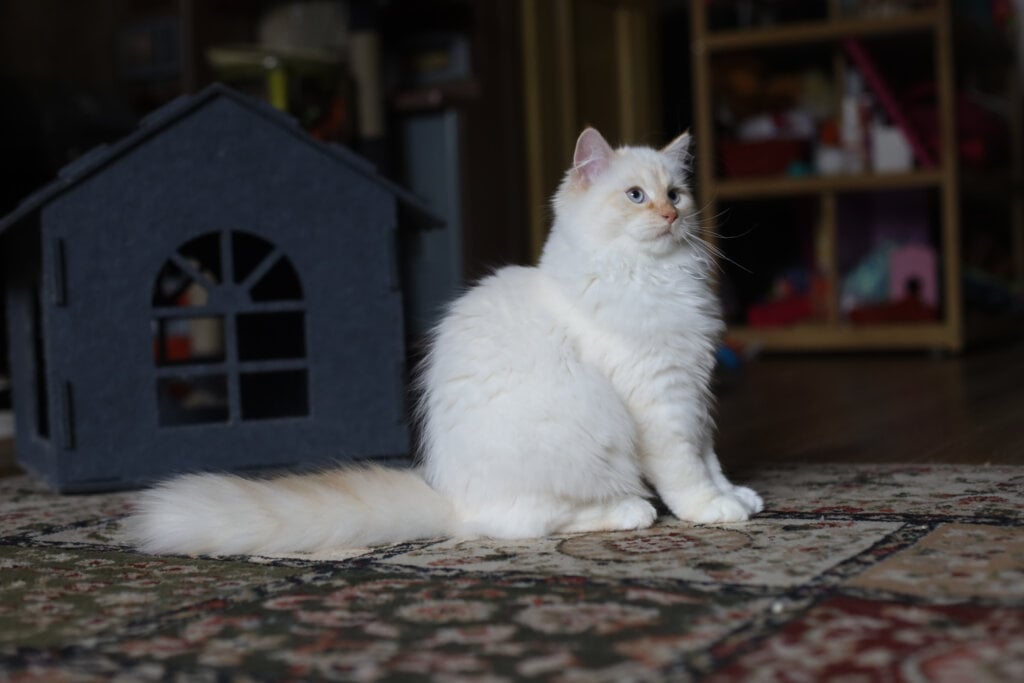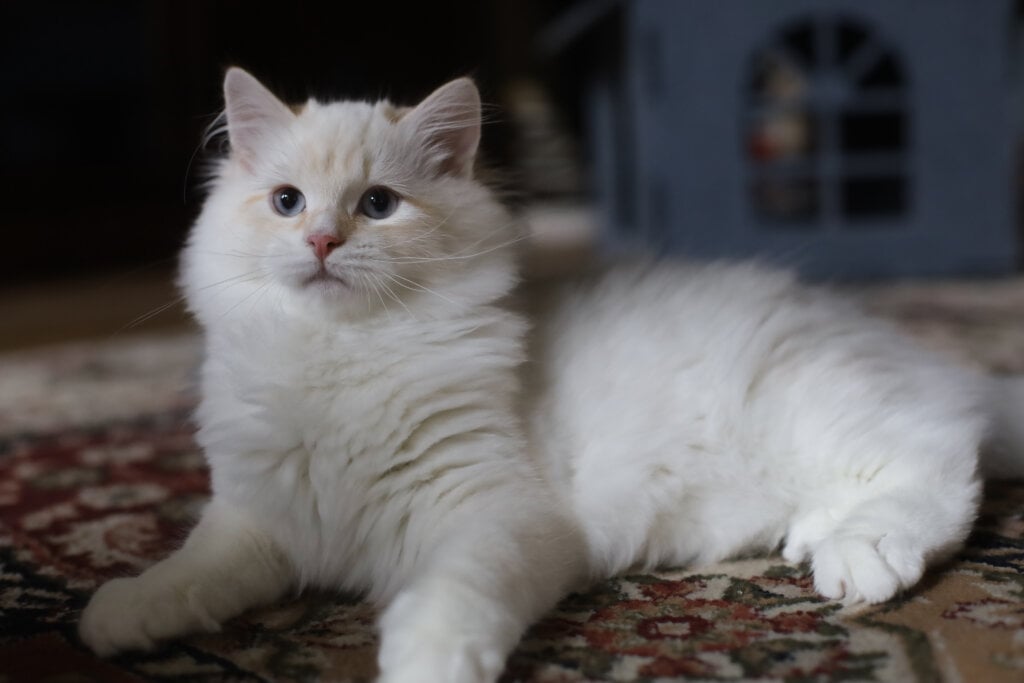

Maine Coon personality is typically sociable, curious and playful, though each cat has its own preferences and energy level. If you are wondering what the temperament of a Maine Coon is like at home, expect an interested companion rather than a guaranteed lap cat.
What is a Maine Coon’s personality and temperament?
Maine Coons are often friendly, observant cats that like to participate in household life. Some follow their people from room to room, while others are content to watch from a comfortable perch.
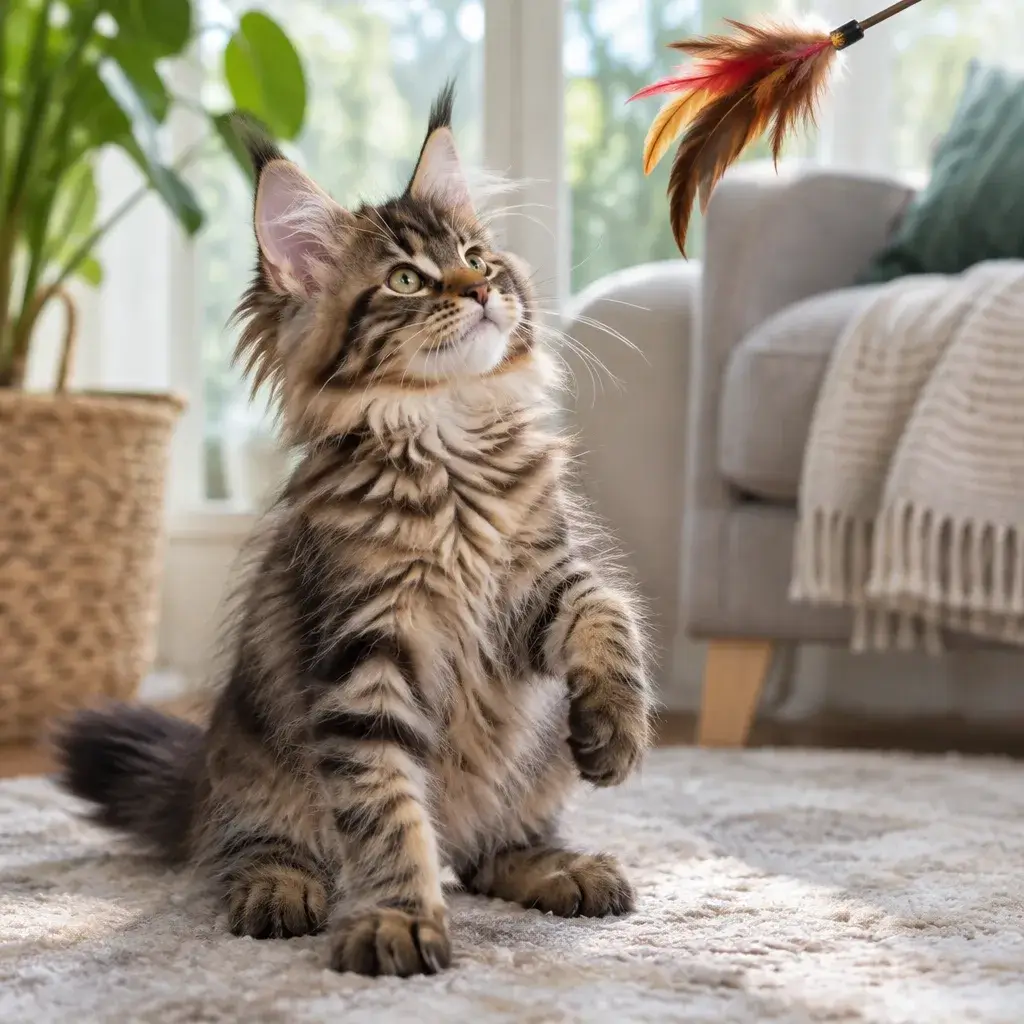
Common Maine Coon behavior characteristics include curiosity, interest in play and a willingness to spend time near familiar people. Personality also reflects the individual cat, its experiences and how it is treated. For more on Maine Coon cats’ personality traits, explore their physical and behavioral characteristics.
If you are considering Maine Coon kittens for sale, ask about each kitten’s behavior rather than choosing on appearance alone.

Are Maine Coons lovable and cuddly?
Many Maine Coons enjoy affection, but a cuddly Maine Coon may prefer sitting beside you to being held or sitting on your lap. Others seek out close contact, and preferences can change with circumstances.
Invite interaction and let the cat leave when it wants to. A relaxed body and leaning into your hand can signal that petting is welcome; a twitching tail, flattened ears or moving away means it is time to stop. Read more about whether Maine Coons are affectionate.
Do Maine Coons attach to one person?
Some Maine Coons favor one person, while others form close bonds with several members of a household. A favorite person may be the one who provides predictable meals, gentle attention or enjoyable play, but there is no way to promise a particular bond.
Let everyone participate in care without competing for the cat’s attention. Offer a toy, sit quietly nearby and allow the cat to approach on its own. Consistency helps build trust, especially while a kitten is settling into a new home.
Are Maine Coons high energy?
Maine Coons are often playful and curious, but they are not all high-energy cats. Many remain interested in play as adults, although the intensity and type of play vary with age, health and personality.
Plan for interactive play every day, with breaks when your cat loses interest. A wand toy, a food puzzle and a sturdy climbing tree give a cat opportunities to chase, solve problems and observe its surroundings. Put wand toys and strings away after supervised play so they cannot be swallowed.
A large house is not essential. An apartment can work well if it has safe climbing and scratching areas, places to rest and an owner who makes time for engagement. Secure windows and balconies, and choose equipment stable enough for a large cat.

What are their characteristics and aptitudes?
Maine Coons often explore their surroundings, learn household routines and communicate with chirps or trills. Some investigate water, while others ignore it; neither behavior is required for a cat to be a Maine Coon.
Many can learn simple behaviors through reward-based training. For example, reward a kitten for stepping into an open carrier, then gradually build up to closing the door briefly. To explore whether Maine Coons are intelligent cats, see our discussion of learning and enrichment.
What are signs my Maine Coon is happy?
Signs your Maine Coon may be happy include a relaxed posture, voluntary social contact and interest in its usual activities. Look at the whole cat and its normal routine rather than relying on a single sound or gesture.
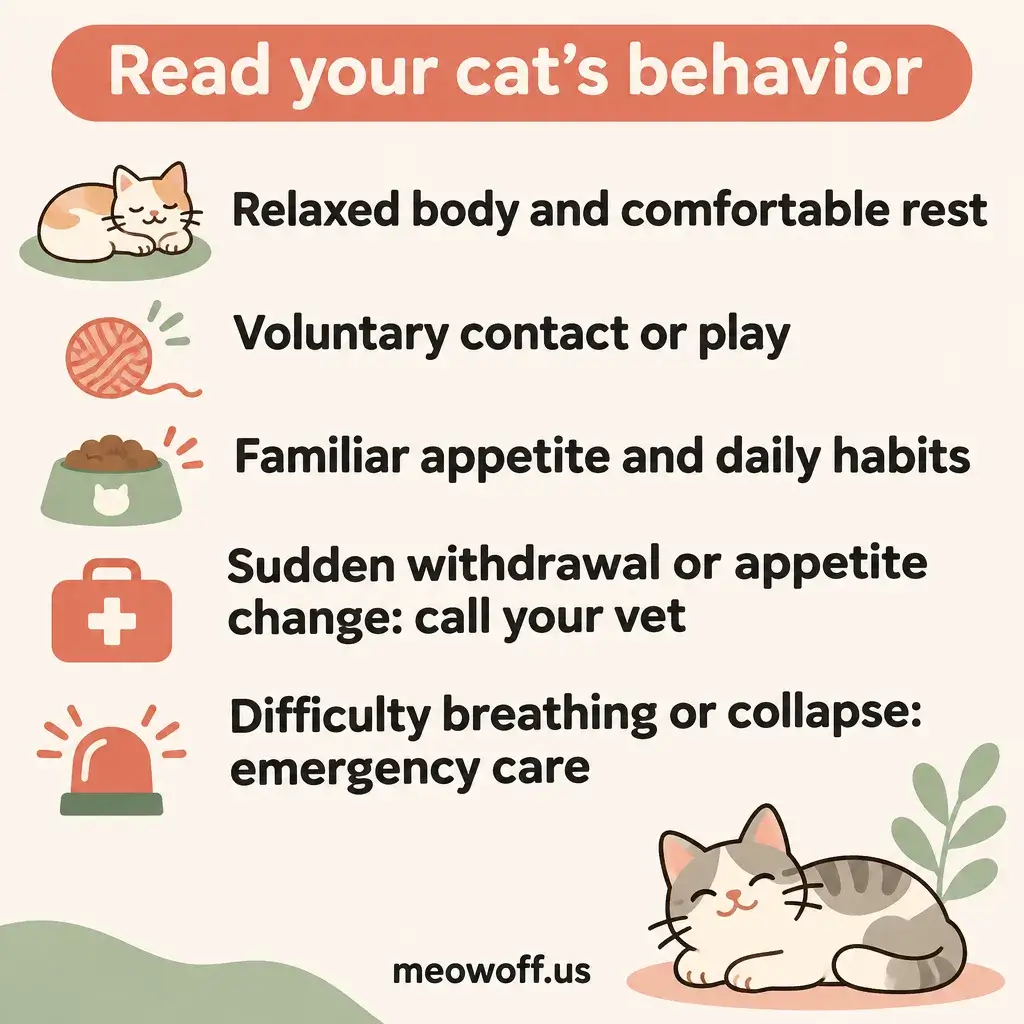
- Relaxed body: The cat rests comfortably, with a loose posture rather than crouching tensely.
- Voluntary engagement: It approaches, rubs against you or chooses to play or rest nearby.
- Familiar habits: Its appetite, grooming, litter box use and activity are broadly normal for that individual.
- Room to choose: It can retreat and return when it feels comfortable.
Purring or chirping alone does not prove happiness; cats can vocalize in different situations. A cat that enjoys a quiet afternoon is not necessarily unhappy, but a noticeable change from its usual behavior deserves attention.
Call your veterinarian about sudden withdrawal, a marked appetite change, reduced activity or a change in litter box habits. Seek emergency care for difficulty breathing, collapse or repeated attempts to urinate with little or no urine produced.
Are they a good fit for children and other pets?
Maine Coons can fit well in families with children or other pets, but no cat is guaranteed to tolerate every interaction. Any cat can scratch or bite when frightened, stressed or in pain.
Teach children to pet gently, avoid pulling fur or tails, and leave a resting cat alone. An adult should supervise interactions, particularly with young children, and provide an elevated perch or quiet room where the cat can escape.
Introduce pets gradually. Start with separate spaces and exchange bedding for scent familiarity; then progress to brief, controlled visual meetings and supervised contact when both animals are calm. Do not force them together, and make sure each has access to food, water, resting places and litter boxes without being blocked.
Call your veterinarian if a previously comfortable cat suddenly becomes aggressive or seems painful. If a bite or other injury causes severe bleeding, or your cat has difficulty breathing or collapses, seek emergency veterinary care.
What is a Maine Coon mix’s personality like?
A Maine Coon mix may be sociable, playful or independent, but ancestry alone does not reliably predict its personality. Observe the individual cat and ask its caregiver how it behaves in familiar surroundings.
A long coat, ear tufts or a large frame can resemble Maine Coon features, but appearance alone cannot confirm ancestry. Ask about the cat’s comfort with handling, play preferences and experience with people or other animals instead of assuming it will behave a certain way.
How can you choose a kitten that fits your home?
Choose a kitten by looking at its health, socialization and individual responses, not just its coat or the most outgoing moment you see. A thoughtful conversation with the breeder and a calm observation can tell you more than a breed label alone.
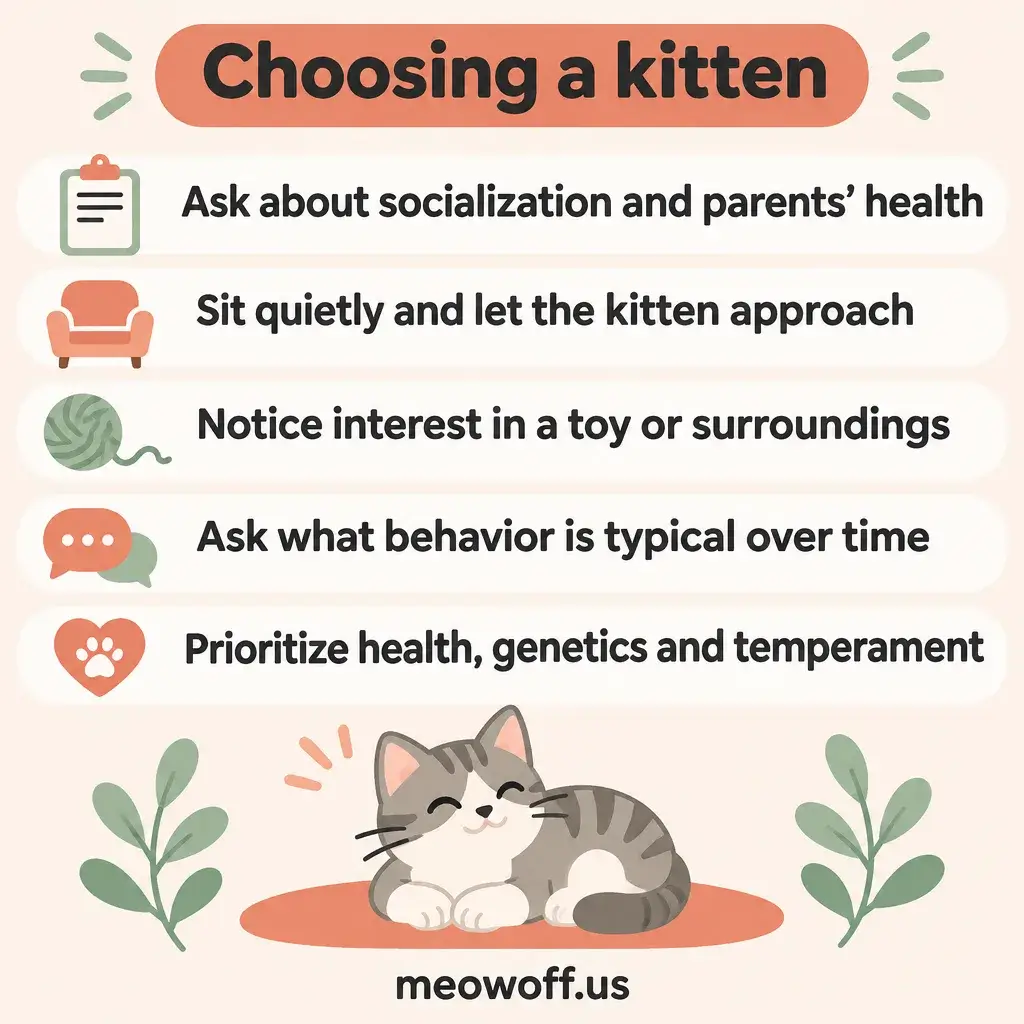
Ask how kittens have been introduced to people, household sounds, grooming and handling. Find out what the kitten enjoys, how it reacts to visitors and what is known about the parents’ health and temperament. At MeoWoff, we put health, genetics and temperament before looks rather than chasing rare colors.
During a visit, sit quietly and let the kitten approach. Look for interest in a toy or its surroundings, and notice whether it can settle after a mild unfamiliar event, such as a new toy being placed nearby. Do not deliberately frighten the kitten or force contact: a single visit is only a snapshot, and a kitten may be sleepy or cautious in an unfamiliar situation.
For example, a kitten that watches from a short distance before joining a game may suit a patient family just as well as one that immediately climbs into a lap. Ask the caregiver what is typical for that kitten over time, and discuss your household’s children, pets and daily schedule.
Our kittens go home at 12–16 weeks, after socialization and age-appropriate vaccines; they are microchipped, and veterinary records are shared with the family. Visits to our Wood Dale, Illinois, showroom are by appointment. We also help families considering Maine Coon kittens for sale in Alabama, with delivery available to all 50 states.
At MeoWoff, typical kitten prices are $2,100–$5,800 depending on breed, pedigree and quality. A $500 deposit reserves a kitten and is part of the price; ground delivery starts at $600 and flight nanny delivery starts at $1,000. Optional heart ultrasound and genetic testing are $200 each. Ask what screening is appropriate for the kitten and its parents rather than treating a test as a guarantee of future health.
Prepare a quiet starter room with food, water, a litter box, a hiding place and a safe bed. Our week-by-week kitten care guidance can help you plan the transition; we also provide guidance for the first 48 hours and first weeks at home.

What are the pros and cons of living with one?
Maine Coons can offer engaging companionship and playful interaction, but they also require regular grooming, enrichment and veterinary care. The right fit is a household prepared for those responsibilities even if its cat is less cuddly or more independent than expected.
| Potential benefit | Commitment to consider |
|---|---|
| Often enjoys company and interactive play | Needs daily attention and opportunities to play |
| Curious and often responsive to training | Needs safe enrichment and sturdy equipment |
| Long, distinctive coat | Needs regular combing and mat checks |
| Can fit a range of households | Introductions and individual preferences require patience |
Comb the coat several times a week, paying attention behind the ears, under the legs and around the rear. Work gently and reward cooperation; do not cut tight mats with scissors, because cat skin can be injured. Call your veterinarian or a qualified groomer if mats are tight, the skin looks irritated or grooming suddenly seems painful. Severe bleeding or a deep skin injury needs emergency care.
Discuss hereditary screening with your veterinarian and breeder. Maine Coons can be affected by hypertrophic cardiomyopathy, hip dysplasia and spinal muscular atrophy; genetic testing and heart ultrasound answer different questions, and a normal result does not rule out every future problem.
Call your veterinarian if you notice reduced activity, limping, weakness or a sudden behavior change. Breathing difficulty, open-mouth breathing at rest or collapse is an emergency: seek veterinary care immediately rather than waiting to see if it passes.
Feed a complete and balanced diet appropriate for your cat’s life stage, provide fresh water and ask your veterinarian to assess body condition. Calorie needs depend on the individual cat’s size, age, activity and body condition, not breed size alone. Both wet and dry complete diets can be suitable; mixing them is not mandatory.
Some cats become calmer as they mature, but becoming more cuddly at a particular age is not a reliable Maine Coon prediction. Let your cat’s preferences guide your relationship throughout its life.


Related articles
- Learn about Maine Coon history and the breed’s characteristics.
- Explore 10 facts about Maine Coon cats.
Questions about Maine Coon personality? Talk to MeoWoff
We can help you discuss a kitten’s temperament, prepare your home and plan for the first weeks together.
Call (773) 917-0073 or send us a message to talk with our team.