

Oriental personality is typically affectionate, curious and vocal: these cats often want to take part in whatever their people are doing. Understanding Oriental cat personality can help you decide whether an Oriental kitten is right for your household and prepare for its social and care needs.
What is an Oriental cat?
An Oriental cat is a Siamese-related cat with a long, lean body, large ears and a wide variety of coat colors and patterns. An Oriental kitten may have a close-lying short coat or a silky, longer coat; both varieties tend to be engaged, people-oriented companions.
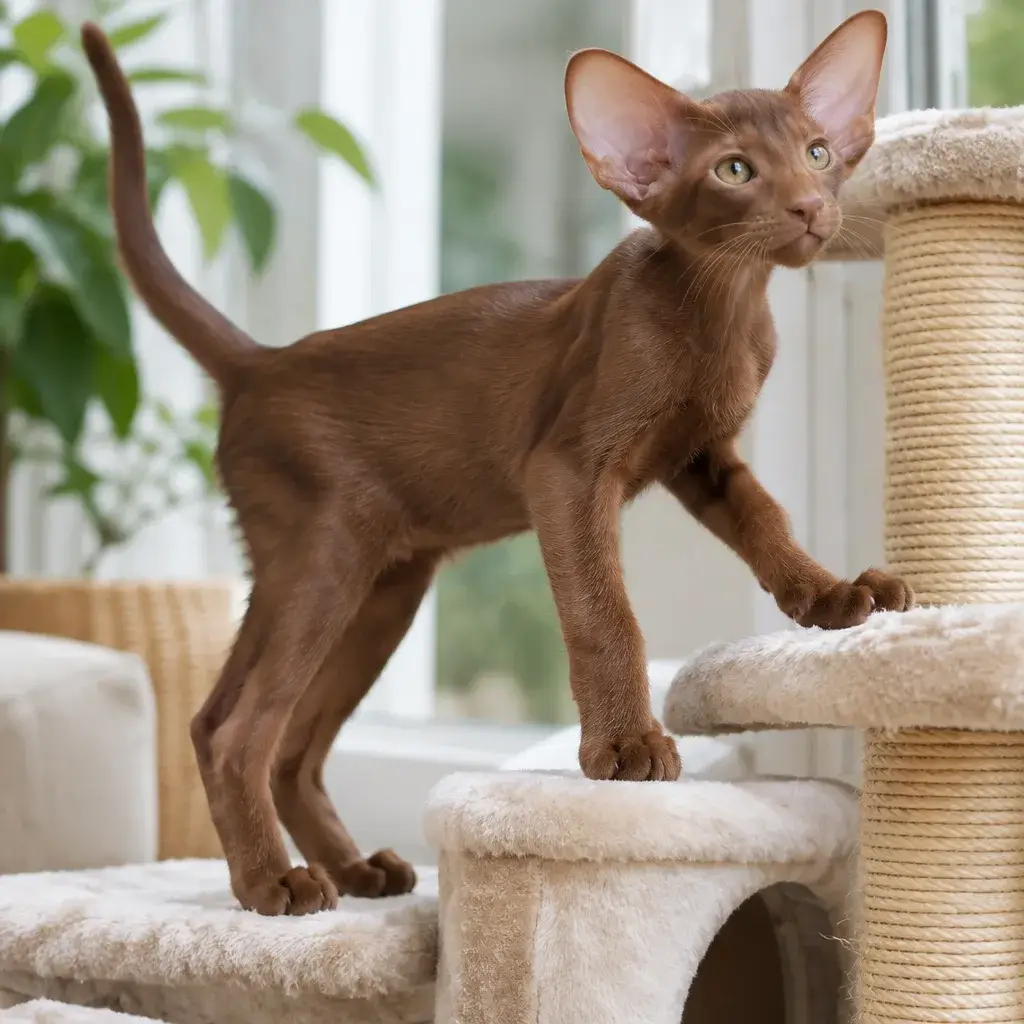
Expect a kitten that wants opportunities to explore, play and interact rather than spend the whole day entertaining itself. Personality still varies: one kitten may be a confident greeter, while another takes longer to approach a new person.
If you are beginning your search, you can ask us about current availability of Oriental kittens for sale. We can also discuss the kitten’s temperament and the kind of home you can offer before you decide.
Oriental cat personality and household fit
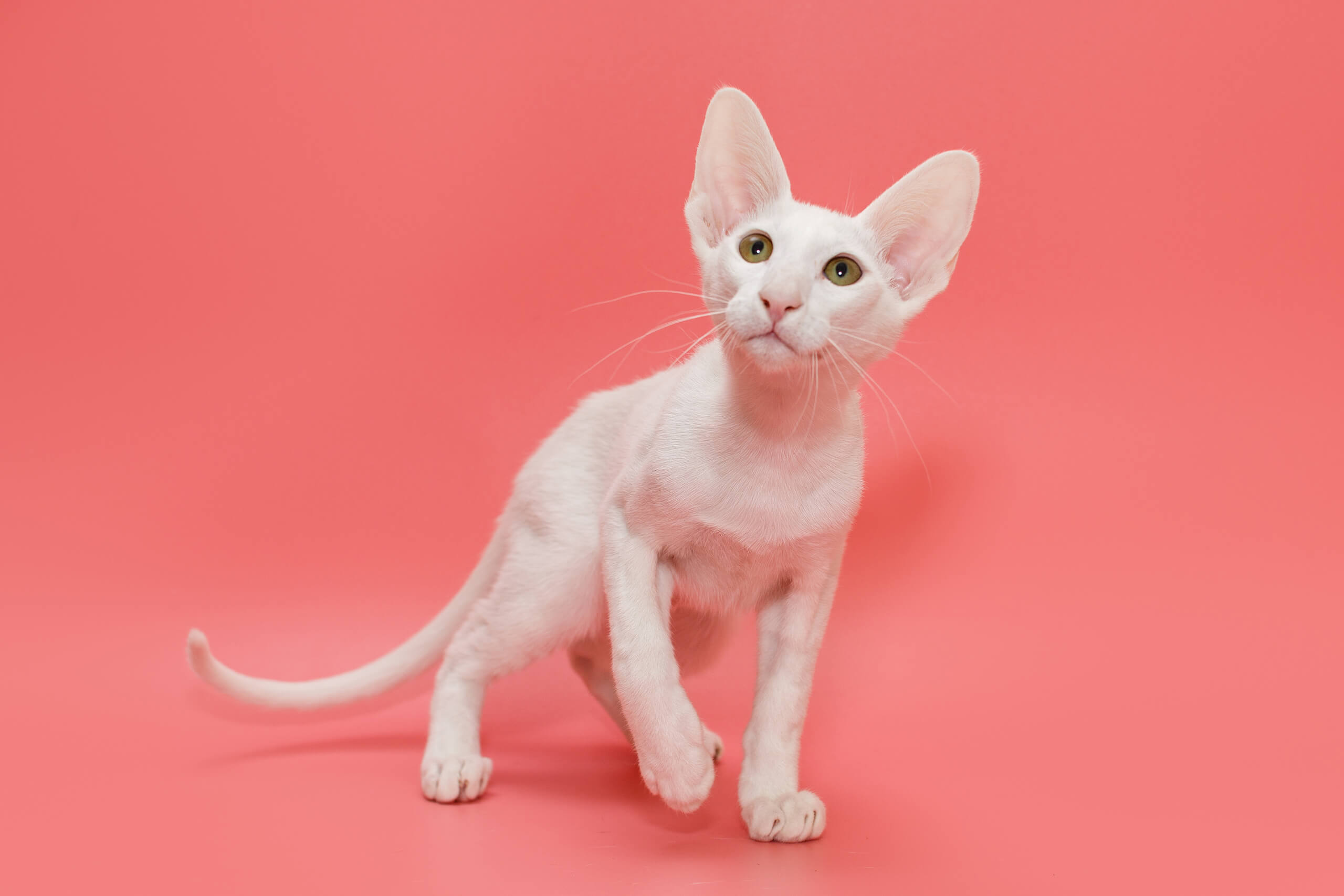
Oriental cat personality traits often include curiosity, affection, playfulness and a readiness to vocalize. Many Orientals follow their people between rooms, investigate cupboards and announce their wishes with meows or chirps, although not every individual is equally chatty.
The inquisitive nature of Oriental cats makes a safe environment especially important. Secure windows and screens, put away string and small objects that could be swallowed, and offer a sturdy cat tree or shelves with clear routes up and down. Store wand toys and loose ribbons out of reach after supervised play.
The affectionate side of Oriental cats can be a good match for someone who enjoys a companion nearby. Some like laps; others prefer to sit beside you or join a game. Let the kitten choose when to approach, and avoid assuming that an affectionate cat always wants to be held.
Orientals can live in busy households, but they need daily attention, play and predictable companionship. If everyone is away for long workdays, arrange reliable visits and playtime, consider whether a compatible animal companion is appropriate, and discuss the individual kitten’s needs before committing. A second cat is not a guaranteed substitute for human interaction.
Plan several short interactive play sessions around your schedule, followed by a meal or quiet time. Rotate puzzle feeders and toys, and provide a window perch in a secure location. An Oriental may be a frustrating fit if you strongly prefer a quiet, independent cat.
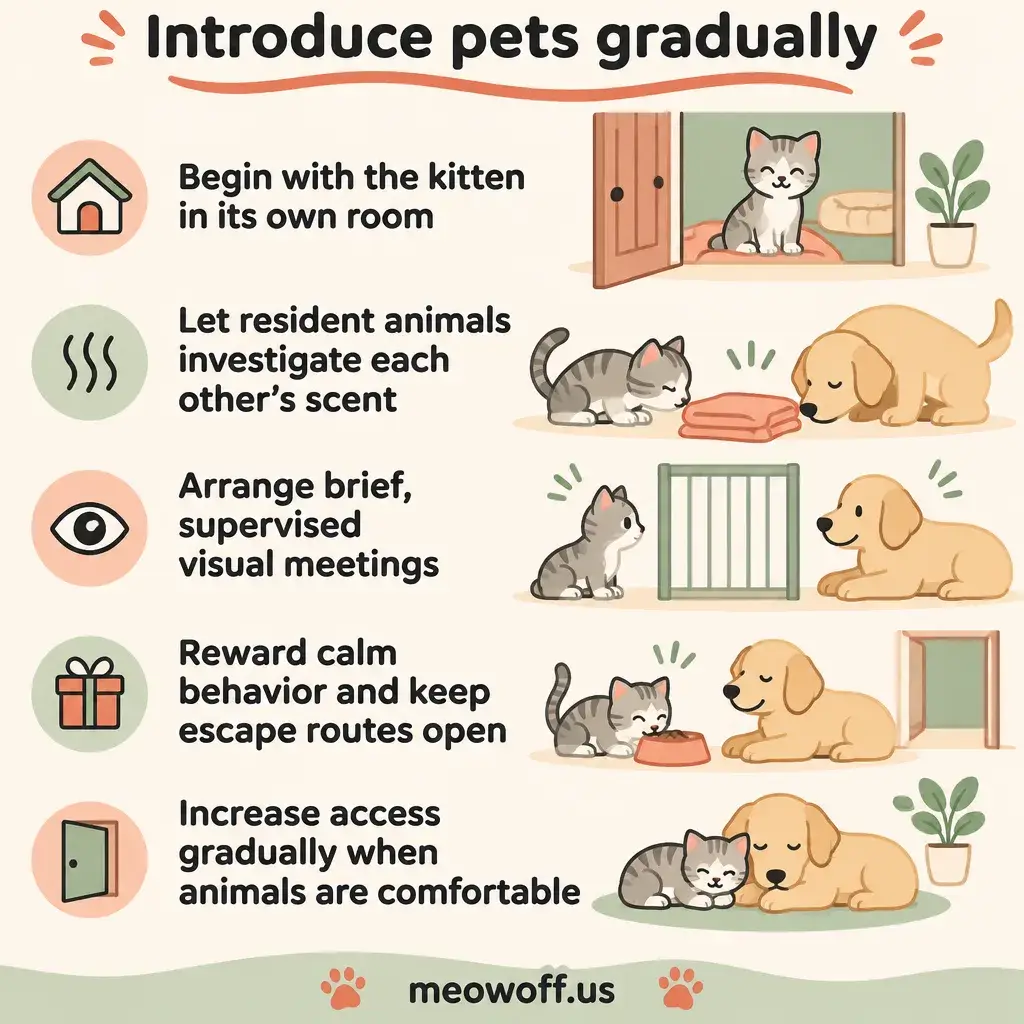
Many Orientals can be good family pets and can live with other cats or cat-friendly dogs when introductions are gradual and supervised. Teach children to sit quietly, let the kitten approach and avoid chasing or carrying it; give the kitten a retreat where children and other animals cannot follow.
- Begin with the kitten in its own room, with food, water, litter, a bed and hiding places.
- Let resident animals investigate each other’s scent on bedding before they meet.
- Arrange brief, supervised visual meetings, rewarding calm behavior and keeping escape routes open.
- Increase access gradually only when the animals are comfortable; separate them again if either is frightened or aggressive.
Sex alone is a poor way to predict whether a cat will be cuddly, vocal or confident. Ask about the individual kitten’s behavior, its experiences and how it responds to handling. To compare household needs across breeds, consider what to consider when choosing the right kitten breed for your household and The Cat Breed Compatibility Test: 10 Key Questions to Ask Yourself Before Buying.
From Siamese ancestry to a colorful breed
The Oriental breed developed from Siamese ancestry and later breeding programs that expanded its range of colors and patterns. The Siamese has roots in Siam, now Thailand; the modern Oriental was developed in Britain and the United States rather than being an ancient breed in its present form.
Breeders used Siamese cats alongside other cats, including Russian Blues, Abyssinians and domestic shorthairs, then selected for the Siamese-like body and a wider color palette. Today’s Oriental cat breed retains that family resemblance, but registration and breed classifications depend on the association.
What do Oriental cats and kittens look like?
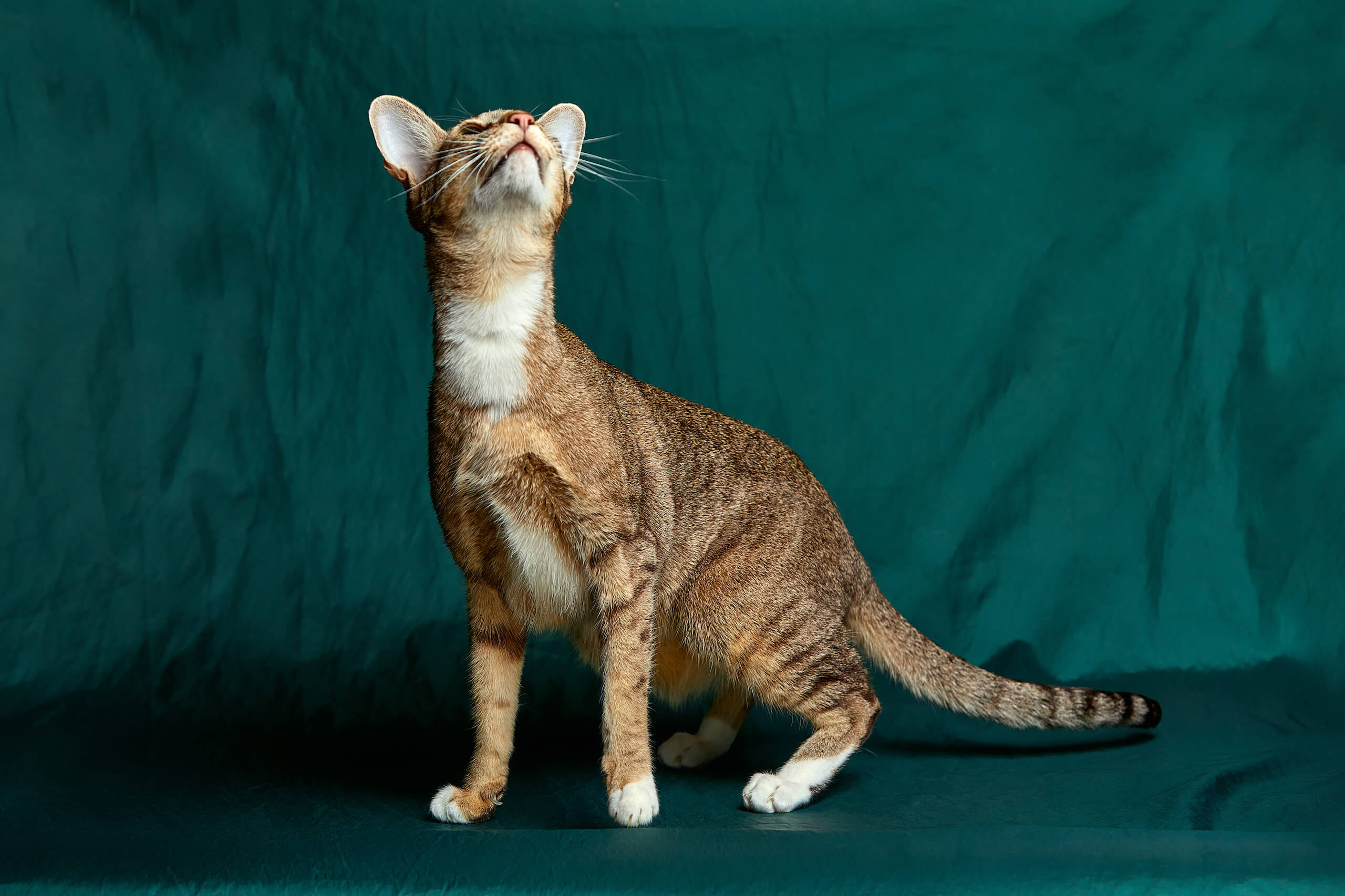
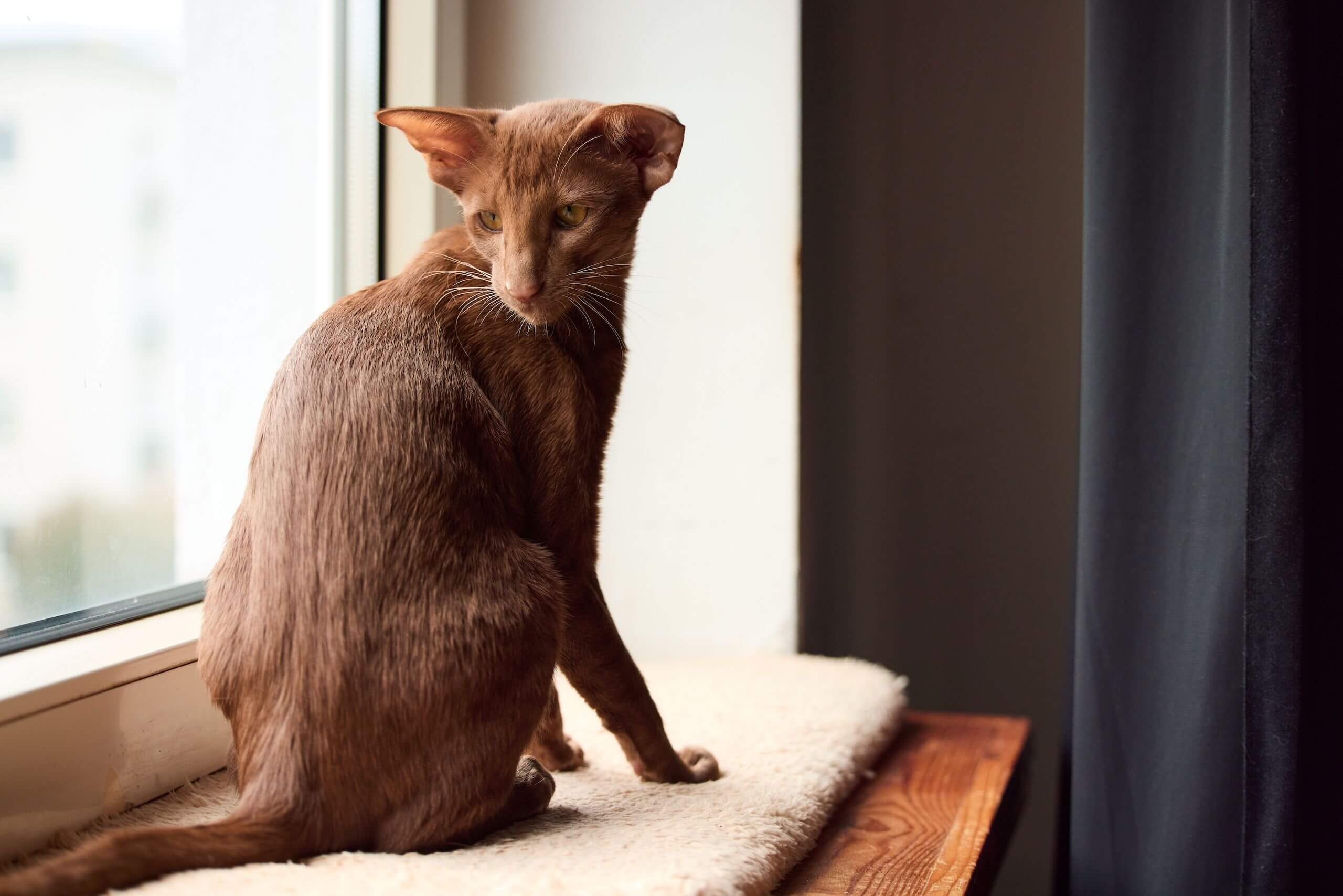
Orientals are known for a wedge-shaped head, very large ears, almond-shaped eyes and a long, lean, muscular body. Their legs and tail are slender, but a healthy Oriental should not feel like skin stretched tightly over bone.
An Oriental brown cat usually has a rich, solid brown coat called chestnut in Cat Fanciers’ Association, or CFA, terminology. Other examples include ebony, blue, red and cream, as well as tabby, tortoiseshell and bicolor patterns. The breed has many recognized color and pattern combinations, with the exact categories depending on the registry.
Pointed coats have a lighter body with darker color on the face, ears, legs and tail; a pointed Oriental-looking cat is not automatically registered as a Siamese. CFA recognizes pointed Oriental color classes, and the appropriate registration depends on the association and the cat’s pedigree.
A color can be appealing, but I put health, genetics and temperament before looks. Ask about the kitten’s family and behavior rather than paying a premium solely because a color is advertised as rare. If anyone in the home has cat allergies, spend time with cats and consult an allergist: no cat is allergen-free, and a short coat does not guarantee a reaction-free home.
Oriental Shorthair and Oriental Longhair kittens
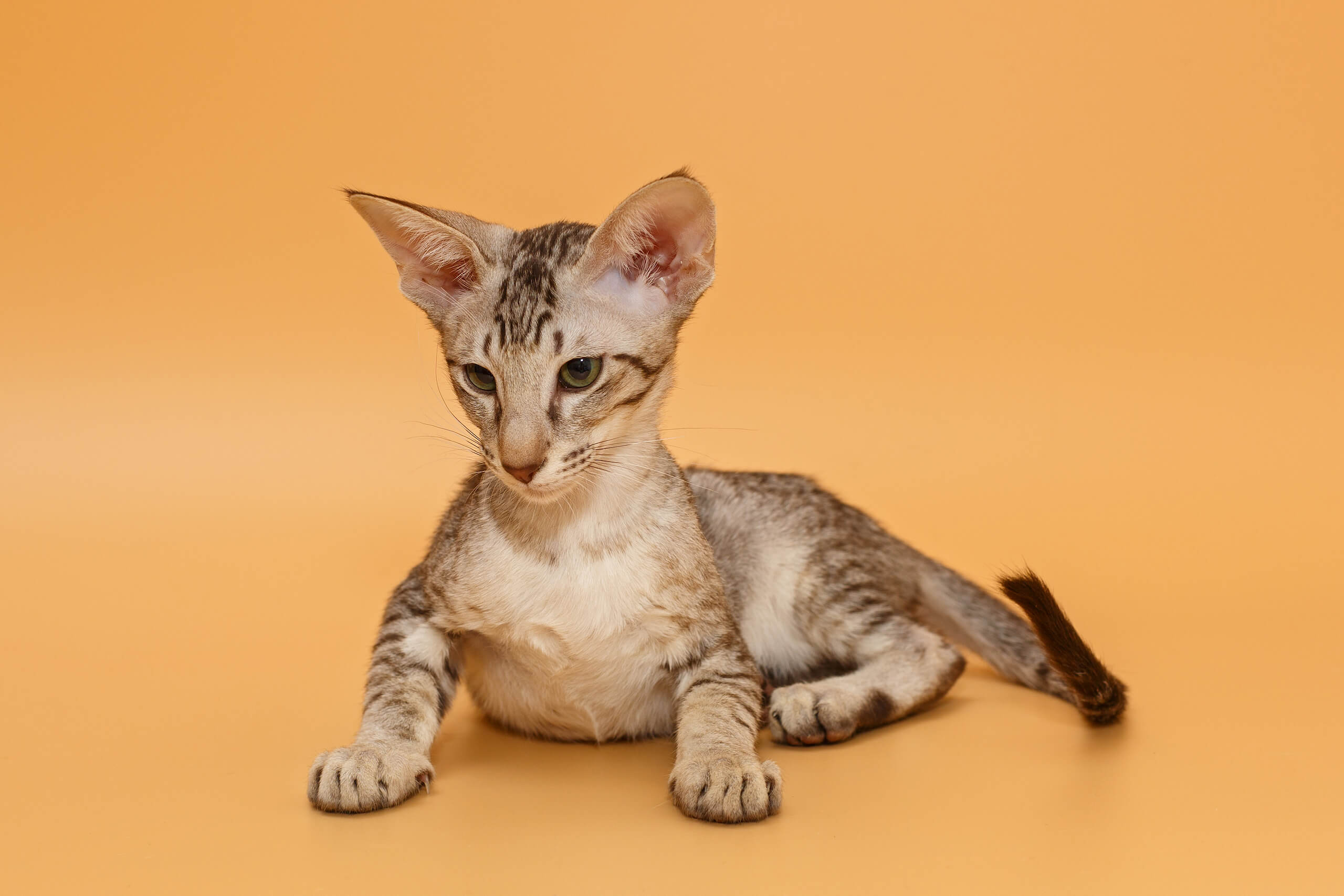
An Oriental Shorthair has a short, fine, close-lying coat; an Oriental Longhair kitten has a silky, longer coat that develops a plumed tail. The longer coat generally needs more combing, while the short coat is simpler to maintain.
Both varieties share the Oriental’s distinctive long lines and large ears. A young kitten’s coat and proportions will change as it matures, so ask to see the parents’ information and discuss what can and cannot be predicted from a kitten’s current appearance.
How big do Oriental cats get and how long do they live?
Orientals are generally small to medium cats: adult males often weigh about 8–12 pounds and females about 5–8 pounds. A typical lifespan is approximately 12–15 years, though individual cats may live shorter or longer lives.
| Characteristic | Typical expectation |
|---|---|
| Adult male weight | About 8–12 pounds |
| Adult female weight | About 5–8 pounds |
| Lifespan | Approximately 12–15 years |
Many cats approach their adult size around one year, but an individual Oriental may continue to fill out afterward. Development varies, so a kitten’s weight on its own cannot tell you whether its growth is healthy.
Ask your veterinarian to assess body condition and plot weight over time. You should generally be able to feel the ribs under a light covering without prominent bones or excess fat; your vet can show you what is appropriate for your kitten’s age and build. Call the vet if your kitten loses weight or stops gaining as expected, especially if its appetite or energy has changed.
If you are comparing a slender Oriental with a larger breed, appearance is only one consideration. Our page on Maine Coon kittens in Alaska is a starting point for families considering that different type of cat.
How do you care for an Oriental kitten?
Feed a complete kitten diet, provide daily play and companionship, and make grooming and handling pleasant from the start. A stable routine and an early veterinary appointment help you notice changes before they become harder to manage.
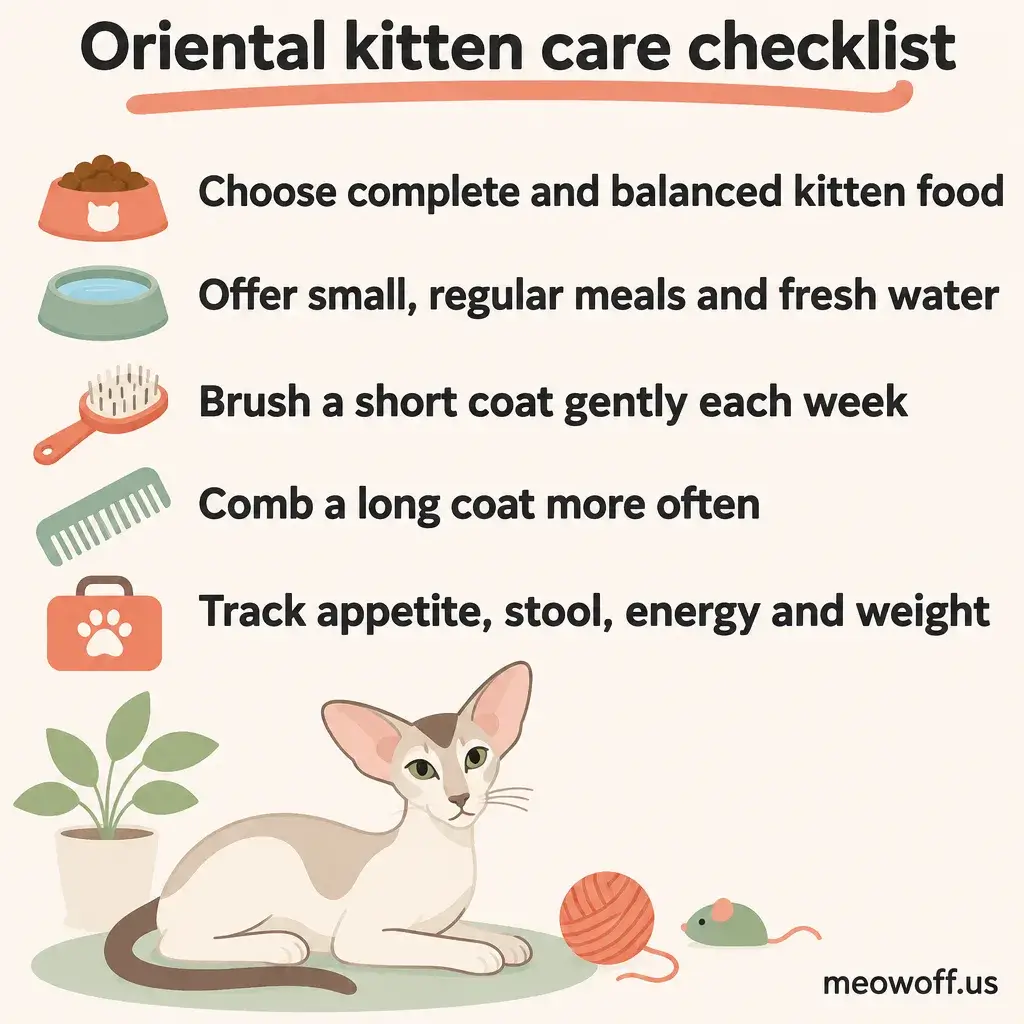
Choose a food labeled complete and balanced for growth or all life stages. Ask what the kitten currently eats and continue it initially; if you change foods, transition gradually over several days, mixing the new food into the old. Your veterinarian can help you choose portions based on growth and body condition rather than a breed-wide target.
Offer small, regular meals and fresh water in a clean, accessible bowl. Wet food, dry food or a combination can work if the overall diet is complete; measure portions and follow the package as a starting point, not a substitute for your vet’s advice. Avoid feeding an unbalanced homemade diet without veterinary nutritional guidance.
Keep track of appetite, stool, energy and weight. Call your veterinarian promptly if a kitten eats poorly, loses weight or has a persistent change in behavior; young kittens can deteriorate quickly. Seek emergency care for collapse, difficulty breathing, repeated vomiting with weakness, or an inability to stand.
For a short coat, a gentle weekly brushing usually removes loose hair. Comb a long coat more often, checking behind the ears, under the legs and around the tail for tangles; do not pull at mats or cut close to the skin. Baths are usually unnecessary unless the cat is particularly dirty or your vet recommends one.
Check nails regularly and trim the sharp tips when needed, using cat nail clippers and avoiding the pink quick. Look at the ears without inserting anything into the ear canal. Call your vet if you notice ear odor, discharge, redness or persistent scratching; seek urgent care if the kitten also has a head tilt, loss of balance or severe distress.
Introduce a carrier, gentle paw handling, brushing and household sounds in short sessions. Reward calm behavior with praise or a small treat and stop before the kitten becomes frightened. For training, reward a simple action such as coming to you; avoid punishment, which can make handling and learning harder.
Set up a quiet room before arrival with a low-sided litter box, food and water away from the box, a bed, a hiding place and a scratching surface. Let the kitten explore at its own pace, then gradually open more of the home. Our cat care guide offers more help with everyday routines.
Are Oriental cats healthy?
Oriental cats can be healthy companions, but responsible planning includes asking about inherited conditions, family history and preventive care. Genetic testing can help answer specific questions; it cannot rule out every disease or guarantee a healthy future.
Progressive retinal atrophy, or PRA, is a group of inherited conditions that can cause gradual vision loss. DNA testing is available for certain PRA-associated variants in Oriental-related cats, but a particular test does not detect every possible cause of eye disease. Ask which variant was tested, whose results are available and how the results affect the proposed mating.
Watch for hesitation in dim light, bumping into familiar objects or difficulty locating toys. Call your veterinarian if you notice vision changes, even if the kitten otherwise seems well. Sudden blindness, an injured eye, a very painful eye or an eye held tightly shut warrants emergency veterinary assessment.
Amyloidosis involves abnormal protein deposits that can damage organs, including the liver in some Siamese-related cats. Ask whether relatives have had liver disease or amyloidosis and what the breeder knows about their health; family history is useful, but it cannot predict with certainty what will happen to an individual kitten.
Call your veterinarian promptly about reduced appetite, unusual lethargy, vomiting, increased thirst or unexplained weight loss. Yellowing of the eyes, gums or skin needs urgent veterinary assessment; go to an emergency hospital if it occurs with collapse, severe weakness, breathing difficulty or repeated vomiting.
Arrange a veterinary visit soon after your kitten comes home and bring its records. Your vet can review its growth, teeth, vaccination and parasite-prevention needs and recommend a schedule suited to its age, exposure and local requirements. MeoWoff kittens go home at 12–16 weeks after socialization and age-appropriate vaccines, with a microchip and veterinary records shared with the family.
Ask your vet to demonstrate toothbrushing with cat-safe toothpaste, then introduce it gradually. Bad breath, red gums, drooling or reluctance to chew should prompt a veterinary call; facial swelling, uncontrolled bleeding or trouble breathing needs urgent or emergency care.
How much does an Oriental kitten cost, and how do you choose one?
An Oriental kitten’s price varies with pedigree, pet or breeding quality, location and what is included, so request a current breed-specific quote. MeoWoff’s typical kitten prices across breeds are $2,100–$5,800; that is not a promise that every Oriental kitten falls at a particular point in that range.
For a broader US budget, Oriental kitten asking prices commonly run from around $1,000 to $3,000 or more, but listings and inclusions change. Compare the actual records and terms, not just the advertised price; an unusually cheap kitten can become costly if its history and care are unclear.
| MeoWoff cost or option | Amount or detail |
|---|---|
| Typical kitten price across breeds | $2,100–$5,800 |
| Reservation deposit | $500, included in the kitten price |
| Wood Dale pickup | Ask about arrangements |
| Ground delivery | From $600 |
| Flight nanny delivery | From $1,000 |
| Optional heart ultrasound | $200 |
| Optional genetic test | $200 |
For example, a kitten quoted at $2,500 with $600 ground delivery would total $3,100 before optional tests and other expenses. The $500 deposit is part of the $2,500 kitten price, not an additional charge. Confirm the actual quote and delivery arrangements before paying.
Also budget for a carrier, food, litter, scratching surfaces, preventive veterinary care and unexpected illness. Ask your local veterinary clinic for examination and routine-care estimates, and consider how you would pay for an emergency. Adoption through a shelter or rescue is another option; ask about the individual cat’s behavior and medical information there, too.
When considering a breeder or seller, ask for specific information rather than accepting a general assurance that the parents are healthy:
- Can I review the parents’ available PRA DNA results, including the variant tested and the testing laboratory?
- Is there a family history of amyloidosis, liver disease, vision problems or other significant illness?
- What veterinary records, vaccination dates, microchip information and written purchase terms will I receive?
- How has this kitten been socialized, and what have you observed about its response to people and other animals?
- When can the kitten go home, what food and litter is it using, and whom can I contact with questions afterward?
Look for clear answers and records that match the kitten. Pressure to pay immediately, refusal to discuss health history, or a promise that genetic testing eliminates all future health risks are reasons to pause. Multiple litters alone do not prove poor care; assess the animals’ conditions, records and the seller’s ability to answer your questions.
MeoWoff works with partner catteries registered with WCF and TICA. Ask us about current Oriental availability and the records for a particular kitten; we do not release kittens before they are developmentally ready. Our showroom is at 126 E Irving Park Rd, Wood Dale, IL 60191, and visits are by appointment. We provide guidance for the first 48 hours and the first weeks at home.
Questions about Oriental kittens? Talk to MeoWoff
We can discuss an Oriental kitten’s temperament, current availability and how to prepare for its first weeks in your home.
Call (773) 917-0073 or send us a message to talk with our team.


